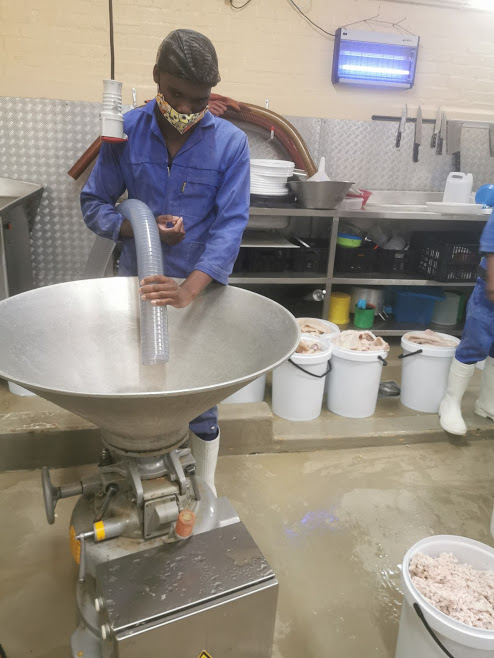
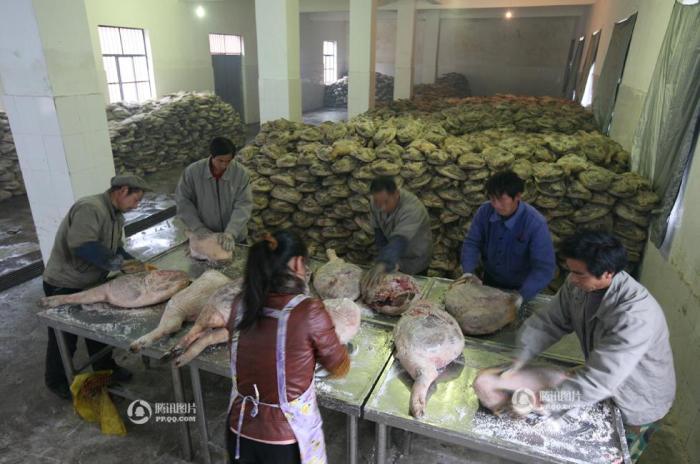
This is the Index Page for all work related to MDM and Blended Ham Products.
Meat Emulsions – A Roadmap to Investigations
2 October 2020
In April this year, I decided to put everything I thought I knew about fine meat emulsions aside and to start from scratch. This was a very hard week where nothing worked the way I wanted it to work. For a large part, I was flying on autopilot, disregarding my personal extreme disappointment with the world NOT working the way I thought it must work. For several days I was in the test kitchen from first thing in the morning and was the last person to leave. What emerged at the end of the week was not an answer, but a roadmap to the answer.
I went for a run when I got home and the enormity of the breakthrough dawned on me. Let me recap what I decided in April when I embarked on this journey. I questioned everything!
What is the role of equipment? What are starch-, soya-, rinds- and fat emulsions and why create it or use it in the final meat emulsion? What exactly are TVP and the various isolates? What is a modified starch and what are the differences with native starches? What is a food gel and what characteristics are required under which conditions? What is the role of meat proteins in gelation? What is an emulsifier and what is a filler? How did these enter the meat processing world and what has been the most important advances? What is the legislative framework? What is the role of time, temperature, pH, pressure, particle size on these products in isolation and synergistically, in a complex system? What is the role of enzymes in manipulating these? What are all the possible sources of protein, starches, fillers and emulsifiers? How do we enhance taste? Firmness? etc.
The subject is clearly stated by Gravelle, et al. “Finely comminuted meat products such as frankfurter-type sausages and bologna can be described as a discrete fat phase embedded in a thermally-set protein gel network. The chopping, or comminution process is performed under saline conditions to facilitate extraction of the salt-soluble (predominantly myofibrillar) proteins. Some of these proteins associate at the surface of the fat globules, forming an interfacial protein film (IPF), thus embedding the fat droplets within the gel matrix, as well as acting to physically restrain or stabilize the droplets during the thermal gelation process. As a result, these types of products are commonly referred to as meat emulsions or meat batters.” (Gravelle, 2017) I love this concise description and in it is embedded a world of discovery and adventure.
A road-map emerged. It is different from NPD in that in this stage of the game, I assume that I know nothing. I seek to learn as much as possible through experimentation and carefully selected collaborations, done in such a way that confidentiality is not an issue. I assume that I don’t know enough and that the information I have been given over the years may not have been the most correct or complete information. I assume that if I understand the various chemicals and equipment pieces better than most people, I should be able to arrive at answers that others are not able to.
My first task was to set out the framework for investigations. The new investigative techniques that became clear to me this week will only be effective within the right philosophical framework.
Test, test and, when you had enough, test some more!
Develop a way to do rapid testing of various combinations or products in isolation. Test per certain pH, temperature, particle size, etc. Test and test and test some more. Remember to keep careful notes with photos.
Find Solace in the wisdom of the old people.
Often, the greatest food innovations emerge out of an understanding how things were done hundreds of years ago. This is the basis premise of The Earthworm Express.
List Protein Sources
Make a list of all protein sources, their protein content, fat, fiber and other characteristics. What is the state of the proteins? Denatured? Damaged? Get samples and test.
Develop Rapid Test’s
Develop rapid test techniques which are quick, inexpensive and accurately mimics processing conditions. Fed up and frustrated with the restrictive and expensive nature of the test kitchen set-up, it was the realization how to do this that was my biggest breakthrough this week.
Don’t Trust Ingredient Comp’s.
Seek advice, but remember that staff from spice companies will tell you whatever they have to tell you to sell their particular product which may or may not be what you are looking for.
Understand your Equipment
Take the time to understand the different pieces of equipment who purports to fulfill a certain function and compare the results by talking to different production managers who use these equipment pieces. Is smaller better? Heat generated? Damage to proteins?
List binders/ emulsifiers
List all possible binders/ emulsifiers / fillers and test. Get samples and test.
Record and photograph everything!
Record everything. Inclusion (dosage), pH, temperature, reaction time, processing steps. Keep meticulous photo records.
Build an international network of trusted friends
Seek out the advice of people you trust when you run into a dead end. I find it best to have such a network of collaborators across the world. Pick the right peoples brains!
There is ONE least cost formulation for every situation.
I have come to the conclusion that it is merely a matter of data manipulation to arrive at the one ultimate “least cost” solution for every product, in any particular set of circumstances.
Separate the steps and logically group chemical reactions.
Group chemical reactions together and separate steps to achieve optimal results, thus creating different emulsions to be blended together in the final step.
-> Emulsifiers in Sausages – Introduction. Understanding the role and chemistry of non-meat emulsifiers, extenders and fillers is currently widely used in South Africa.
-> Soy or Pea Protein and what in the world is TVP? Here we start to learn about the functional properties brought to the fine emulsion by soy, pea protein and TVP by first understanding exactly what they are and how they are produced.
Over the next years, I want to make this approach part of my daily routine. I am interested to work with collaborators on various aspects of the project.
We are considering source material for fine emulation usages. Collagen has become my main area of interest. Here I post the relevant data related to collagen. It is my personal study notes if you will.
“Collagen is a fibrous protein found in all multicellular animals (Voet et al., 2006). It is an important component in the support structures in vertebrates and invertebrates. It is the most abundant protein in mammals, corresponding to approximately 25% of the weight of all proteins (Ward and Courts, 1977; Voet et al., 2006), and is the major constituent protein of skin, tendons, cartilage, bones and tissues in general. In poultry and fish it plays a similar role to that of invertebrates and is an important component of the body wall (Ward and Courts, 1977).”
“Collagen molecules are about 280 nm long, with a molar mass of 360,000 Da; they are stabilized by hydrogen bonds and intermolecular bonds (Silva and Penna, 2012), which are composed of three helical polypeptide chains, each with about 1000 amino acids, which are called an α chain. The chains become entangled, forming a stable triple helix which is varied in size. The triple helix molecules have terminal globular domains and are called procollagen. These globular regions are cleaved in varying degrees to give a polymerized structure (tropocollagen), which is the basic unit of collagen. The tropocollagen molecules are stabilized by hydrophobic and electrostatic interactions (Nelson and Cox, 2004; Damoradan et al., 2010).” (Schmidt, et al., 2016)
“There are different kinds of collagen in vertebrates; they typically contain about 35% glycine (Gly), 11% alanine (Ala) and 21% proline (Pro) and hydroxyproline (Hyp). The amino acid sequence in collagen is generally a repetitive tripeptide unit (Gly-X-Y), where X is frequently Pro and Y is Hyp (Nelson and Cox, 2004).” (Schmidt, et al., 2016)
“At least 29 different types of collagen have been reported, which are classified according to their structure into: striatum (fibrous), non-fibrous (network forming), microfibrillar (filamentous) and those which are associated with fibril (Damoradan et al., 2010).” (Schmidt, et al., 2016)
“Type I collagen is the most common, primarily in connective tissue, in tissues such as skin, tendons and bones. It consists of three polypeptide chains, two of which are identical, which are called chain α1 (I) and α2 (I), and which are composed of different amino acids. Type II collagen occurs almost exclusively in cartilage tissue and it is believed that the α1 (II) subunit is similar to the α1 (I) subunit. Type III collagen is strongly dependent on age: very young skin can contain up to 50%, but with the passage of time that percentage can be reduced to 5-10%. Other types of collagen are only present in very small quantities, mainly in specific organs such as the basement membranes, cornea, heart muscle, lungs and intestinal mucosa (Schrieber and Gareis, 2007; Karim and Bhat, 2009).” (Schmidt, et al., 2016)
Collagen as a Constituent of Mammalian Tissue
“Mammalian tissues have many things in common. For example, they usually consist of cells embedded in a matrix consisting of collagen, elastin, and mucopolysaccharides. The interactions of these components give the tissue its structural properties, while the cells embedded in the matrix give the tissue its metabolic properties. The proportion of matrix present depends on the tissue function so that structural tissue (e.g. skin, bone or tendon) consists mainly of connective tissue, while tissues with a major metabolic function (e.g. liver or brain) contain little connective tissue.” (Courtis and Ward, 1977)
“Neuman and Logan (1950) based the collagen and elastin contents on hydroxyproline determinations of preparations similar to those of Lowry, assuming collagen contains 13.4% hydroxyproline and elastin contains 2% hydroxyproline. While the former assumption is substantially true (modern literature favours a hydroxyproline value of 14.4% in collagen) the existence of hydroxyproline in elastin is not now accepted with certainty.” (Courtis and Ward, 1977)
“More recently Dahl and Persson (1963) have estimated the hydroxyproline content of several tissues by direct tissue hydrolysis, and their results can be converted to values of collagen content if one assumes that all the hydroxy-proline is derived from collagen. The table below shows how some of these results have been collected in order to indicate what may be regarded as typical values. Since in no case did the author give precise details of the tissues used, the table should be considered only as a guide to collagen-rich tissues.” (Courtis and Ward, 1977)
The table above is very interesting as it gives potential sources of collagen which suppliers can rank in price in order to determine the cost of collagen. In bovine, collagen-containing material can therefore be ranked as follows:
Hydroxyproline becomes the market to indicate a high usage of collagen. Irrespective of the animal species, collagen fibres have an amino acid composition in which glycine makes up around one-third of the total residues and the amino acids proline and hydroxyproline a further 15-30%. “Hydroxyproline is of very limited occurrence in proteins, the only other mammalian protein in which it occurs being elastin (2 %). Collagen is also the only protein reported to contain more than about 0.1 % hydroxy-lysine.” (Courtis and Ward, 1977) The presence of hydroxyproline is the marker used to determine the approximate inclusion of collagen into meat products. “Hydroxyproline is a part of collagen and occurs only in sinews, bones, gristle and skin.” (Buchi) It is therefore taken that a high percentage of hydroxyproline is indicative that a large percentage of collagen was added to the meat formulation.
Elastin is the main protein component of the elastic fibres, and differs from proteins in that it has no triple-helical collagen-like domain. Nevertheless, the polypeptide chain has repeated -Gly-X-Y sequences, which contain 4-hydroxyproline but no hydroxylysine. The 4-hydroxyproline content of elastin may vary greatly, usually being about 10 to 15 residues per 1000 amino acids, but ranging up to about 50 residues per 1000 in special situations.
When solutions of collagen are heated at about 40°C or above, denaturation occurs and the helical structure is lost. (Courtis and Ward, 1977)
Reactivity of Collagen
“The reactive amino acid side chains all project outwards from the main body of the triple helix and in soluble collagens should, therefore, be accessible to all chemical reagents. In the compact fibrous forms of collagen, however, there is no guarantee that this will be so.” (Ward and Courtis, 1977) Overcoming this is the main purpose behind my study!
“Native collagens, even the soluble forms, are very resistant both to the action of enzymes and chemicals, a property almost certainly related to the stable helical conformation of the molecule and the protection this affords to the peptide bonds of the individual chains.” (Ward and Courtis, 1977)
“Dilute acids lead to solubilization of varying amounts of collagen and on the basis of current hypotheses, this would appear to be due to the action of the acid on labile intermolecular links of the Schiff’s base type. Attack on the collagen molecule itself appears to be negligible even at low pH values provided the temperature is below 20°C.” (Ward and Courtis, 1977)
“A long treatment in alkali is the traditional prelude to the conversion of collagen to gelatin. Complete breakdown of native collagen to small peptides can only be achieved by the action of a group of bacterial enzymes, the collagenases, the best documented being that isolated from Cl. histolyticum (see Mandl, 1961). These enzymes are specific for the -Gly-Pro-X-Gly-(Pro or Hypro-) sequence, cleavage occurring to give an N-terminal glycine. Even with such enzymes, however, complete solubilization and breakdown of many collagenous tissues, e.g. mature ox hide collagen is difficult. Tadpole collagenase is even more specific in its action.” (Ward and Courtis, 1977)
Denaturation
Chang et al. (2011), investigated the effects of heat-induced changes in intramuscular connective tissue (IMCT) and collagen on meat texture properties of beef Semitendinosus (ST) muscle. Their conclusions are instructive. They compared heating in a water bath and microwave heating.
-> Collagen Content
They found that “the mean content for total collagen of the raw meat was 0.66 ± 0.09 % (wet basis) and was within the normal range (lower than 1% wet weight). Total collagen content of microwave treated sample was higher compared to water bath treatment before heating temperature up to 80◦C, and showed significant differences (p 0.05) were found for soluble collagen content between water bath and microwave treated samples, and the same changes tendency were presented as total collagen content with increase in the temperature during water bath and microwave heating.” (Chang et al., 2011)
-> Collagen Solubility
“Changes of collagen solubility of water bath and microwave treated samples were irregular. There was an unaccountable variation in collagen solubility with a maximum at 75◦C for water bath heated meat. Collagen solubility changed unaccountably throughout heating due to juice loss and collagen solubilization. For microwave heating, the highest collagen solubility was found when heated to 90◦C, and could be attributed to the conversion of collagen to gelatin occurs at this temperature range. At 65◦C, collagen solubility of water bath and microwave treated samples were relatively higher simultaneously, partly because of the shrinkage effect of perimysial and endomysial collagen at about 65◦C (proved in DSC analysis, data not shown). According to the reports of Li et al., low correlations were found between meat-Warner-Bratzler shear force (WBSF) values and total collagen and collagen solubility, although previous data indicated a high relationship between peak shear force and collagen content for beef.” (Chang et al., 2011)
We will return to the solubility of collagen when we look at soluble collagen chemistry.
-> Instrumental Texture Profile Analysis (TPA)
“TPA provides textural change of meat during thermal treatment. It was found that the thermal conditions (internal temperature) and heating modes had significant effects on all the TPA parameters of meat except for resilience (Fig. 1G). Hardness, as a measure of force necessary to attain a given deformation, gave a different response to the different heating methods and temperatures applied. Hardness (Fig. 1A) of microwave treated sample was higher compared to water bath treatment at 65◦C, and showed significant differences (p < 0.05) in the temperature range from 75◦C to 90◦C. Hardness of water bath heated meat showed a maximum at 60◦C. Changes of adhesiveness (Fig. 1B) for water bath and microwave treated sample were irregular with increase in internal core temperatures, and there were no significant differences except for 75◦C between both thermal treatments.” (Chang et al., 2011)
“Springiness is an important TPA parameter and the date on springiness (Fig. 1C) for microwave heated meat had a changing point at 65◦C, and the meat springiness of water bath heated was higher compared to microwave treatment after 65◦C. This parameter seems to be affected by myosin and α-actinin denaturation, which occurs in this temperature range. Springiness of meat is likely related to the degree of fiber swelling which in turn should be reflected in the fiber diameter. As discussed above, the main changes of springiness during heating were consistent with the thermal shrinkage of intramuscular collagen at around 65◦C.” (Chang et al., 2011)
“Cohesiveness contributes to the comprehensive understanding of viscoelastic properties including tensile strength. Chewiness is the energy required to masticate a solid food product to a state ready for swallowing. Therefore, it is considered as an important parameter since the final phase of mouth feels and the ease in swallowing depends on the chewiness of meat. Cohesiveness (Fig. 1D), gumminess (Fig. 1E), chewiness (Fig. 1F), and resilience (Fig. 1G) were all showed a maximum at 65◦C in microwave treated sample, however, gumminess and chewiness of water bath treatment reached the maximum at 60◦C. Changes of cohesiveness and resilience for water bath treated sample were irregular with the increase in heating temperature, it was maybe result from the intercorrelation effects among TPA parameters during the long time heating for water bath compared with the microwave. Resilience was the only TPA parameter that presented no significant differences between two thermal treatments.” (Chang et al., 2011)
“Changes of TPA parameters in this study suggested that internal core temperature of 60◦C and 65◦C were the critical heating temperatures which affect meat texture for water bath and microwave heating respectively. Furthermore, according to our previous studies, the maximal shrinkage temperature of IMCT collagen was within this range, this can give a full relationship of heat-induced change of collagen to meat quality, especially the meat texture; the results were also clearly showed in the SEM photographs.” (Chang et al., 2011)
Swelling
“The swelling of collagen fibres in tissues such as tendon or skin is of two types: osmotic and lyotropic (see Gustavson, 1956). The first occurs in acid or alkaline solutions and is related to the positive or negative charge on the protein reaching a maximum at pH 2-0 and 12-0 and then decreasing again at more extreme pH values at the rising ion concentration reduces the change effect. The fibres swell laterally, contract in length and become glassy and translucent in appearance. The swelling is reversed by neutralization, by the addition of salts which reduce the effect of charge or by the presence of anions (or cations) having a specific affinity for the charged groups. This type of swelling has been considered in terms of the Donnan equilibrium (Procter and Wilson, 1916) which provides a satisfactory explanation in practical terms. X-ray diffraction studies (Burge et al., 1958) showed that the lateral spacing of about 11 Å, attributed to the distance between the molecules, was increased to 13-5 Å in salt free water in the pH range of minimum swelling but increased to 15Å at pH 2-0. Structural stability, as indicated by fall in shrinkage temperature, is also affected, suggesting that water actually penetrates into the tropocollagen molecule, but it is difficult to disentangle the effects of swelling, pH and ion concentration.” (Courtis and Ward, 1977)
“Swelling in neutral salt solutions has rather different effects. The fibres become opaque and flaccid, length is relatively unaffected and cohesion between fibrils is reduced. The uptake of water varies greatly with the salt, increasing with its tendency to disrupt hydrogen bonds. Dimensional changes probably first occur in the less ordered polar areas of the molecule leading to more general disruption under favourable conditions, i.e. rise of temperature. (For fuller discussion of the effect of salts on the collagen triple helix see von Hippel, 1967.)” (Courtis and Ward, 1977)
Soluble Collagen Chemistry
“Varying amounts of fibrous collagen dissolve in cold acidic or near neutral buffers or even water. This material is referred to as soluble collagen and usually represents only a small fraction of total collagen present in any tissue. However, soluble collagen has provided the sample used for most studies concerned with the chemistry of collagen.”
“It has been known for some time that a part of mammalian collagen from tendon and from many other tissues can be extracted by dilute aqueous solutions of organic acids or buffered citrate of pH 3–4, while most of the collagen remains insoluble. There is in addition a quantitatively minute fraction which can be extracted at neutral or slightly alkaline pH by salt solutions and this has been called “neutral-salt-soluble collagen.” It has been suggested (Green and Lowther, 1959; Jackson and Bentley, 1960) that there are no sharp divisions between these different soluble fractions and that there is a continuous spectrum of molecular species varying in degree of aggregation and cross-linking.” (Munro (Ed), 1964)
“Soluble collagen chemistry dates back to the studies by Zachariades (1900) who observed swelling of tendons immersed in weak acid solutions.” (Fishman, 1970) Let’s look into the significance of swelling. Collagen is classed as “a naturally occurring matrix polymer.” (Cheema, 2011) When a polymer dissolves, the first step is a slow swelling process called solvation in which the polymer molecule swells by a factor 𝛿, which is related to CED. Linear and branched polymers dissolve in a second step, but network polymers remain in a swollen condition. (Carraher, 2003)
Polymer mobility is an important aspect helping to determine a polymer’s physical, chemical, and biological behaviour. Lack of mobility, either because of interactions that are too swift to allow the units within the polymer chain some mobility or because there is not enough energy (often a high enough temperature) available to create mobility, results in a brittle material. Many processing techniques require the polymer to have some mobility. This mobility can be achieved through application of heat and/or pressure, or by having the polymer in solution. Because of its size, the usual driving force for the mixing and dissolving of materials is much smaller for polymers in comparison with smaller molecules. Here we will look at some of the factors that affect polymer solubility. The physical properties of polymers . . . are related to the strength of the covalent bonds, the stiffness of the segments in the polymer backbone, and the strength of the intermolecular forces between the polymer molecules. The strength of the intermolecular forces is equal to the CED, which is the molar energy of vaporization per unit volume. Since intermolecular attractions of solvent and solute must be overcome when a solute dissolves, CED values may be used to predict solubility. (Carraher, 2003)
“A polymer dissolves by a swelling process followed by a dispersion process or disintegration of the swollen particles. This process may occur if there is a decrease in free energy. Since the second step in the solution process involves an increase in entropy, it is essential that the change in enthalpy be negligible or negative to assure a negative value for the change in free energy.” (Carraher, 2003)
“Soluble collagen chemistry was taken up again (following Zachariades, 1900), principally by Nageotte (1927a – e, 1928, 1930, 1933), Nageotte and Guyon (1933 and 34), Huzella (1932), Leplat (133a, b), Faure-Fremiet (1933a, b) and Guyon (1934). These authors worked with the dilute acid extracts and demonstrated a protein content.” (Fishman, 1970)
“Much of the knowledge of soluble collagen chemistry derives from initial papers by Tustanowski (1947) and Oreskovich, et al. (1948a, b) who demonstrated a revisable solubility of collagen fibrils that had dissolved in citric acid buffer (ph 3 – 4.5) and underwent reformation into collagen fibrils upon dialysis against water.” (Fishman, 1970)
Application of Soluble Collagen Chemistry
“There is a growing interest in the extraction process of collagen and its derivatives due to the growing tendency to use this protein to replace synthetic agents in various industrial processes, which results in a greater appreciation of the by-products from animal slaughter. Collagen’s characteristics depend on the raw material and the extraction conditions, which subsequently determine its application. The most commonly used extraction methods are based on the solubility of collagen in neutral saline solutions, acid solutions, and acid solutions with added enzymes. Recently, the use of ultrasound, combined with these traditional processes, has proven effective in increasing the extraction yield.” (Schmidt, et al., 2016) Schmidt, et al., 2016 did a mini review of the “different collagen extraction processes, from raw materials to the use of combinations of chemical and enzymatic processes, as well as the use of ultrasound.” The information outlined in their review has been collected from different national and international journals in Agricultural Sciences and Science and Food Technology. They studied the different extraction processes, using four bibliographic databases and also some books of renowned authors, and selected articles published between 2000 and 2015. (Schmidt, et al., 2016)
Raw materials for collagen extraction
“Meat is the main product derived from the slaughter of animals, while all other entrails and offal are classed as by-products (Bhaskar et al., 2007), including bones, tendons, skin, fatty tissues, horns, hooves, feet, blood and internal organs. The yield of by-products that is generated depends, among other factors, on the species, sex, age and body weight of the animal. The yield varies from 10% – 30% in cattle, pigs and sheep and from 5% – 6% in poultry (Nollet and Toldrá, 2011). According to Bhaskar et al. (2007) about 40% of these by-products are edible and 20% are inedible.” (Schmidt, et al., 2016)
“Depending on the culture and the country, edible by-products can be considered as waste or as delicacies that command high prices (Toldrá et al., 2012). However, the majority of by-products are not suitable for human consumption due to their characteristics. As a result, a potential source of income is lost, and the cost of disposal of these products has become increasingly high (Jayathilakan et al., 2012). Nevertheless, there is a growing awareness that these by-products can represent valuable resources if they are used properly.” (Schmidt, et al., 2016)
“Generally, inedible by-products are used in the manufacture of fertilizers, animal feed and fuel but there is also a growing market in using them to obtain minerals, fatty acids, and vitamins and to obtain protein hydrolysates and collagen. Obtaining those products, which have high added value, is a better alternative to use these by-products, which would otherwise be discarded.” (Schmidt, et al., 2016)
“The main sources for collagen extraction are byproducts from the slaughter of pork and beef (Jia et al., 2010; Silva and Penna, 2012). Several of these by-products have been studied, including the Achilles tendon (Li et al., 2009), pericardium (Santos et al., 2013), bovine inner layer of skin (Moraes and Cunha, 2013) and bovine bones (Paschalis et al., 2001), porcine skin (Yang and Shu, 2014) and porcine lung (Lin et al., 2011).” (Schmidt, et al., 2016)
“Recent research has examined alternative sources for the extraction of collagen, with particular emphasis on fish by-products (Muralidharan et al., 2013; Kaewdang et al., 2014; Ninan et al., 2014; Wang et al., 2014; Mahboob, 2015; Tang et al., 2015). This is mainly due to religious restrictions, regarding the non-consumption of pork by Muslims and Jews, and also the risk of bovine spongiform encephalopathy (BSE) (Kaewdang et al., 2014). The latter belongs to a family of diseases known as transmissible spongiform encephalopathies, which are caused by the accumulation of the pathological prion protein (PrPSc) in the brain and central nervous system, which affects adult bovines (Callado and Teixeira, 1998; Toldrá et al., 2012).” (Schmidt, et al., 2016)
“The extraction of collagen from fish has been carried out in several species using different byproducts, such as Japanese sea bass skin (Lateolabrax japonicus) (Kim et al., 2012), skin of clown featherback (Chitala ornata) (Kittiphattanabawon et al., 2015), bladder of yellow fin tuna (Thunnus albacares) (Kaewdang et al., 2014), skin and bone from Japanese seerfish (Scomberomorous niphonius) (Li et al., 2013), cartilage from Japanese sturgeon (Acipenser schrenckii) (Liang et al., 2014), and the fins, scales, skins, bones and swim bladders from bighead carp (Hypophthalmichthys nobilis) (Liu et al., 2012). Despite the extraction of marine collagen is easy and safe this collagen presents some limitations in their application, due to its low denaturation temperature (Subhan et al., 2015).” (Schmidt, et al., 2016)
“The extraction of collagen from poultry slaughter waste has also been researched, but with less emphasis because of the risk of the transmission of avian influenza (Saito et al., 2009). Studies have been performed regarding emu skin (Dromaius novaehollandiae) (Nagai et al., 2015), and chicken feet (Saiga et al., 2008; Almeida et al., 2012a; Hashim et al., 2014), chicken sternal cartilage (Cao and Xu, 2008), chicken skin (Cliche et al., 2003; Munasinghe et al., 2015) and chicken tarsus (Almeida et al., 2012b) etc.” (Schmidt, et al., 2016)
“The processing of by-products can convert a product with low value, or one that requires costly disposal, into a product that is able to cover all the costs of processing and disposal, with consequent higher added value and reduced environmental damage (Toldrá et al., 2012).” (Schmidt, et al., 2016)
Collagen extraction process
“Collagen can be basically obtained by chemical hydrolysis and enzymatic hydrolysis (Zavareze et al., 2009). Chemical hydrolysis is more commonly used in industry, but biological processes that use the addition of enzymes are more promising when products with high nutritional value and improved functionality are required (Martins et al., 2009). Moreover, enzymatic processes generate less waste and may reduce the processing time, but they are more expensive. To extract collagen it is necessary to remove numerous covalent intra- and intermolecular cross-links, which primarily involves residues of lysine and hydroxy-lysine, ester bonds and other bonds with saccharides, all of which makes the process quite complex (Ran and Wang, 2014).” (Schmidt, et al., 2016)
“Before the collagen can be extracted a pretreatment is performed using an acid or alkaline process, which varies according to the origin of the raw material. The pre-treatment is used to remove non-collagenous substances and to obtain higher yields in the process. The most commonly used extraction methods are based on the solubility of collagen in neutral saline solutions, acidic solutions, and acidic solutions with added enzymes. The table below presents a summary of the procedures employed in the extraction of collagen from animal by-products.” (Schmidt, et al., 2016)
Pre-treatment
“Due to the nature of the cross-linked collagen that is present in the connective tissue of animals, it dissolves very slowly, even in boiling water. As a result, a mild chemical treatment is necessary to break these cross-links before extraction (Schreiber and Gareis, 2007). To this end, diluted acids and bases are employed, and the collagen is subjected to partial hydrolysis, which maintains the collagen chains intact but the cross-links are cleaved (Prestes, 2013).” (Schmidt, et al., 2016)
“In the acidic form of pre-treatment, the raw material is immersed in acidic solution until the solution penetrates throughout the material. As the solution penetrates the structure of the skin at a controlled temperature it swells to two or three times its initial volume and the cleavage of the non-covalent inter- and intramolecular bonds occurs (Ledward, 2000). The acidic process is more suitable for more fragile raw materials with less intertwined collagen fibres, such as porcine and fish skins (Almeida, 2012b).” (Schmidt, et al., 2016)
“The alkaline process consists of treating the raw material with a basic solution, typically sodium hydroxide (NaOH), for a period that can take from a few days to several weeks (Prestes, 2013). This process is used for thicker materials that require a more aggressive penetration by the treatment agents, such as bovine ossein or shavings (Ledward, 2000). NaOH and Ca (OH)2 are often used for pre-treatment, but NaOH is better for pre-treating skins because it causes significant swelling, which facilitates the extraction of collagen by increasing the transfer rate of the mass in the tissue matrix (Liu et al., 2015).” (Schmidt, et al., 2016)
“A study by Liu et al. (2015) evaluated the effect of alkaline pre-treatment on the extraction of acid-soluble collagen (ASC) from the skin of grass carp (Ctenopharyngodon Idella). Concentrations of NaOH from 0.05 to 0.1 M were effective in removing non-collagenous proteins without losing the ASC and structural modifications at temperatures of 4, 10, 15 and 20°C. However, 0.2 and 0.5 NaOH M caused a significant loss of ASC, and 0.5 M NaOH resulted in structural modification in the collagen at 15 and 20°C. In addition to the use of acids and bases, enzymes or chemicals may also be used to cleave the cross-linked bonds to obtain products with different characteristics (Schrieber and Gareis, 2007).” (Schmidt, et al., 2016)
By Schmidt, et al. (2016)
Chemical hydrolysis
“In the extraction of collagen which is soluble in salt, neutral saline solutions are used, such as sodium chloride (NaCl), Tris-HCl (Tris (hydroxymethyl) aminomethane hydrochloride), phosphates or citrates. Caution is required in this process in order to control the concentration of salt, but considering that the majority of collagen molecules are cross-linked, the use of this method is limited (Yang and Shu, 2014).” (Schmidt, et al., 2016)
“Acid hydrolysis can be performed by using organic acids such as acetic acid, citric acid and lactic acid, and inorganic acids such as hydrochloric acid. However, organic acids are more efficient than inorganic acids (Skierka and Sadowska, 2007; Wang et al., 2008). Organic acids are capable of solubilizing non-crosslinked collagens and also of breaking some of the inter-strand cross-links in collagen, which leads to a higher solubility of collagen during the extraction process (Liu et al., 2015). Therefore, acidic solutions, especially acetic acid, are commonly used to extract collagen.” (Schmidt, et al., 2016)
“For the extraction of acid-soluble collagen, the pre-treated material is added to the acid solution, usually 0.5 M acetic acid, and maintained for 24 to 72 hours under constant stirring at 4°C, depending on the raw material (Wang et al., 2014; Nagai et al., 2015; Kaewdang et al., 2014).” (Schmidt, et al., 2016)
“After the extraction stage, a filtering is performed to separate the supernatant (residue) from the collagen, which is in the liquid phase. To obtain collagen powder, the filtrate is usually subjected to precipitation with NaCl. The precipitate is then collected by centrifugation and subsequently redissolved in a minimum volume of 0.5 M acetic acid and then dialyzed in 0.1 acetic acid for 2 days, and distilled water for 2 days, with replacement of the solution on average every 12 hours.” (Schmidt, et al., 2016)
“Moraes and Cunha (2013) analyzed collagen from the inner layer of bovine hide that was extracted under different temperature conditions (50, 60 or 80°C) and pH (3, 5, 7 or 10) under stirring for 6 hours. The hydrolysates that were produced in different conditions showed distinct properties. The highest levels of soluble proteins were obtained from treatments at a temperature of 80°C and a pH below the isoelectric point. The products obtained in conditions of extreme pH (3 and 10) or high temperatures (60 and 80°C) were completely denatured. The extractions with acidic pH and high temperature produced collagen with reduced molar mass. In general, the hydrolysates obtained with acidic pH formed firmer gels. The water retention capacity of the gels was approximately 100%, except for the hydrolysates that were obtained at high pH (7 and 10) and above the denaturation temperature (80°C).” (Schmidt, et al., 2016)
“Wang et al. (2008) optimized the conditions for extraction of acid-soluble collagen in skin from grass carp (Ctenopharyngodon Idella), having evaluated the effects of the concentration of acetic acid (0.3, 0.5 and 0.8 M), temperature (10, 20 and 30°C) and extraction time (12, 24 and 36 hours). The three tested variables showed a significant effect on collagen extraction and a positive relationship was found between time and the collagen yield. Increased temperature and concentration of acetic acid increased the yield to a certain value, which then decreased. The optimal conditions to obtain the highest yield of acid-soluble collagen in skin from grass carp were: an acetic acid concentration of 0.54 M at a temperature of 24.7°C for 32.1 hours.” (Schmidt, et al., 2016)
“Acid-soluble collagen from the skin and swim bladder of barramundi (Lates calcarifer) was extracted by Sinthusamran et al. (2013). The pretreated raw materials were extracted with 0.5 M acetic acid for 48 hours at 4°C. The acid-soluble collagen from the swim bladder showed a higher yield (28.5%) compared to that which was obtained from the skin (15.8%). In both cases, the collagen was identified as type I, with some differences in the primary structure. Both the skin and the swim bladder of barramundi showed potential for collagen extraction.” (Schmidt, et al., 2016)
“In general, chemical hydrolysis processes seek optimum conditions for obtaining higher yields by controlling process variables such as concentration, pH, temperature, and process time.” (Schmidt, et al., 2016)
Additional Notes on Salt-Extracted Collagen
Fisherman adds the following notes on salt extracted collagen. “Various buffers have been used to obtain salt-extracted collagen. Highberger et al. (1951) used an alkaline disodium phosphate buffer. Using isotopes Harkness et al., (1954) was able to determine that this fraction was a precursor to insoluble collagen. Jackson and Fessler (1955) and Gross et al. (1955) soon discovered that neutral salt probably extracts the same collagen as does the alkaline buffer and that both represent the most resent formed collagen. Increased amounts of collagen have been solubilized by increasing the concentration of NaCl. Perhaps no more than 10% of the total collagen can be extracted with salt, and generally much less than this is extractable. Less collagen can be extracted from skins of aged animals than from young animals and less is extracted from tendons than from skin. An amount of 0.5M NaCl in 0.5M tris buffer, pH 7.5 at 4 deg C for 2 – 4 days is currently used in this laboratory to obtain salt-extracted collagen. (Fishman (Ed), 1970)
Additional Notes on Acid Extracted Collagen
Fisherman adds the following notes on acid extracted collagen. “After collagen-containing tissue has been extracted with salt solutions additional collagen can be extracted by employing cold weak acids. Under the best of conditions, as much as 20% of of the total collagen may be extracted with cold acids. Ground-up tissue containing collagen may be placed directly in cold acids (after thorough washing with water) for extraction of soluble collagen without an intermediate salt extraction. In other words, weak acids will extract both the acid and salt soluble fractions. 0.5 M acetic acid is generally used in our laboratory to obtain acid soluble-collagen (Piez et al. 1961). Other acids have been advocated for example 0.1M citric acid and 0.1M sodium citrate pH4.3 (Gallop, 1955) 0.5M dihydrogen phosphate (Dumitru and Garrett, 1957) and 0.15M citrate buffer pH 3.8 (Mazurov and Orekhovich, 1959). The amount of collagen obtained varies with several factors including the pH of the acid (more being extracted at low pH), the age of the animal (more being extracted from younger animals) and the type of collagen-containing tissue (more is being extracted from skin than from tendons).” (Fishman (Ed), 1970)
Enzymatic Hydrolysis
“For the extraction of collagen by enzymatic hydrolysis, the raw material, which can be the residue of acidic extraction, is added to 0.5 M acetic acid solution containing selected enzymes such as pepsin, Alcalase® and Flavourzyme® (Novozymes®, Araucária PR, Brazil). The mixture is continuously stirred for about 48 hours at 4°C followed by filtration (Li et al., 2009; Li et al., 2013; Wang et al., 2014). The filtrate is subjected to precipitation and dialysis under the same conditions as for obtaining acid-soluble collagen.” (Schmidt, et al., 2016)
“Woo et al. (2008) optimized the extraction of collagen from the skin of yellowfin tuna (Thunnus albacares). Pre-treatment was performed with NaOH (0.5 to 1.3 N) at 9°C for 12 to 36 hours for the removal of non-collagenous protein. Subsequently, digestion with pepsin (0.6 to 1.4% (w/v) was performed in hydrochloric acid (HCl) solution (pH 2.0) at 9°C for 12 to 36 hours. The optimal extraction conditions were obtained with a pre-treatment of 0.92 N NaOH for 24 hours and digestion with pepsin at a concentration of 0.98% (w/v) for 23.5 hours.” (Schmidt, et al., 2016)
“Wang et al. (2014) isolated and characterized collagen from the skin of Japanese sturgeon (Acipenser schrenckii) using NaCl, acetic acid and pepsin for extraction. Initially, the skin was pretreated with NaCl and Tris-HCI and then the saline soluble collagen was extracted (SSC) in 0.45 M NaCl at pH 7.5 for 24 h with continuous stirring; this was performed six times. After the extraction with salt, the residue was suspended in 0.5 M acetic acid for the extraction of acid-soluble collagen (ASC); the procedure was carried out for 24 hours, twice. The material that was insoluble in acetic acid was used to extract pepsin-solubilized collagen (PSC) by using 0.1% (w/v) pepsin in 0.01 M HCl for 48 hours. The yields of SSC, ASC and PSC were 4.55%, 37.42% and 52.80%, respectively. All the isolated collagens maintained a triple helix structure and were mainly type 1 collagen, with similar morphology and amino acid profiles. The spectroscopic analysis in the midinfrared region using Fourier transform spectroscopy (FTIR) showed more hydrogen bonds in the PSC and more intermolecular cross-linking in the ASC. The different collagens also showed some differences in terms of thermal stability, which could have been due to the hydration level, as well as the number and type of covalent cross-links.” (Schmidt, et al., 2016)
“Kittiphattanabawon et al. (2010) extracted collagen from the cartilage of brown-banded shark (Chiloscyllium punctatum) and blacktip shark (Carcharhinus limbatus). Pre-treatment was performed using NaOH and ethylenediamine tetraacetic acid (EDTA). The extraction was initially performed with acetic acid for 48 hours at 4°C. Thereafter, the residue that was not dissolved by the acidic extraction was extracted with porcine pepsin in acetic acid for 48 hours at 4°C. The collagen extracted by pepsin had a much higher yield than the acid-extracted collagen. Furthermore, the spectra of both collagens that were obtained by FTIR were very similar; suggesting that hydrolysis with pepsin does not affect the secondary structure of collagen, especially the triple helix structure.” (Schmidt, et al., 2016)
“The method of extraction can influence the length of the polypeptide chains and the functional properties of collagen, such as viscosity, solubility, as well as water retention and emulsification capacity. This varies according to the processing parameters (enzyme, temperature, time and pH), the pretreatment, method of storage and the properties of the initial raw material (Karim and Bhat, 2009).” (Schmidt, et al., 2016)
“Thus it is necessary to perform a partially controlled hydrolysis of the cross-linked bonds and the peptide bonds of the original structure of the collagen in order to obtain the ideal distribution of molar mass for a given application (Schreiber and Gareis, 2007). This factor has emphasized the use of selected animal or vegetable proteolytic enzymes, such as trypsin, chymotrypsin, pepsin, pronase, alcalase, collagenases, bromelain and papain (GómezGuillén et al., 2011; Khan et al., 2011) because these permit the control of the degree of cleavage of the substrate protein. In addition, enzymatic hydrolysis presents some advantages compared with chemical hydrolysis, such as specificity, the control of the degree of hydrolysis, moderate conditions of action, and lower salt content in the final hydrolysate. Furthermore, enzymes can be generally employed at very low concentrations and it is not necessary to remove them from the medium (Zavareze et al., 2009). Despite the high cost of enzymatic hydrolysis, the fact that it results in lower levels of waste, better control of the process and higher yield justifies the use of enzymes.” (Schmidt, et al., 2016)
The use of ultrasound in the collagen extraction process
“Ultrasound is widely used to improve the transfer of mass by wet processes, which are of importance in terms of mixture, extraction and drying (Li et al., 2009). Ultrasound has been used successfully in collagen extraction by reducing the processing time and increasing the yield (Kim et al., 2012; Kim et al., 2013; Ran and Wang, 2014; Tu et al., 2015).” (Schmidt, et al., 2016)
“Ultrasound is a process that uses the energy of sound waves which are generated at a higher frequency than the hearing capacity of human beings (higher than 16 kHz) (Chemat and Khan, 2011). The effects of ultrasound in liquid systems are mainly due to the phenomenon known as cavitation (Hu et al., 2013). During sonication, cavitation bubbles are quickly formed, which then suffer a violent collapse, resulting in extreme temperatures and pressures. This leads to turbulence and shearing in the cavitation zone (Chemat and Khan, 2011).” (Schmidt, et al., 2016)
“In a study by Kim et al. (2012), the extraction of acid-soluble collagen from the skin of Japanese sea bass (Lateolabrax japonicus) showed increased yield and reduced extraction time after ultrasonic treatment at a frequency of 20 kHz in 0.5 M acetic acid. Extraction with ultrasound did not alter the major components of the collagen, more specifically the α1, α2 and β chains.” (Schmidt, et al., 2016)
“Ran and Wang (2014) compared the extraction of collagen from bovine tendon with and without the use of ultrasound (20 kHz pulsed 20/20 seconds). Conventional extraction was performed with pepsin (50 Umg-1 of sample) in acetic acid for 48 hours. For the extraction with ultrasound the same conditions were used, but the times of extraction with ultrasound (3 to 24 h) and pepsin (24 to 45 hours) were varied, resulting in a total of 48 hours of treatment. The combination of ultrasound with pepsin resulted in a greater efficiency of collagen extraction, reaching a yield of 6.2%, when the conventional extraction yield was 2.4%. The adequate time for extraction using ultrasonic treatment was 18 h. The collagen that was extracted from bovine tendon showed a continuous helical structure, as well as good solubility and fairly high thermal stability. The use of ultrasound in conjunction with pepsin improved the efficiency of the extraction of natural collagen without damaging the quality of the resulting collagen.” (Schmidt, et al., 2016)
“Li et al. (2009) utilized ultrasound (40 kHz, 120 W) to extract collagen from bovine tendon using the enzyme pepsin. The results showed that ultrasound increased extraction by up to 124% and reduced the process time. These results were explained by the increased activity and dissolution of the substrate because irradiation allows for a greater dispersion of pepsin and opening of collagen fibrils, which facilitates the action of the enzyme. The use of circular dichroism analysis, atomic force microscopy and FTIR showed that the triple helix structure of the collagen remained intact, even after the ultrasonic treatment.” (Schmidt, et al., 2016)
“According to Kim et al. (2013) the use of ultrasound in the extraction of collagen generated a higher rate of yield than the conventional extraction method with 0.5 M acetic acid, even when using a low concentration of acid (0.01 M). In addition, the yield of collagen from the skin of Japanese sea bass (Lateolabrax japonicus) increased greatly with increased treatment time and amplitude of ultrasound.” (Schmidt, et al., 2016)
“However, studies of the effect of ultrasound on enzyme activity are still very limited (Li et al., 2009; Yu et al., 2014). Yu et al. (2014) suggested that the activity of the enzymes papain and pepsin can be modified by ultrasound treatment, mainly due to changes in their secondary and tertiary structures. The activity of papain was inhibited, and the activity of pepsin was activated by the ultrasound treatment that was tested.” (Schmidt, et al., 2016)
“The application of ultrasound for a long period of time may give rise to elevated temperatures and shear strength, as well as high pressures within the medium because of cavitation. It can also break the hydrogen bonds and van der Waals forces in polypeptide chains, leading to the denaturation of the protein/ enzyme (Ran and Wang 2014).” (Schmidt, et al., 2016)
Inclusion Rate of Collagen in Sausages
Notes from Wenther (2003):
Henrickson (1980) – beef hide protein, collagen, is a useful extender, moisturizer, texturizer, or emulsifer in different food systems.
Bailey and Light (1988) – Non-detrimental effects to coarse-ground sausages were observed with levels up to 30 percent of collagen from the corium layer of hides.
Wiley and others (1979) – as a “rule of thumb,” use of high collagen meats should be limited to 15 percent of the meat block.
Rust (1987) – collagen should be limited to 25 percent of the total protein content in a sausage.
Millier and Wagner (1985) – an addition of rind and sinew should be limited to 5 percent of frankfurters to prevent undesirable sensory characteristics.
Collagen Sources
-Beef Tripe “Randall and others (1976) replaced the beef component in a meat emulsion system up to 80 percent with frozen honeycomb beef tripe. There were minimal changes in cooked yields at the 20 percent replacement level, but at 40 percent, the tripe caused adverse yield results. Drip losses paralleled the cooked yield results and at the 60 and 80 percent replacement levels, measurable lipid losses occurred with the tripe. Due to the nature of tripe (connective tissue protein), reduced-fat and water binding occurred by replacing the salt-soluble muscle protein. Firmness decreased at the 60 and 80 percent replacement levels and cohesiveness decreased at all replacement levels.” (Wenther, 2003)
“Jones and others (1982) conducted research in which beef tripe was used in 30 batches of bologna as a collagen source. Meat emulsions were prepared with five tripe levels (0, 10, 20, 30 and 40 percent of the formulation). Total collagen and insoluble collagen were significantly higher (P<0.05) for each increasing tripe level. Only minor differences were observed in the soluble collagen fractions. In comparison to lower tripe levels, the 40 percent tripe level had a lower smokehouse yield (P<0.05). The authors also concluded that the higher the collagen content in the formulation leads to a more “brittle” emulsion which was determined by lower hardness and chewiness scores. Furthermore, the authors reported decreased firmness and bind values in the cooked product and decreased visoelastic properties. In the raw batter in formulations that contained tripe levels greater than 10 percent.” (Wenther, 2003)
–Tendons from Beef Hind Leg Muscles “Sadler and Young (1993) replaced a portion of the lean in a conventional emulsion formulation with tendon from beef hind leg musdes. The tendons were homogenized and used either in a raw state or a preheated state. In the preheated treatment, the homogenized tendon was subjected to four temperature ranges (50, 60 70, 80 °C). In the first study, all treatments were observed by replacing 20 percent of the meat protein with 20 percent tendons (all treatments). Hardness doubled by replacement with raw tendon or tendon heated at 50 °C, but returned to approximately no-replacement levels at temperatures higher than 50 °C.” (Wenther, 2003)
“In the second study by Sadler and Young (1993), a portion of the lean meat was replaced with 0, 5,10,15, 20 or 25 percent tendon homogenate (raw and preheated at 70 °C). All attributes measured by the sensory evaluation decreased with increasing collagen content, but to a lesser extent with preheated tendon. By comparison of panel scores and texture profile analysis, it was determined that reduced fracturability was the texture parameter that panellists objected to when heated tendon replaced some of the lean. The authors concluded that a 60 °C preheated tendon homogenate at a 20 percent lean meat replacement can be effective for positive sensory attributes.” (Wenther, 2003)
–Desinewed Connective Tissue “Desinewed connective tissue has been obtained from cow meat and beef hind shank meat and utilized by many authors. Ladwig and others (1989) added two levels of collagen to meat emulsions to determine the effect of muscle collagen on emulsion stability. The authors revealed that adding additional collagen to meat emulsions shortened the total chopping time and decreased emulsion stability, but had no effect on protein solubility.” (Wenther, 2003)
“Eilert and Mandigo (1993), Eilert and others (1996ab), and Calhoun and others (1996ab) performed extensive research with desinewed connective tissue from beef hind shank meat. Eilert and Mandigo (1993) noted that thermal processing yield losses declined with increased modified connective tissue level (0, 10, 20, 30, 40 percent) and hypothesized that the addition of modified connective tissue may be effective for reducing processing yield losses in low-fat meat systems.” (Wenther, 2003)
“Eilert and others (1996ab) and Calhoun and others (1996ab) studied the relationship between phosphates and desinewed beef connective tissue. Collagen solubility was maximized with a 3.5 percent acidic phosphate solution, while hydration was optimized with a 3.5 percent alkaline phosphate solution (Eilert and others 1996a). The authors concluded that exposing connective tissue to high concentrations of phosphate will dramatically alter binding and solubility.” (Wenther, 2003)
“Calhoun and others (1996ab) expanded on the previous research with studies of preblending connective tissue with phosphates. While Calhoun and others (1996a) revealed that preblending sodium add pyrophosphate with modified beef connective tissue and subsequent addition of alkaline phosphate created a modified connective tissue product similar to the control product, Calhoun and others (1996b) determined that preblending modified connective tissue and sodium tripolyphosphate was not beneficial.” (Wenther, 2003)
“Osbum and other (1999) determined that the incorporation of desinewed beef connective tissue gels in reduced-fat bologna decreased (P<0.05) product hardness and increased juiciness, which indicated potential for the utilization of beef connective tissue gels as water-binders and texture-modlfiylng agents in reduced-fat comminuted meat products.” (Wenther, 2003)
–Beef Hide (Skin) “Although hamburger is not considered a processed product, hamburger is an intermediate particle-size product (Whiting 1989) and defined In the Code of Federal Regulations with section 319.15b (USDA 2002a) as: “Chopped fresh and/or frozen beef, with or without added beef fat and /or seasonings. Shall not contain more than 30 percent fat, and shall not contain added water, binders or extenders. Beef cheek meat may be used up to 25 percent of the meat formulation.” Chavez and others (1985) added bovine hide collagen as an extender to ground beef replacing lean meat at a level of 0, 10, or 20 percent. Beef patties with the collagen were found to be superior (P<0.05) in juiciness by the taste panel, while the flavor, texture, and overall acceptability decreased as the collagen level increased.” (Wenther, 2003)
“Asghar and Henrickson (1982) investigated the effect of the addition of food-grade bovine collagen at 10, 20, and 30 percent levels on other protein fractions in bologna. The authors revealed that the solubility of sarcoplasmic and myofibrillar proteins decreased, while percent solubility of collagen increased with increasing level of added hide collagen. Rao and Henrickson (1983) replaced 20 percent of the lean meat component in bologna with 20 percent beef hide collagen. The replacement did not alter the functional characters such as raw bologna emulsion stability and pH, cook yield, pH, water activity, and expressible moisture in the cooked bologna. The bologna with collagen had increased (P<0.05) shear force values compared to bologna with no collagen.” (Wenther, 2003)
–Pork Skin “Satterlee and others (1973) produced pork skin hydrolyzates and replaced non-fat dry milk in a sausage formulation. The utilization of pork skin hydrolzates produced sausage with a slightly better water and fat holding ability even though the emulsion capacity was slightly lower than the capacity of non-fat dry milk emulsions.” (Wenther, 2003)
“Sadowska and others (1980) and Sadowska (1987) utilized varying levels (5, 15, 20, or 25 percent) of raw and cooked (100 °C for 0-90 minutes) pork skin collagen to examine the rheological properties of sausage batters and cooked sausage, respectively. It was reported that replacing 20 percent of the meat protein with pork skin collagen decreased batter viscosity and cooked sausage elasticity. Incorporation of cooked skin (15 percent of the total protein) resulted in batter with higher viscosity and higher cooked sausage elasticity when compared to batter or cooked sausage not containing pork skin collagen. The authors concluded that the addition of greater than 2.5 percent pork skin collagen would result in altered cooked sausage texture and appearance. Puolanne and Ruusunen (1981) hypothesized that connective tissue may be important for the water binding capacity and firmness of cold sausage.” (Wenther, 2003)
Quint and others (1987) produced a loaf product that contained flaked pork skin and water that was pre-emulsified by passing it through an emulsion mill. The authors determined that the incorporation of the pre-emulsion improved bind of the emulsion and increased firmness, redness (a value), and yellowness (b value) colors of the loaf product. Delmore and Mandigo (1994) also used flaked pork skin sinew to low-fat, high-water added frankfurters at varying levels (0, 10, 20 percent of the formulation). Cooking yield, texture, and purge of the frankfurters were not altered by replacement levels of up to 20 percent pork connective tissue. There was no difference in juiciness, favor, texture, or overall acceptability detected by consumer sensory panelists between frankfurters containing 0 to 10 percent pork sinew. Fojtik (1997) incorporated flaked pork skin at levels of 10 and 20 percent into fresh pork sausage. The author reported that consumer panelists ranked lowfat sausage patties containing 10 percent pork skin higher for flavor, juiciness and overall acceptability than patties containing higher fat levels or pork skin levels. Fojtik concluded that the patties that contained 10 percent pork skin were more tender than those containing 20 percent pork skin (Fojtik 1997).” (Wenther, 2003)
Osbum and others (1997) produced gels from flaked pork skin with varying amounts of added water (100, 200, 300, 400, 500, 600 percent). These pork skin gels were utilized in reduced-fat bologna at levels of 10-30 percent addition. The greatest purge for any bologna occurred with the 600 percent added water, 30 percent addition treatment. Taste panel analysis revealed that juiciness scores increased as added water and percent gel addition increased. The overall acceptability of the pork connective tissue bologna tended to increase as added gel and added water increased. The authors summarized that the incorporation of pork connective tissue gels varied the functional, textural, and sensory attributes in reduced-fat bologna (Osbum and others 1997).” (Wenther, 2003)
“More recently, Prabhu and Doerscher (2000) utilized processed pork skin collagen in reduced-fat frankfurters to increase cooking yield and decrease purge in the final product. The authors also researched the effect of pork collagen in fat-free pork sausage formulations. The results indicated increased cooked yields with a reduction in cooked diameter shrink. The authors concluded that the addition of 1 percent hydrated collagen at a 1:4 ratio is a cost-effective (e.g improved yields), functional ingredient that can improve the quality (e.g. texture improvement) of various meat products.” (Wenther, 2003)
“Hoogenkamp (2001) cited the use of pork skin (rinds) in the production of preemulsions, which are another method to incorporate this raw material into emulsified meats. Pork skins are pre-blanched for about 20 minutes at 80 °C to soften the collagen tissue. The pork skins are added into the chopper prior to the addition of fat and chopped to a fine particle size which allows an increase in the pre-emulsion ratio utilized in the formulation.” (Wenther, 2003)
“Researchers have studied the use of skin in raw or cooked form. Sadowska and others (1980) and Sadowska (1987) utilized varying levels (5, 15, 20, or 25 percent) of raw and cooked (100 °C for 0-90 minutes) pork skin collagen to examine the rheological properties of sausage batters and cooked sausage, respectively. It was reported that replacing 20 percent of the meat protein with pork skin collagen decreased batter viscosity and cooked sausage elasticity. Incorporation of cooked skin (15 percent of the total protein) resulted in batter with higher viscosity and higher cooked sausage elasticity when compared to batter or cooked sausage without pork skin collagen. The authors concluded that the addition of greater than 2.5 percent pork skin collagen would result in altered cooked sausage texture and appearance. Puolanne and Ruusunen (1981) hypothesized that connective tissue may be important for the water binding capacity and firmness of cold sausage.” (Wenther, 2003)
-Poultry / Turkey Skin “Poultry skin is also a source of collagen that may be used in comminuted meat systems. Campbell and Kenney (1994) listed poultry skin as generally being a filler ingredient in poultry or mixed-species batter sausages. The authors described that poultry skin may be listed on ingredient labels as “poultry by-products” and in other products skin cannot be added in higher proportion than occurs naturally.” (Wenther, 2003)
“Due to its high collagen content, broiler skin meat possessed inferior emulsifying capacity (Maurer and Baker 1966). Moreover, Hudspeth and May (1969) analyzed skin, heart, and gizzard tissues of turkeys, hens, broilers, and ducklings for emulsifying capacity of salt-soluble protein. The authors reported that skin was the least desirable tissue in emulsification properties and was not as effective in emulsifying ability as muscle tissue from the same class of poultry.” (Wenther, 2003)
“On the other hand, Prabhu (2003) reported that functional collagen proteins from chicken and turkey skins can bind three to four times their weight in water and can form a firm elastic “cold” gel producing texture characteristics that are similar to meat. Prabhu stated that this gel functions as a matrix stabilizer of finely comminuted and coarse-ground meat products such as frankfurters or sausages. The author suggested that collagens immobilize free water and prevent moisture loss during heat processing as well as improve texture while reducing purge loss.” (Wenther, 2003)
Heat Modified Collagen
Notes from Tarté, R. (Ed) (2009).
“The functional properties of collagen can be modified collagen or collagen-rich raw material under different time/ temperature combinations some of which has been reported in the literature (eg 100deg for 30, 60 or 90 minutes; Sadowska et al; 1980) During processing of most processed meats native collagen generally melts and becomes gelatin too late in the process (i.e. at temperatures of between 75 and 80 deg C) to become part of the batters gel structure. Precooked collagen, on the other hand, solubilizes early during chopping and is, therefore, able to provide functionality to the meat batter. (Whiting, 1989) This was born out in a study that evaluated the effect of temperature on the water-binding ability of concentrated pork skin CT gels (Osburn, Mandogo, & Eskridge, 1997). Pork skin CT was first obtained by cutting pork skin into strips, followed by freezing, grinding, refreezing and flaking. It was then combined with varying amounts of water and heated at 50 deg C, 60, 70 and 80 deg for 30 minutes. Under these conditions, it was found that gels produced by heating to at least 70 deg C had the highest water-binding ability. After cooling, these 70 deg C gels were tested in reduced-fat (2%, 3.5%, 4,3%6.8% and 12% fat) bologna, resulting in decreased hardness and increased juiciness.”
See his notes on Enzyme Modified Collagen, p. 152.
Negatives of Using Collagen in Fine Emulsion Sausages
“The possibility in using collagen found in great abundance in beef hide has been discussed by Elias et al., 1970. They indicated that collagen fibres and granules could be isolated from beef hide and used as a possible binder extender in meat products. An early study has shown that collagen, the major protein of skin, bone and connective tissue was detrimental to the emulsifying capacity of poultry meat (Maurerand Baker, 1966). The inability of collagen to emulsify fat and its ability to convert to gelatin upon make it an undesirable ingredient in sausage formulations.” (Satterlee, et al., 1973)
“Another property of collagen its nutritional value should be discussed when collagen is to be considered as a food additive. Collagen is known to be deficient in the essential amino acid tryptophan and limiting in other essential amino acids such as lysine, threonine, and methionine. However, it has been shown (Ashley and Fisher, 1966) that chicks fed on a diet of 10% gelatin+ 3% casein had the body weight gains equal to those fed on a diet of 13% soy protein and 0.2% methionine. Erbersdobler, et al. (1970), using male rats as the experimental animal showed when collagen or gelatin was incorporated into the diet of levels of up to 5% of the total diet weight, there were slight improvements in daily gain and feed conversion. Therefore, collagen will not lower the nutritional quality, if used along with a balanced protein and maintained at a low level in the diet, such as would be the case when a collagen hydrolyzate is used as a binder or extender in meat emulsions.” (Satterlee, et al., 1973)
“Collagen in its native state is resistant to proteolytic action of most enzymes, but when heated the resultant gelation is easily enzyme degraded. Hydrolysis of a protein by means of an enzyme will also change the physical characteristic of the protein.” (Satterlee, et al., 1973)
Maurer and Baker (1966) found an inverse relationship between the collagen content in poultry meat and its emulsifying capability. They write that “the method used in this study provides comparative estimates of the capacity of individual parts of different classes of poultry to emulsify fat. It has been found that the collagen content of poultry meat is a reliable estimator of emulsifying capacity when dealing with meat and skin mixtures. Collagen can be detrimental to the process of making poultry meat emulsions because of the inability of collagen to dissolve and form stabilizing membranes necessary for emulsion formation. In general, the voluntary muscle meats such as breast and thigh have a higher emulsifying capacity than the gizzard, heart or skin of poultry meat. Light fowl total carcass was found to emulsify significantly less oil than any other class of poultry.”
The following graph illustrates their conclusions well.
Conclusion
That collagen on its own is not a silver bullet to cheaper or better sausage production is clear. That it has very interesting characteristics is equally clear. An understanding of the nature of collagen and the different techniques of manipulating it inform the meat processing professional in every respect. Understanding its limitations and potential is key before one begins test kitchen trails.
Further Reading
The Science and Technology of Gelatin, 1977; Edited by A. G. Ward, A. Courtis, Imperial College of Science and Technology, London, England. Academic Press
Cheema, U., Anata, M., Mudera, V.. 2011. Collagen: Applications of a Natural Polymer, Submitted: December 2nd 2010; Reviewed: June 29th 2011, Published: August 29th 2011, Researchgate. DOI: 10.5772/24165
Courtis, A. and Ward, A. G.. 1977. The Science and Technology of Gelatin, 1977; Imperial College of Science and Technology, London, England. Academic Press
Munro, H. N., Allison, J. B. (Editors). 1964. Mammalian Protein Metabolism, 1st Edition, Volume I, eBook ISBN: 9781483272924, Academic Press, 1st January 1964
Schmidt, M. M., Dornelles, R. C. P., Mello, R. O., Kubota, E. H., Mazutti, M. A., Kempka, A. P. and Demiate, I. M.. 2016. Collagen extraction process. Mini Review. International Food Research Journal 23(3): 913-922 (2016) Journal homepage: http://www.ifrj.upm.edu.my
Satterlee, L. D., Zachariah, N. Y., Levin, E. 1973. Utilization of Beef and Pork Skin Hydrolyzates as a Binder or Extender in Sausage Emulsions. First published: February 1973. https://doi.org/10.1111/j.1365-2621.1973.tb01402.
Tarté, R. (Ed). 2009. Ingredients in Meat Products: Properties, Functionality and Applications. Springer.
Wenther, J. B.. 2003. The effect of various protein ingredients utilized as a lean meat replacement in a model emulsion system and frankfurters. Iowa State University.
Image Reference:
From Collagen Scaffolds for Orthopedic Regenerative Medicine, April 2011, JOM: the journal of the Minerals, Metals & Materials Society 63(4):66-73, DOI: 10.1007/s11837-011-0061-y. Gráinne Cunniffe and Fergal J. O’Brien
Product Comparison By Eben van Tonder 24 August 2020
Introduction
Meat products fall in the following three categories.
Pure Meat Products is where every ingredient except the spices come from an animal carcass.
Meat Analogues are starches and soy, grains and cereals which are made so that it tastes like meat but contains no part of an animal carcass. The question comes up as to why would a vegan, for example, who does not want to eat meat, buy a product disguised as meat, but which, in reality, contains no meat? Pure meat and meat analogues are therefore two opposing and extreme ends of the spectrum.
Meat Hybrids is the middle of the two and combines meat and plant-based protein, essential for the purpose of achieving a cheaper product. There is something deceptive about this class of products since it is often designed to mislead as to the real nature of the products (I say this, despite the label declaration, which is often still enigmatic to consumers). They think it’s meat, but it contains a percentage of non-meat fillers. This is almost always done to reduce the price of the product, which, in a country like South Africa, is not necessarily a bad thing. Affordable food, where “affordable” is relative to the income level of the consumer, is a very important consideration. It must also be stated that for the most part, large producers of this kind of products do not add as fillers and extenders, anything except high quality, acceptable and healthy products such as soy in the meat to extend it.
My personal preference is clear. I prefer pure meat products mainly based on taste and, to a lesser extent, on matters such as allergy which relate to health in that some of the fillers may be allergens. Taste of pure meat products can, in my personal opinion, not be matched in taste, firmness, mouthfeel, or any other organoleptic characteristics (the aspects of the end-product that create an individual experience via the senses—including taste, sight and smell).
Meat Hybrids I can understand, living in Africa where there is a long tradition of honouring every scrap of meat. My main issue is with meat analogues.
It was with this background that I was intrigued by Denny Mushroom’s range of meat substitute products they recently launched. When I saw it being advertised at our local Spar I immediately went looking for it, but due to its popularity, only the mince was left. My wife and I decided to compare it to soy mince.
In order to do any evaluation worth its salt, we find it best to pare it against a competitor. Here is our evaluation:
The Face-off
We chose the same basic method of preparation and ingredients.
Phrases like “meat alternative” and “100% Vegan Superfood” removes all doubt – it contains no meat.
The product looks like mince and it is obvious where the name comes from. I have a bit of an issue with the “Beef Style” part of the name since it creates an expectation that it will taste like beef. The ingredients list makes it clear that there is no beef in the product.
Final Evaluation
At first, I am disappointed by the “Beef Style Mince” when I realise that it does not taste like meat at all. My problem with it was, however short-lived when I took my second bite! The taste is “refreshing!” It is unlike anything I had before and is delicious! It stands on its own as a well-formulated product! Sure, it tastes nothing like mince, but it still is exceptional!
Minette and I both noticed that it binds well, meaning that it mushes into a meatball (well, not a meatball 🙈🙈🙈 but you get my point) 🤣 This characteristic opens up a world of possibilities for the chef and is also distinctly different from minced meat.
The manager at Spar told me that the mince is not selling as well as the rest of the range. In my personal opinion it will be a pity if, for commercial reasons, the line is killed.
I understand why they would never go there, but is ripe for inclusion in a food hybrid formulation. A thought for the future as a different brand name with a unique positioning will do well with it. It scores a well deserved 8 out of 10 for a refreshing taste, its originality and the overall product formulation! Hats off to the development team!
Veggie Mince of Frey’s
Ingredients
The product comes in an inner pack with gravy, but right from the start, one can see that it looks far less appealing than Denny’s product. The ingredients are:
Similarly to Denny’s, it positions itself squarely for the vegetarian market with no meat. The taste was unfortunately such that I could not take a second bite. We threw it all into a bag and in the dustbin. It scores a disappointing 2 out of 10.
In contrast to this, I got up at 2:00 a.m. this morning and sneaked into the kitchen to finish the leftovers of the Denny product!
Conclusion
I understand why marketers link non-meat products to meat. They believe a meat point of reference will aid them in selling the product. Life may very well prove them right. Still, it is a pity, particularly in the case of Denny who produced a unique and exceptional product which should be able to stand on its own two feet, apart from the simile to meat. Why not call it Mushroom Style Mince? or Denny Style Mince? Whatever you call it, it is a brilliant product!
Caviat
– Frey’s is a well-respected producer and there are many of its products which I love and regularly buy. The Mince is only one of them which I will rather give a miss.
– The views expressed are purely my own. The products were prepared in an unscientific way and no blind test or other evaluation was performed besides merely my first impressions upon tasting it. I advise consumers to be their own judge if they agree with me or not.
– I refer to myself as doing the evaluations for the sake of not making my amazing wife complicit in my comparisons! 🙂 Reality is that I am a very poor cook and she is in a league of her own. Her sister and she practice cooking as an art and not a way to get food in one’s stomach! Minette, therefore, prepares all the meals – exceptionally well. I only enjoy and judge them with her!
Please email me on ebenvt@gmail.com for comments or suggestions. Feel free to comment at the bottom of this blog post!
Poultry MDM: Notes on Composition and Functionality
by Eben van Tonder
5 July 2020
Background
The mechanical deboning of meat has its origins from the late 1940s in Japan when it was applied to the bones of filleted fish. In the late 1950s, the mechanical recovery of poultry meat from necks, backs and other bones with attached flesh started. (EFSA, 2013) A newspaper report from the Ithaca Journal, Wed, 30 Dec 1964 is the earliest reference I can find on Mechanically Deboned Meat (MDM) in America. It reports on research done at Cornell State College of Agriculture in an article entitled, “New Egg Package, Chicken Products Are Among 1964 Research Results.” It reports that “mechanically deboned chicken meat was put to use for the first time, and improvements were in new types of harvesting machines.”
It claims that MDM based products would be available from 1964. “Late in 1964 Cornwell researchers began preparing experimental chicken products from this meat, which resembles finely ground hamburger.” It said that the new chunky type chicken bologna, was introduced in three forms: Chicken Chunk Roll, which is half chunk meat, and Chicken Chunkalona, which is 25 per cent chunks and 75 per cent emulsion.”By 1969, several American universities were working on these products, including the University of Wisconsin.
The Oshkosh Northwestern, Thu, 21 Aug 1969
By the early 1970s, the removal of beef and pork from irregularly shaped bones was introduced. Originally, the aim of MDM was to reduce the rate of repetitive strain injury (RSI) of workers caused by short cyclic boning work in cutting rooms of meat operations. A press was developed to accommodate this. The success of the approach resulted in a rapid acceptance of the principles and an incorporation of the technology across Europe and the USA.
As is the case with meat processing technology in general, despite recent developments of the process, the basic approach is still the same as the first machines that was built. Initially primitive presses derived from other types of industries were used to separate the meat from the bones, using pressures of up to 200 bar. A fine textured meat paste was the end-product, suitable for use in cooked sausages. Gradual technological improvements and pre-selection of the different types of flesh bearing bones pressed at much lower pressure (up to 20 bar) produced a coarse texture of higher quality meat that could no longer be distinguished from traditional minced meat (so called 3 mm or Baader meat).
Today, a wide variety of different products are available on the market from many different suppliers of every imaginable animal protein source. Legislation differs widely between different countries on the definition of MDM. They name and classify it differently and the astute entrepreneur will find opportunities in studying every aspect of this fascinating industry closely, especially in the maize of ever evolving legislation related to it around the world. As one country restricts its use on one front, other countries will be able to buy a particular grade or type at better rates and this will in turn open up opportunities in the buying-country’s market for new ways to use raw material which becomes available for it due to a drop in the price.
My own foray into this world took place during a year when Woody’s gave me the opportunity to spend almost a year working with companies in England. The project I worked on was high injection pork. During this time there were changes to legislation related to ground pork. I witnessed UK prices plummet on a commodity which, in retrospect, we should have pounced on, but I knew far too little about the sausage market to exploit the opportunity. My business partner in the company we founded and where neither of us are involved in any longer will certainly have a good chuckle remembering those days!
Between 10 May and 8 June 2012, at the Tulip plant in Bristol, England, we extended ground pork with 100% brine which was designed by a friend from Denmark. Brine was tumbled into the meat, heat set, chilled, frozen and sliced. Re-looking at the texture of the final product from photos I took, almost 8 years later to the day, I realise that we should have used it to create a fine emulsion for a sausage or loaves. Looking at the result of the 100% extension below, we could easily have targeted 150% or even higher. We could have landed the raw material at a very competitive price in SA if we created a fine emulsion base, extended 150% with rind emulsion added (instead of rusk) and used it as the basis for a number of fine emulsion based products at our factory in Cape Town. Evaluating what we did in Bristol, the heat setting, even in our course loaf-like product, was inadequate for proper gelation, which is clearly seen in the photos below.
The lesson for me is that in order to exploit these realities, one must grasp the functional value of the raw material, which in our consideration here is MDM, but must most certainly include other similar products not necessarily classified as MDM, MRM or MSM such as ground meat or something similar. This will lead to an appreciation of the differences between various grades of MDM and related products, which will allow processors to develop new products and increase its bottom line / reduce selling prices of others as new MDM products become available and countries adjust its legislation to regulate its use. It all begins by understanding the basic principles at work in this immense and fascinating world. We begin by looking at the basics of poultry MDM.
I use the work of JM Jones as the basis for these considerations as was published in the work edited by Hudson, B. J. F.. Related to the functional characteristics, I rely on the work of Abdullah and Al‐Najdawi (2005). They set up to investigate the effects of either manual or mechanical deboning on the functional properties of the resultant meat and any changes that might occur in quality attributes, as measured by sensory testing. They also considered the effects of frozen storage. In their study, they compared 4 treatments: treatment 1: manual deboning of whole carcasses; treatment 2: manual deboning of skinned carcasses; treatment 3: mechanical deboning of whole carcasses; treatment 4: mechanical deboning of skinned carcasses. We will refer to these 4 treatments during our discussion below.
Production Methods, Meat Quality and Nomenclature
The process of mechanical deboning involves crushing the bones and mixing with meat and skin before the bone is separated out. Inevitably, crushing of the material leads to changes in the chemical, physical, sensory and functional properties of the meat, and meat colour is a case in point. This is one of the most important meat-quality characteristics, with a strong influence on consumer acceptance of the retail product.
Groves and Knight refer to EU Regulation (EC) No 853/2004 which defines “mechanically separated meat (MSM) as the product from mechanical separation of residual flesh from bones where there has been loss or modification of the muscle fibre structure. MSM cannot count towards the meat content of products for the purposes of Quantitative Ingredient Declaration (QUID) requirements in EU Food Labelling legislation.”
Today, MDM production take place in two forms. With high pressure and with low pressure. Low pressure MSM was previously called desinewed meat (DSM or 3mm meat) in the UK and it was shown that it has a considerable amount of intact muscle fibre structure similar to some meat preparations (made from hand deboned meat or HDM) and was very different to high pressure MSM. Based on this research and analytical evidence in the literature, DSM was considered in the UK to fall within the definition of ‘meat preparations’ in EU food law rather than that of MSM. By itself, this shows the major difference between High Pressure and Low Pressure MDM.
Groves and Knight reported that “an audit by the Food and Veterinary Office of the European Commission (FVO) was conducted in March 2012 and led to a change in UK policy to align with the Commission’s interpretation that DSM was treated in all respects as MSM, including for the purposes of QUID. This has significant economic implications as the value of the low pressure MSM is considerably reduced. It is accepted that there is no evidence of any increased food safety risks associated with low pressure MSM (DSM).” It is this classification change that I refer to my own England experience in 2012 and is my case in point of focus for the international MDM trade and opportunities created by a change in legislation.
Regulation (EC) No. 853/2004 further defines different rules for MSM produced by techniques that do not alter the structure of the bones and those that do. This is based on whether the product has a calcium content that is not significantly higher than that of minced meat, for which a limit is set down in Regulation (EC) No. 2074/2005. Calcium content is therefore a method of determining if high or low pressure meat recovery is used as opposed to the health issue, which was the case, early on in its introduction on the world stage.
Their report is very educational in terms of various production methods and serves as an excellent introduction into our study. An evidence-based review MSM vs DMS For now, it is enough to identify two main classes of equipment for producing MDM, High Pressure MDM and Low Pressure MDM machines. Even though Abdullah and Al‐Najdawi (2005) do not say if the MDM used in their study was produced with HP or LP, my guess is that it is Low Pressure MDM produced in Jordan. I mailed the author to get clarity on the point since it will have a direct impact on the points of application. For now, I will assume that Low Pressure was used.
Viuda-Martos (2012), generalises more in their definition of these products. Like many authors, they see mechanically deboned meat (MDM), mechanically recovered meat (MRM) or mechanically separated meat (MSM) as synonyms to mark material, obtained by application of mechanical force (pressure and/or shear) to animal bones (sheep, goat, pork, beef) or poultry carcasses (chicken, duck, turkey) from which the bulk of meat has been manually removed (Püssa and others 2009). They state that the deboning process can be applied to whole carcasses, necks, backs and, in particular, to residual meat left on the bones after the completion of manual deboning operations.
Importantly, they highlight some of the key challenges with this class of products in that the mechanical process of removing meat from the bone causes cell breakage, protein denaturation and an increase in lipids and haem groups and poorer mechanical properties. MDM is therefore characterised by a pasty texture of various consistencies, depending on a wide range of factors. The past texture is generally due to the high proportion of pulverised muscle fibre residue, and the presence of a significant quantity of partly destructured muscle fibres. The term used by these and other authors for this loss or modification of muscle fibre structure is ‘‘destructuration”. Recovered meat is generally considered to be of poor nutritional and microbiological quality and is strictly regulated in its use as a binding agent or as a source of meat proteins in minced meat products. (Viuda-Martos, 2012)
MDM is, therefore, used in the formulation of comminuted meat products and in the creation of fine emulsion sausages due to its fine consistency and relatively low cost. It is an important raw material in underdeveloped countries, due to its price. (Viuda-Martos, 2012) Groves and Knight remind us how important the naming of a substance is and how difficult it is in the case of this class of products. It would be a mistake to see MDM, MRM, MSM or any of the other synonyms as homogeneous product names and that without delving into the details of its production, we cannot fully know its functional qualities. Each individual product, from each different supplier, at different times (depending on input raw material, which is never consistent), must be looked at carefully and evaluated on its own.
There are, however, general observations that can be made related to the overall product class. If nothing else, what follows will give us a list of questions to ask and reasons why it is important. It will further give us an appreciation of the complexity of its evaluation and manipulation and the impact it can have on the final product produced from it.
Poultry MDM Stability
In general, poultry MDM has been shown to have more constant composition compared with pork, veal and beef MDM. Considerable variations in fat and protein content occur in poultry MDM. The amount of back, wing, neck, rack, skin (or no skin) or the ratio of starting material used and type of deboning machine and settings play a major part in final product composition. Deboner head pressure was increased x 3 to increase the yield from 45 to 82%; fat content significantly reduced and moisture content increased. (Hudson, 1994) This is an interesting observation. What could have caused the decrease in fat and increase in moisture? The decrease in fat was probably due to an increase in other components such as connective tissue and the increase in moisture probably refers to unbound water, which resulted as a result of the higher pressure and bone marrow. The addition of bone marrow under higher pressure was therefore less than the increase of connective tissues.
Rancidity problems stem from the method of production. Air with increased iron because of bone marrow are the major reasons. Additional fat stems from bone marrow and skin. Phospholipid fraction, as a percentage of total lipid content, is only at about 1 – 2% in poultry MRM. Over 60% of this may be unsaturated, oleic, linoleic, arachidonic acid. These acids decrease in concentration during freezing or frozen storage of turkey meats or nuggets made from chicken MDM. This (the decrease in polyunsaturated fatty acids) may be explained by reports that chicken muscle homogenates to contain enzymes capable of oxidizing both linoleic and arachidonic acids and one was found to be stable during frozen storage, being 15-lipoxygenase. (Hudson, 1994)
Iron in MDM acts as a catalyst in lipid oxidation is well known, but -> is it haem or non heam iron that plays the dominant role in poultry? Lee et al. say that haem protein, (50% of total iron) is the dominant catalyst for lipid oxidation in poultry MDM. Igene et al. claim that “warmed over flavour” of cooked chicken meat (whole muscle) is due to non-haem iron release during heating, which is the catalyst for oxidation. Kanner et al. say that one reason why haem protein effects lipid oxidation only after heating was that catalase activity was inhibited and this allowed H2O2-activated mayoglobin to initiate peroxidation. Related to uncooked meat, these authors report an iron-redox cycle initiated peroxidation and the soluble fraction of turkey muscle contained reducing substances which stimulated the reaction. Free iron in white and red meats of chicken and turkey increases in concentration with storage time and is capable of catalyzing lipid oxidation. (Hudson, 1994)
Decker and Schanus used gel formation to separate an extract of chicken leg muscle into three protein fractions. One catalysed over 92% of the observed total linoleate oxidation. Iron-exchange chromatography of this active fraction revealed three proteins capable of oxidising linoleate. Haemoglobin was responsible for 30% of total oxidation while two components (according to Soret absorbance) were non-heam proteins and responsible for 60%. (Hudson, 1994)
“Metal ions from the deboning machinery itself and calcium and phosphorus ions from bone may act as catalysts for haem oxidation (Field, 1988).” Also, mechanical deboning of material containing skin leads to a release of subcutaneous fat that tends to dilute the haem pigments present, producing meat of a lighter colour. The same is true for fat released from bone marrow during crushing.” (Abdullah and Al‐Najdawi, 2005)
Related to the effect of the production process on myoglobin, it has been proved that manufacturing MDM “has no effect on the myoglobin contents, although it may influence the form of that pigment, thereby causing colour changes (Froning, 1981).” (Abdullah and Al‐Najdawi, 2005) Much work in this area remains.
Modification of Poultry MDM and Functional Characteristics
-> Texturing
The paste-like nature of poultry MDM limits its use. Early investigations focused on ways to “texturise” it. This can be done by adding plant protein or by various heat treatments. Sensory properties are not always what is desired. (Hudson, 1994)
One method of producing MDM products is to use a twin-screw extrusion cooker. (Extrusion Cooking) Treatment of poultry MDM alone gives unsatisfactory results. The fat content of the material is too high. Satisfactory products similar to meat loaf or luncheon meat were achieved if, as binding or gelling agents, cereal flours, corn starch, egg white concentrate or soy protein isolate were combined with the MDM. (Hudson, 1994) This begs the question as to the gelling temperature of these products.
Alvarez et al. found that chicken extruded with 10 or 15% corn starch, lipid oxidation decreased as extrusion temperature rose from 71 to 115.5 deg C. They suggest that antioxidants were produced with increasing temperature. Hsieh et al. reported that a mixture of turkey MDM (40 parts) and corn flour (60 parts) increased in susceptibility to lipid oxidation above 110°C. The antioxidant BHA (butylated hydroxyanisole) was added to the raw materials before extrusion. (Hudson, 1994)
-> Haem Removal
Haem pigments in the product impacts on product stability and in poultry MDM it has a tendency to create a dark colour in the final products. Much effort is expended to remove these pigments and so extend the range of products in which the MDM may be used. (Hudson, 1994)
Froning and Johnson showed that centrifuging poultry MDM would remove haem pigments. Washing procedures was first developed in Japan to remove haem proteins, enzymes and fats from fish during the production of the myofibrillar protein concentrate, surimi. A lot of work has been done to extend the same procedure to washing MDM. However, there are several reasons why surimi technology might not be applied directly to poultry MRM, viz:
1. Surimi is prepared from whole muscle while poultry MDM is isolated from bones after most muscle tissue is removed.
2. Poultry MDM can have considerable quantities of connective tissue in the final product, e.g. histochemical investigations have shown the connective tissue: muscle ratio of chicken MRM to be 1 : 1.2.
3. Fish mince is frequently washed during preparation, but water washing is not an efficient means of removing haem pigments from MRM.
4. Lee suggested the size of perforations in the deboner drum of fish deboners ranges from 1 to 5 mm, with orifices of 3 to 4 mm giving the best quality and yield of surimi. Poultry deboners seem to have a pore size below 1 mm and thus the particle size of the products will differ. Since the term ‘surimi’ has long been associated with the product isolated from fish muscle, it is perhaps debatable as to whether the term should be applied to the material prepared from poultry MRM.
(Hudson, 1994)
Other terms used are:
‘Washed mechanically deboned chicken meat’, ‘myofibrillar protein isolate’, (MPI), ‘isolate of myofibrillar protein, (IMP). The acronym IMP is problematic since it is widely accepted as an abbreviation for inosine monophosphate. Clearly some rationalization of nomenclature is required and perhaps a term such as ‘poultry myofibrillar protein extract’ would be more appropriate. (Hudson, 1994)
One of the earliest studies of poultry, turkey neck MDM, considered to be the darkest poultry MDM, was washed either three times in water or once in 0.04 M phosphate at various pH values, followed by two water washes. Then, the mixtures were pressed through cheesecloth to remove as much moisture as possible. The yield of paste from water-washed MRM was higher than that which had been treated with phosphate, but it had a darker colour. The researchers concluded that washing with 0.04 M phosphate at pH 8.0 provided the most efficient means of removing red pigment from turkey MDM. Froning and Niemann reported that extraction of chicken MDM with 0.1 M NaCI significantly reduced fat concentration and colour, and increased protein concentration. Others, using different washing techniques, particularly the use of bicarbonate as the washing medium, have found that either the protein content of the washed material was similar to that of the starting material, or was up to 7% lower. However, all agreed that washing drastically reduced the fat level of the recovered material. (Hudson, 1994)
Washing with bicarbonate appears to be the most efficient way of removing pigment from poultry MDM, probably due to the fact that the pH value of the slurry makes the blood proteins more soluble, there may be other factors at work to influence the final colour of the washed product. For example, Trziszka et al. found that if, following bicarbonate extraction, water washing was carried out at pH 5.5, the product was lighter than at pH 6.0, while the variable amounts of connective tissue present in the washed residue can influence the appearance of the material, as shown by Kijowski et al., who found that removal of connective tissue by sieving increased both the darkness and redness of water-washed chicken MRM. (Hudson, 1994)
The yield after washing range was 13.5 to over 62% of the starting material. Reasons for this variety may be the result of a number of factors such as source material for MRM, grinding of MRM before washing, nature of washing medium, washing time, adjustment of pH, number of washes, ratio of MDM to extractant and centrifugal force applied during separation of ‘meat’ and extractant. (Hudson, 1994)
Cryoprotectants, such as mixtures of sugars and/or phosphates, must be added for the washed material to retain its gelling and water-holding abilities during frozen storage. Washing improved the functional properties of the material – after cooking the washed MDM was more chewy, less cohesive and had increased stress values but the cooking losses from washed material were higher, probably due to the fact that ‘free’ water was absorbed during washing. The best indication of the success of the washing procedure is probably in practical terms measured by the performance of the myofibrillar complex in products. There have been a few studies who looked at this. Frozen-thawed, bicarbonate washed turkey MDM at a level of 10% reduced the fat level of frankfurters, while increasing the expressible moisture content and resistance to shear compared with control frankfurters. Scanning electron microscopy did not reveal any obvious structural differences between controls and frankfurters containing 10% washed MDM. Hernandez et al. reported – the protein paste from washed turkey MDM could be incorporated into patties at levels up to 20% without adversely affecting sensory quality. Trziszka et al. reported that up to 50% of the ground chicken meat in hamburgers could be replaced by carbonate-washed turkey MRM without reducing the acceptability of the product. A sensory panel gave slightly lower flavour scores to hamburgers containing the protein extract, although whether this was due to the ‘soapy’ taste reported by Dawson et al. is not clear. (Hudson, 1994)
-> Improving Emulsification and Gelation
“Since MDM is used in the manufacture of emulsion products, emulsifying capacity (EC) is an important property of the raw material (Froning, 1981; Field, 1988). EC has been defined as the amount of oil that can be emulsified by the material prior to the reversion or collapse of the emulsion (Swift et al., 1961; Ivey et al., 1970; Kato et al. , 1985). Factors affecting the emulsifying properties of a protein are: protein concentration, medium pH, oil temperature, mechanical force and rate of oil-addition during emulsification “(Galluzzo & Regenstein, 1978; Wang & Zayas, 1992; Zorba et al., 1993 as quoted by Abdullah and Al‐Najdawi, 2005.
Although the protein complex isolated from washed MDM could be of use in altering textural properties of poultry products, further possibilities of effecting such changes exist. For instance, Smith and Brekke found that limited acid proteolysis improved the emulsifying capacity of actomyosin isolated from fowl MDM, as well as improving the quality of heat-set gels. Kurth used a model system to demonstrate the crosslinking of myosin and casein by a Ca-dependent acyltransfer reaction catalysed by transglutaminase (EC 2.3.2.13; R-glutaminyl peptide amine gamma-glutamyl transferase). Application of the technique to actomyosin prepared from turkey MDM showed that actin did not polymerize, but that the disappearance of myosin monomer was accompanied by a concomitant increase in polymer content and that the gel strength of enzyme-treated protein was greater. The polymerization could occur at temperatures as low as 4°C, thus opening up possibilities for the manufacture of new products. (Hudson, 1994)
Emulsifying capacity
(Abdullah and Al‐Najdawi, 2005)
“Mean EC values are presented in Table 1 and show significantly higher values for both kinds of deboned meat without skin (treatment 2: manual deboning of skinned carcasses; treatment 4: mechanical deboning of skinned carcasses.). The presence of skin in MDM is considered detrimental to EC, because of its collagen content, and this view is supported by the significantly lower EC value obtained for MDM prepared from whole carcases (treatment 3: mechanical deboning of whole carcasses), in comparison with that from skinned carcasses (treatment 4: mechanical deboning of skinned carcasses). Deboning of skinned carcasses by hand (Treatment 2: manual deboning of skinned carcasses) significantly increased the proportion of insoluble protein in the meat (Table 1), which can have an adverse effect on EC. However, this would be counterbalanced, to some extent, by the relatively low pH of the material that would increase protein solubility. Increased levels of insoluble protein could lead to protein enveloping the added oil droplets, thereby reducing the total amount of oil that is available to be emulsified (Swift, et al., 1961). The concentration of protein is also critical in relation to its own stability. When the concentration is sufficiently low, the protein structure unfolds to a degree that favours stability (Ivey et al., 1970).” (Abdullah and Al‐Najdawi, 2005)
(Abdullah and Al‐Najdawi, 2005)
“It is clear from Table 2, that EC values increased significantly during frozen storage of manually deboned meat, but declined in the case of MDM obtained from skinned carcasses (Treatment 4: mechanical deboning of skinned carcasses). These changes occurred exclusively during months 1 and 2, with no significant effect subsequently for any treatment group. The initial decline in EC values for Treatment 4 may be attributable to the partial denaturation of protein. Accordingly, the corresponding increase in EC for manually-deboned meat is likely to reflect the absence of any mechanical damage to the structure of the meat. In this state, the protein would remain largely intact.” (Abdullah and Al‐Najdawi, 2005)
Poultry MDM: Water Holding Capacity
“Another important property of meat used for product manufacture is water-holding capacity (WHC). Like other meats, poultry contains approximately 70% water in the raw state, much of which is not tightly bound and is known as ‘free water’ (Baker & Bruce, 1989). The WHC of muscle foods has been used as an index of palatability, microbial quality and manufacturing potential (Dagbjartsson & Solberg, 1972). It is highly important in the formulation, processing, cooking and freezing of meat products, because it relates to weight loss and ultimate quality of the finished product (Field, 1988). Factors affecting WHC are pH value, presence of iron, copper, calcium and magnesium from bone, content of skin and collagen, and the processes of cooking and freezing.” (Abdullah and Al‐Najdawi, 2005)
The pH values “obtained from mechanically deboned material (mechanical deboning of whole carcasses and mechanical deboning of skinned carcasses) were significantly higher than the values for manually-deboned meat (manual deboning of whole carcasses and manual deboning of skinned carcasses). This may be explained by the unavoidable incorporation of bone marrow in the MDM, which therefore had a higher pH. Crushing of the bones also would have released mineral substances capable of contributing to the increase in pH (Zorba et al., 1993), as well as raising the protein content and concentration of free amino acids. At higher pH values, protein solubility would be increased, limiting any possible improvement in the functional properties of the meat.” (Abdullah and Al‐Najdawi, 2005)
(Abdullah and Al‐Najdawi, 2005)
“There were no significant differences between treatment groups in relation to WHC (Table 3). Thus, neither the presence of skin nor the method of deboning influenced WHC values. The absence of a skin effect is in agreement with Field (1988), and the collagen content of MDM may have been too low. However, while mechanical deboning could have affected WHC, because of the higher pH values obtained (Table 1), this was not the case (cf. Demos & Mandigo, 1995).” (Abdullah and Al‐Najdawi, 2005)
(Abdullah and Al‐Najdawi, 2005)
“Table 4 shows that frozen storage only affected the meat from skinned carcasses, whether manually- or mechanically-deboned. WHC values declined significantly over the 3-month period, possibly because of the lower fat content and therefore greater rate of protein denaturation.” (Abdullah and Al‐Najdawi, 2005)
Poultry MDM and Pigment Concentration
(Abdullah and Al‐Najdawi, 2005)
“Table 5 shows the differences between the experimental treatments for pigment concentration, which would have included both haemoglobin and myoglobin. It is evident that the mean value was significantly higher for MDM without skin (Treatment 4: mechanical deboning of skinned carcasses) and lowest in meat from manually deboned, whole carcasses (Treatment 1: manual deboning of whole carcasses). Pigment concentrations in meat obtained by either method of deboning were clearly influenced by the presence of skin, and were lower when skin was present, possibly because of a dilution effect. However, differences in this respect between whole and skinned carcasses were less for those that had been deboned mechanically. The higher values obtained are consistent with a release of haemoglobin from bone marrow during mechanical deboning.” (Abdullah and Al‐Najdawi, 2005)
“Meat colour was not measured instrumentally in this study, but some variation in colour was apparent. It may have involved the conversion of myoglobin to oxymyoglobin in MDM and binding of ions from the metal surface of the deboner to the haem pigment (Froning, 1981; Demos & Mandigo, 1995). Possible pH effects in MDM, resulting from the release of bone marrow, could have led to changes in the structure of myofibrillar protein and may have increased the amount of myoglobin extracted. Also, pH is known to be capable of influencing the porphyrin ring-structure of meat pigments through its effect on iron.” (Abdullah and Al‐Najdawi, 2005)
“Changes in pigment concentration during frozen storage are shown in Table 6. Results indicate that pigment levels either remained static or diminished over time. For manually-deboned carcasses, there was a significant decline when skin and its associated fat were absent, but not when skin was present, suggesting a possible protective effect in limiting pigment oxidation (Field, 1988). No such effect was observed for mechanical deboning, where oxidation of pigment would be more likely, because of the release of potentially oxidising substances.” (Abdullah and Al‐Najdawi, 2005)
Poultry MDM: Sensory Evaluation
(Abdullah and Al‐Najdawi, 2005)
“Initially, there were no significant differences between treatments with respect to aroma, colour, texture or overall acceptability of the meat, as judged by the sensory panel. After storage for up to 12 weeks (Table 7), aroma values showed little or no change for hand-deboned meat, but MDM from whole carcasses (Treatment 3: mechanical deboning of whole carcasses) showed a significant reduction in score that was indicative of deterioration. This change could be attributed to the higher fat content of the meat and therefore greater susceptibility to oxidation.” (Abdullah and Al‐Najdawi, 2005)
(Abdullah and Al‐Najdawi, 2005)
“In relation to meat colour, manually-deboned meat stored for 6 weeks was more acceptable than either kind of MDM, presumably because of the lower haemoglobin content of the former. After 12 weeks, only hand-deboned meat from skinned carcasses (Treatment 2: manual deboning of skinned carcasses) was significantly different and more acceptable to the panel, although the reason for this is unclear.” (Abdullah and Al‐Najdawi, 2005)
“Meat texture was less affected by carcass treatment during storage in the frozen state for 6 weeks, and no significant differences were observed. After 12 weeks, however, significantly lower scores were obtained for both kinds of MDM. Thus, freezing may have further damaged meat structure and the presence of trace amounts of bone (Al-Najdawi & Abdullah, 2002) could have contributed to the lower panel rating. Overall acceptance scores were clearly better for the manually-deboned meat, both at 6 and 12 weeks of frozen storage.” (Abdullah and Al‐Najdawi, 2005)
Conclusion by Abdullah and Al‐Najdawi
“This study has confirmed the role of skin content in deboned meat as a factor affecting EC, but has found no effect of deboning method or incorporating skin on WHC, despite differences between manually- and mechanically-deboned meat with respect to pH. On the other hand, the influence of skin on pigment concentration appears to be mainly a dilution effect. Although higher pigment levels in MDM could be attributed to the release of bone marrow during the deboning process, assessment by a sensory panel showed no differences initially between the experimental treatments in relation to aroma, colour, texture or overall acceptability of the meat. Only after frozen storage for up to 12 weeks, were differences apparent in both functional and sensory properties, and the study has highlighted the superior keeping-quality of manually-deboned poultry meat, according to a sensory assessment.” (Abdullah and Al‐Najdawi, 2005)
Summary
This is a work-in progress. As I expand the functional value of different MDM or related products, I will add it to this document. It is an adventure in discovery!
Reference
Abdullah, B. and Al‐Najdawi, R. (2005), Functional and sensory properties of chicken meat from spent‐hen carcasses deboned manually or mechanically in Jordan. International Journal of Food Science & Technology, 40: 537-543. doi:10.1111/j.1365-2621.2005.00969.
EFSA Panel on Biological Hazards (BIOHAZ). 2013. Scientific Opinion on the public health risks related to mechanically separated meat (MSM) derived from poultry and swine; European Food Safety Authority (EFSA), Parma, Italy; EFSA Journal 2013;11(3) : 3137.
Groves, K and Knight, A. An evidence-based review of the state of knowledge on methods for distinguishing mechanically separated meat (MSM) from desinewed meat (DSM). Food Standards Agency & DEFRA
Viuda-Martos, M; Fernández-López, J.; Pérez-Álvarez, J. A., Hui, YH (Editor) Mechanical Deboning, January 2012, DOI: 10.1201/b11479-30, In book: Handbook of Meat and Meat Processing, Chapter: Mechanical Deboning, Publisher: CRC Press; Taylor & Francis Inc.
Notes on Proteins used in Fine Emulsion Sausages
by Eben van Tonder
24 May 2020
Introduction
I am interested in understanding the ability of gel formation of different meat proteins, their water holding capacity and the relative protein content of various ingredients used in making fine emulsion sausages. This is important, especially in South Africa where there is a heavy reliance on MDM/ MRD in emulation sausages. What can be added to increase its water holding capacity and firmness and can a pure but economical sausage be produced?
Different Meat Related Classes of Products
In making sense of this approach, it is beneficial to understand that we deal with three classes of meat-related products. I call it the pure, the deceptive and the dishonest, thus revealing my personal bias. Pure Meat products which, in my use of the term, means products where every ingredient except the spices come from an animal carcass.
Meat Analogues are starches and soyas, grains and cereals which are made so that it tastes like meat, but contains no part of an animal carcass. This is the dishonest or hypocritical class of products. Why would a vegan, for example, who does not want to eat meat, buy a product disguised as meat, but which, in reality, contains no meat? Pure meat and meat analogues are therefore two opposing and extreme ends of the spectrum.
Meat Hybrids is the middle of the two and combines meat and plant-based protein, essentially for the purpose of achieving a cheaper product. I call it deceptive because the consumer is most often misled as to the real nature of the products they buy (I say this, despite the label declaration, which is often still enigmatic to consumers). They think it’s meat, but it contains a percentage of non-meat fillers. This is almost always done to reduce the price of the product, which, in a country like South Africa, is not necessarily a bad thing. Affordable food, where “affordable” is relative to the income level of the consumer, is a very important consideration. It must also be stated that for the most part, large producers of this kind of products do not add as fillers and extenders, anything except high quality, acceptable and healthy products such as soya in the meat to extend it.
My personal preference for pure meat products is mainly based on taste and, to a lesser extent, on matters such as allergy which relate to health in that some of the fillers may be allergens. Taste of pure meat products can, in my personal opinion, not be matched in taste, firmness, mouth feel, or any other organoleptic characteristics (the aspects of the end-product that create an individual experience via the senses—including taste, sight and smell).
I am therefore interested here to learn more about the functional value of various animal proteins and fats and fillers and extenders, customarily used in producing fine emulsion sausages.
The Cost of Protein
In evaluating the options for a producer, one must first understand the real cost of protein. In the table below, you can see the relative cost per kg of protein sources, expressed in South African Rand. The buying prices per kg obviously change and you can use the following spreadsheet to recalculate it with the current prices. More importantly than the cost of the protein source is the inclusion ratio of protein in the different sources and the real cost of the protein.
So, taking the prices above, skin was, at the time of writing, the cheapest protein source, followed by soy TVP, then soy isolates, followed by offal and then chicken MDM. For knack, you need collagen.
Starch is an interesting ingredient. Tapioca Starch contains 6.67% protein (66.7g per kg) (eatthismuch) At the writing of this article, it is R12.00 per kg, which is R179,91 per kg of protein making it more expensive than MDM, but at an inclusion rate of around 4%, and with soya isolate at R39.00 per kg
The convention in SA became to use the cheapest protein source available, which is normally seen as MDM/ MRM. Add soy for better binding and pork rind, made of collagen protein, for even greater binding and gel formation. (Mapanda et al., 2015) In reality, it is done to make the products cheaper for the consumer.
The Extremities of Formulating a Sausage
There are at least three sets of characteristics normally taken into account when formulating a sausage.
-> Total Meat Equivalent (TME)
In South Africa, the minimum Total Meat Equivalent (TME) for different classes of meat products is laid down in legislation. Let’s review briefly the important equations which will be applied to the table of possible ingredients with protein percentages above.
The Dutch chemist Gerard Mulder (1802–1880) had published a paper in a Dutch journal in 1838 and this was reprinted in 1839 in the Journal für praktische Chemie. Mulder had examined a series of nitrogen-rich organic compounds, including fibrin, egg albumin, gluten, etc., and had concluded that they all contained a basic nitrogenous component (~16%) to which he gave the name of “protein” (Munro and Allison, 1964) from a Greek term implying that it was the primary material of the animal kingdom.
The term protein was coined by Jöns Jacob Berzelius, and suggested it to Mulder, who was the first one to use it in a published article. (Bulletin des Sciences Physiques et Naturelles en Néerlande (1838); Hartley, Harold (1951) “Ueber die Zusammensetzung einiger thierischen Substanzen” 1839). Berzelius suggested the word to Mulder in a letter from Stockholm on 10 July 1838. (Vickery, H, B, 1950)
Total protein % can therefore be derived from an analysis of the nitrogen content of a meat product. The following equation is used and is derived from the fact that proteins contain around 16% nitrogen.
% N by analysis x 6.25 = % Protein (since 100/16 = 6.25)
An example is if nitrogen, by analysis, is 1.85%, then the % protein is 1.85 x 6.25 = 11.5% (protein).
The protein content in lean meat is also known to be around 21%. The factor to convert protein % to lean meat is therefore 100/21 = 4.8 if we take the lean meat as 100% and divide it by 21. So, in our example, 11.5% x 4.8 = 52.2% lean meat. The equation is:
% Protein x 4.8 = % lean
We can combine these two factors to give us a way to go from % nitrogen directly to the lean meat %. 6.25 x 4.8 = 30 and % N x 30 = % lean.
A good summary of the thinking early in the late 1800s and early 1900s on the subject exists in the South African Food, Drugs and Disinfectants Act No. 13 of 1929 (See note 1). As an important historical document, it sets out the determination of total meat content. It essentially remained unchanged (apart from minor updates).
The calculations of total meat content are defined in subparagraph 4 (iv) which reads as follows: “In all cases where it is necessary to calculate total meat under regulations 14 (1), (2), (3) and (4), the formula used shall be:—
Percentage Lean Meat = (Percentage Protein Nitrogen × 30 ). Percentage Total Meat = (Percentage Lean Meat + Percentage Fat).”
-> Water Holding Capacity (WHC)
Non-meat binders are often added to meat. Such binders and extenders commonly include flour, starch, breadcrumb, cereal binders, TVP and rusk. Often these are used to hold and bind large amounts of water to reduce product cost.
There are legal limits that must be adhered to in terms of protein content for a sausage to be called a meat sausage. When fillers and extenders are used such as these, it is, however, not a pure meat product, and hybrids are created which contains both plant and animal components.
Here there is a major misconception. All animal proteins have the ability to form gels and to hold water. The functional ability of various animal proteins to do this, however, differs significantly. A thorough knowledge of these abilities of various components of the carcass is required to determine which proteins will be best to achieve what result in any particular sausage formulation.
My suspicion is that these differences were discovered as soups and meat stews were developed by early humans, which was probably motivated by the desire to soften various parts of the carcass for consumption. There is evidence that a centre of these developments emerged on the Russian Steppe. It is interesting that Russia also became the world leader in fine emulsion meat technology and the creation of hybrid meat products.
-> Taste and Texture
Taste and texture differ considerably between pure meat products and hybrids, which leads to my personal preference of the former. The meat industry employs spices as one of the major resources of making hybrid products more “acceptable”.
Animal Protein and Gel Formation
There are three functional characteristics of meat, important to our study, namely gelation, emulsification and water holding ability. It relates to meat particle binding and adhesion ability. Processed foods are the result of the combination of several protein functionalities. In mathematics we will represent it with a polynomial function. An example of this is a Russian sausage with its firm texture and juiciness which is the result of a composite protein network system which in turn is created by protein-protein interaction (gelation), protein-fat interaction or fat encapsulation (emulsification) and protein-water interaction (water binding). Even a slight change in ingredient composition and processing conditions are enough to alter the final texture materially. (Yada, 2004)
Yada (2004) summarises the functional properties of muscle proteins as follows:
Yada (2004) defines gelation as “viscoelastic entity comprised of strands or chains cross-linked into a continuous network structure capable of immobilizing a large amount of water. The process of forming a gel, i.e. gelation, occurs in muscle foods as a result of unfolding and subsequent association of extracted proteins, usually in the presence of salt and sometimes also phosphates. The rate of structural change, i.e. denaturation, is critically important. A slow unfolding process, which typically occurs with a mild heating condition, allows polypeptides to align in an ordered manner into a cohesive structured network capable of holding both indigenous and extraneous water.” (Yada, 2004) When producing boneless hams, the gel formed at the junction of the meat chunks is responsible for the adhesion and is responsible for the integrity of the product.
Cheapest Meat Product: Structure and Characteristics
The key ingredient used in South Africa in producing fine emulsion sausages is MDM/ MRM. It is the cheapest meat product, most often used as the basis for meat hybrids. (see MDM – Not all are created equal!) MDM is a source of meat protein which is “complete, containing all the nine essential amino acids.” (Mapanda et al., 2015) MDM is, however, mostly compromised due to the way it is manufactured. It also contains the least amount of protein on our table of proteins containing raw materials listed above. The proteins and fibres are denatured / damaged to such anextent that even the protein that it contains is retarded in terms of its ability to form a gel and hold water. Non-meat extenders, fillers and emulsifiers are, therefore, often used to compensate for this. Such plant products often include soy isolate and soy concentrate. Animal products are also often used such as milk powder, whey powder and egg white. Pork skinor rind emulations provide firmness. Fillers are usually carbohydrate materials such as carrageenan and various starch materials (Mapanda et al., 2015) depending on the price point that the formulator is targeting. Low cost sausages can contain as much as 15% such fillers and extenders.
In the Mapanda study, polony was considered as an emulation type sausage. “Polony is formed by changing coarse heterogeneous meat into a homogeneous meat mass consisting of dispersed water, fat and protein, which during heating is transformed into a gel. Polony is regarded as a fully cooked emulsified sausage product” (Mapanda et al., 2015).
Skins or skin emulsions are added to provide firmness and knack, but soya and starch are customarily added to reduce the cost. Inspired by trends from Russia, there has been a trend from around 1946 (following World War 2) in the USA to employ various serials and starches in meat processing as a way to extend the meat. As such, soy protein has been commonly used. Large manufacturers of soy products aggressively targeted the meat industry to continue the use of soy as a meat extender. Spice companies became the preferred method of distribution and large amounts of money was spent on developing recipes that would include soy and starch. The industry preached that this inclusion was “beneficial” from an economic perspective and is healthy. They proclaim that soy is a good “replacer of meat due to its essential amino acids, whose composition (though slightly lower in quantity) is no different from that of meat.” Functionally, they pointed to the fact that soy functions as a binder of fine emulsion type sausages such as polony where it contributes to the water holding capacity and the emulsification of fat in the gel. The real benefit is that it’s cheaper and easier to work than meat, and by itself, this argument is without question a valid one.
POLONY: An Example of a Meat Hybrid
Let’s now look in greater detail at how different fillers, emulsifiers and extenders are used along with MDM to create a low cost meat hybrid. We follow work done by Mapanda, et al. (2015) where they investigated “varying quantities of chicken mechanically recovered meat (MRM), soy flour (S) and pork rind (R)” were used to manufacture South African polony. For the full article, see Effect of Pork Rind and Soy Protein on Polony Sensory Attributes.
Preparation of Meat
In the Mapanda study (2015) the meat components were prepared as follows.
Rind Emulation: “Pork rind is quite tough in texture. To soften it, it was precooked before use. 7.5 kg of rind was cooked in 7.5 kg (litres) of water. The cooking time varied from 4 to 5 h for the three batches of pork rind prepared. After cooking, the pork rind and water mixture was re-weighed and water added to make up the 15 kg before chopping the mixture in the bowl cutter until a fine, sticky homogenous mass called rind emulsion was formed. The rind emulsion was then allowed to cool to room temperature prior to weighing and vacuum packaging. The rind emulsion was subsequently stored at -18°C until chemically analysed or used in polony processing.” (Mapanda et al., 2015)
MDM/ MRM: “The only preparation done on the frozen MRM involved cutting it into smaller blocks for the purpose of easily fitting into the bowl cutter. The cut blocks of MRM were vacuum sealed and frozen until polony processing commenced.” (Mapanda et al., 2015)
Sausage Formulation and Analysis
In the Mapanda study (2015) the meat components were blended as follows with the following functionals added, resulting in the analysis as given.
“All nine treatments were formulated to contain 10% protein (equivalent to 48% LME). MRM, soy flour and pork rind all vary in quantities to maintain a 10% protein in the respective treatments. The percentage of water added also varied to maintain a constant product weight, while the percentage of additives was kept constant. Additives added were 8% tapioca starch, 1.8% salt, 0.016% nitrite, 0.3% phosphate, 0.05% ascorbic acid, 0.02% erythrosine dye, 0.1% each for black pepper and cayenne pepper, 0.03% ginger, 0.2% garlic, and 0.05% each for nutmeg and coriander. Each polony sample was designed to weigh 1.5 kg. Since 10 polony units were produced for each treatment, the total mixture of polony emulsion (meat and all ingredients added for emulsification in a bowl cutter) was 15 kg. ” (Mapanda et al., 2015)
“Order of adding the ingredients was the same, i.e. ingredients were added when the bowl cutter was running at low speed. After that, the speed was increased for the final chopping phase. The MRM was added and chopped first, followed by adding the salt, nitrite, the phosphate and one third of the water. This was followed by adding the rind emulsion. After that, soy flour was added into the bowl cutter and chopped for 2 min before adding spices and another third of the water. The tapioca starch was then added, after which the ascorbic acid and the last third of the water was added.” (Mapanda et al., 2015)
Cooking
“The end temperatures after chopping the polony emulsion varied between 12°C
and 17°C.” (Mapanda et al., 2015)
Cooling Down
“The polonies were cooked in a steam bath for about 2 h to an internal temperature
of 80°C as measured by a thermocouple. The cooked polony was then cooled in clean running water prior to storage at 4°C until chemical, instrumental and sensory analyses were done on the respective samples.” (Mapanda et al., 2015)
Effect on Colour
“The redness decreased, in the Mapanda study (2015), “with an increase in both rind and soy proteins. Chicken MRM contains red pigments of blood (myoglobin and haemoglobin). The replacement of MRM with white proteins (rind and soy) reduced the red colour of the polony treatments.” (Mapanda et al., 2015)
“The present findings for pink colour are consistent with Abiola and Adegbaju, who reported that, when pork back fat was replaced with rind levels of 0, 33, 66 and 100%, the colour of pork sausages decreased correspondingly. The negative effect of MRM replacement with rind and soy on the pink colour of polony can be counteracted by adding more dye during the emulsification stage. In South Africa, dyes such as erythrosine BS can be added to enhance the pink colour of polony up to the maximum level of 30 mg/ kg of the product, Department of Health.” (Mapanda et al., 2015)
“In the treatments where rind was added, white spots were observed. The white spots were actual pieces of rind which resulted from incomplete emulsification of the pork rind emulsion by the bowl cutter. This negative attribute could be rectified by extensive chopping of the raw batter of the treatments containing pork rind.” (Mapanda et al., 2015)
Texture
“The replacement of MRM with rind levels of up to 8% and soy levels of up to 4% increased the hardness (firmness) of the polony treatments, while treatments with 8% soy were softer at all levels of rind. Similar results were obtained for gumminess (Figure 5). These results show that good quality polony with acceptable hardness can be obtained with up to 4% soy and 8% rind. Beyond 4% of soy flour, the products become softer and sticky. According to Chambers and Bowers, hardness is the most important attribute to consumers because it determines the commercial value of the processed meat products. Approximately 60% of consumers will be willing to buy a sausage with a hardness of 47.3 N and higher (Dingstad). However, higher values for the parameter do not necessarily mean better quality. There is a cut-off point above which the texture of comminuted meat products would be unacceptable.” (Mapanda et al., 2015)
Related to cohesiveness, the Mapanda (2015) study found that “the addition of binding aids such as soy and rind improves cohesiveness, as long as too much is not used (Trock). Chin [29] established that the use of incremental levels of soy protein below 3% decreased the cohesiveness of low-fat meat products. The current results disagree with the findings of Chin as some of the treatments of polony in which only soy protein was used, for instance at the level of 4%, showed that cohesiveness increased. A possible explanation might be the difference in the fat content of the products used in their study and in the current study.” (Mapanda et al., 2015)
“For sensory texture, the attributes analysed were firmness, pastiness and fatty mouth feel. All treatments decreased in sensory firmness due to an increase of soy and rind proteins. For both pastiness and fatty mouth feel, the mean scores for these two texture attributes increased in all samples compared to that of the control treatment. Feiner highlighted that the replacing of lean meat with soy protein and water, as was done in the present study, affects texture and firmness because the replaced meat proteins contribute positively to the named parameters. It can clearly be seen that an increased replacement of chicken MRM with pork rind and soy flour reduced firmness and increased the sensory textural attributes of pastiness and fatty mouth feel in all the polony treatments, except for the control sample.” (Mapanda et al., 2015)
Pure Meat Products at the Same Low Cost
The question now comes up, if a pure meat product can be produced at the same low cost as is done in the Mapanda study. The Yada (2004) study and the table of various functional values of different animal proteins is the first clue.
I again present this article as a “work in progress” study, as I did with other investigations. Results will be reported on unless a proprietary benefit can be derived. Any suggestions and comments can be mailed to me at ebenvt@gmail.com. All results of relevant investigations will be listed below and the controlling principle will be: “Why think, if we can test?” I embark on this voyage with great excitement!
-> Hot Boning in America First step towards a better understanding of the binding of proteins to each other and water.
-> Emulsifiers in Sausages – Introduction. Understanding the role and chemistry of non-meat emulsifiers, extenders and fillers is currently widely used in South Africa.
-> MDM – Not all are created equal! Starting to understand the base meat material used in fine emulsion sausages in South Africa.
-> Soy or Pea Protein and what in the world is TVP? Here we start to learn about the functional properties brought to the fine emulsion by soy, pea protein and TVP by first understanding exactly what they are and how they are produced.
I came across this Anglo-Boer War photo of medical staff in the Bloemfontein Concentration Camp posted online by Elria Wessels. For those who are not familiar with the history, between 11 October 1899 – 31 May 1902, England fought a war against two independent Boer republics in Southern Africa to gain control of the lucrative gold and diamond fields of the Johannesburg and Kimberly areas. Unable to win the war against a determined foe, they placed the women and children in over a 100 concentration camps while they enforced a scorched earth policy and burned down the farmhouses of the Boers. This provides the background for the photo.
I was struck by the prominence of the Bovril poster in the photo, appearing very deliberate and staged. Further investigation revealed a fascinating history.
The Name: Bovril
The name, Bovril, comes from the Latin bovīnus, meaning “ox”. The inventor, Johnston, added the suffix, -vril, from a contemporary popular novel by Edward Bulwer-Lytton, The Coming Race (1870). It is a story of a superior race of people, the Vril-ya. They derived their power from an electromagnetic substance named “Vril”. Bovril is therefore great strength obtained from an ox. (Phillips, 1920) The essence of the meaning of the name is given in an advertisement in 1899 where it is claimed that it is “the vital principle of prime ox beef.” (Western Mail (Cardiff, South Glamorgan, Wales) 24 January 1899)
The Inventor: John Lawson Johnston
John Lawson Johnston
Johnston was born in 1839 in Roslin near Edinburgh where he was also educated. He studied dietetics. It was said that he pursued the discipline with a “thoroughness and pertinacity” with such “good purpose that, when, after the close of the Franco-German war, the French Government determined to thoroughly investigate the question of food concentration and preservation, he was chosen, as its Commissioner, to proceed to Canada, and make a thorough investigation of the subject. ” (The Isle of Man Weekly Times, 1900)
He was successful in the task given to him and “the French Government conferred on him the Fellowship of the Red Cross Society of France”. It is said that he realised the dream of Liebig to develop a beef concentrate “that should contain not only the stimulative extracts but also the nourishing fibrine and albumen of the beef.” (The Isle of Man Weekly Times, 1900)
“Returning to England he enlisted the cooperation of Lord Playfair, the friend and assistant of Liebig; Sir Edmund Franklin, Dr. Farquharson, and other leading scientists were quick to perceive the great value of Mr. Johnston’s invention. With their powerful endorsement and Mr. Johnston’s determined assiduity, Bovril soon became recognised as the embodiment of the latest scientific ideas on the subject of dietetics.” (The Isle of Man Weekly Times, 1900)
From the beginning, the invention had military applications as a prime objective and the British army became an important consumer of the new invention. The Marker: The British Army during the Anglo-Boer War and British Run Camps in South Africa. With a wide application in war theatres around the world, the South African War created a hungry market both from the perspective of supplying the British forces, including their hospitals and the concentration camps housing the Boer women and children. I am sure it would have included the many POW camps set up in Ceylon, India, Bermuda, St. Helena and in South Africa such as the Sea Point camp. It is here where our interest began because of the Bloemfontein photo of Elria Wessels.
I did some digging and found advertisements in British newspapers at that time, referencing its application in this war.
The Standard (London, Greater London, England), Fri, Feb 2, 1900The Newcastle Weekly Courant (Newcastle upon Tyne, Tyne and Wear, England), 25 November 1899The Standard, (London, Greater London, England) Tuesday, February 13, 1900
The Key Differentiator: What Makes it Different from Beef Extract
The following advertisement makes it clear what sets Bovril apart from all other beef extracts.
Belfast News Letter, (Belfast, Antrim, Northern Ireland) Wednesday, March 16, 1898In the preparation, the highest quality of beef is used as opposed to meaty bones and other scraps of meat, used in the production of meat stock in the late 1800s. The advertisement states that it contains both the “NUTRITIVE as well as the STIMULATIVE constituents of Beef.” The terminology is outdated, but it is relatively easy to transfer it into modern day vernacular.An 1896 publication explains the difference between the two. The author states that beef extracts at the time were analysed and found to contain “the mineral matter and soluble flavoring extractives of the meat only; the albuminous matter to which beef owes its nutrient value, being rejected during preparation.” (The New Idea)It describes the process of making extracts of beef as follows. Meat is soaked in water. The resulting broth is strained through a linen cloth which is boiled down to a soft extract. During the boiling process, the albuminous matter is dissolved out of the meat. Due to the heat, it coagulates and in the straining process, is removed. What is left has the flavour of the meat, but contains no nutritional value. (The New Idea)The effect of boiling temperature upon albuminous matter is illustrated by poaching an egg. “The water in which the egg is poached, if boiled down, would yield and extract about as nutritious as the extracts of meats prepared in this way.” (The New Idea)As far as STIMULANTS of beef, this refers to the fact that such extracts contain the inorganic salts and organic bases of the meat “upon which its stimulating properties depend.” They then make the point that this does not mean that it is nutritional. (The New Idea)Contrary to beef extracts, then, Bovril retains all the nutritional value of beef.
Mass Marketing: The Role of the Bovril Company
What set the South African War apart from all previous wars was the unprecedented use of war correspondents and cinematography. One news report claims that it was the first mass media war. “The newly literate masses of industrial Britain, serviced by advances in printing and distribution, turned out to be avid consumers of newspaper and magazine reports about the war. There was a demographic inevitability about this – between 1841 and 1900 the literacy rate shot up from 63.3% to 92.2% – and a corresponding inevitability that public opinion would begin to figure in military calculations. The paper that was really to benefit was the Daily Mail. It launched in 1896 with about 400,000 readers; by 1900 it had nearly 1m.” (Bringing it all back home) “The conflict was also the first to be recorded in its entirety by the sharp lens of cinematography. The newly established Biograph and Mutoscope Company was represented by the pioneer cameraman William Dixon, who travelled out to the Cape with Churchill (for the Morning Post) and the Guardian’s special writer, John Black Atkins. From behind the huge elm-wood box of his machine, Dixon and his assistant took film which – sent back regularly to play in packed London music halls – would give the public a closer perspective on warfare than ever before.” (Bringing it all back home)
The Bovril company became one of the first companies to capitalise on these developments. They recognised the glutenous consumption of war reports by the British public and, probably on account of the widespread use of Bovril in the war theatre, they seized on the opportunity to use this for marketing purposes. The Guardian article (Bringing it all back home) describes this very well. Looking at many Anglo-Boer War photographs, one can see many are staged. The author of the article writes that “the need to get close-up human interest in film meant that events were restaged for the camera. Others simply never happened at all – setting the model for wartime fakes of our own time. A famous painting of the relief of Ladysmith shows Buller (the relief column general) and White (in command of the town) shaking hands heartily. “Nothing of the sort ever happened,” Nevinson would later write, amused at finding prints of the painting on the walls of pubs after the war. The image’s ubiquity lay in the fact that the Bovril company, recognising its power, used it as a marketing tool: collect so many coupons and get your free Relief of Ladysmith print.” (Bringing it all back home)
The Elria Wessels-photo that started the fascinating inquiry does, in other words, not portray the full extent of the war-marketing done by the Bovril company and it will be interesting to try and find more war photographs featuring Bovril as well as the coupons spoken about.
Bovril: A Legendary Brand and Legendary Product
Reference: The Province. Thursday, November 5, 1925
The story of bacon is set in the late 1800s and early 1900s when most of the important developments in bacon took place. The plotline takes place in the 2000s with each character referring to a real person and actual events. The theme is a kind of “steampunk” where modern mannerisms, speech, clothes and practices are superimposed on a historical setting. Modern people interact with old historical figures with all the historical and cultural bias that goes with this.
The Boers (Our Lives and Wars)
The Afrikaner Nation and Boers feature prominently in my story of bacon. The timeline is such that I returned to South Africa just before the outbreak of the war. So, inserting the Boer War into this work makes perfect sense.
The second role of inserting it is that it is a perfect example of the power of the mental world where we serve images we created and exist only in the mind such as nationalism. It is central to the “art of living” considerations and insights that came to me through the discipline of meat curing.
American volunteers, welcomed by President Kruger. Photo supplied by Elria Wessels.
Annexing the Orange River Colony
Annexing the Orange River Colony May 1900
Australians in the ABW
Dirk Marais wrote,
“Australia and the ABW 1899-1902
NSW Bushmen
The war between the British and the two Dutch South African republics – the Boer War – began on 11 October 1899 when the Boers declared war on the British. It lasted until 31 May 1902 when Lord Kitchener and General Botha signed a treaty, the Peace of Vereeniging. Australia, as part of the British Empire, offered troops from the six separate colonies and from 1901, the new Australian Commonwealth.
Contingents
The first colonial contingents arrived in South Africa between November 1899 and March 1900; the second between December 1899 and February 1900; the third between April and May 1900 and the fourth between May and June 1900. The 5th NSW contingent departed between March and April 1901 and consisted of the 2nd and 3rd NSW Mounted Rifles and those troops destined to become the 3rd NSW Imperial Bushmen, plus reinforcements for the Field Ambulance NSWAMC and A Field Battery RAA. After 1901 additional contingents of soldiers were sent to South Africa to form battalions with squadrons from each state. These battalions were first numbered as units of the Commonwealth Contingent. Later the entire force was designated as the Australian Commonwealth Horse.
Casualties
It is estimated that about 16,000 Australians fought in the Boer War and there were about 600 casualties and deaths. Six Australian soldiers were decorated with a Victoria Cross. In our collection are some general records relating to the Boer War, such as regimental orders and photos of the NSW Bushmen’s Contingent.”
Captioned breakfast on the Veld; looks like Aussies but has the WO got a lemon Squeezer? Photo and comments by Iain Hayter.
Australian soldiers in the Anglo-Boer war, c. 1901. Photo supplied by Dirk Marais
Australian light horse Artillery ABW 1899-1902. Photo and caption by Dirk Marais.
Black Refugees, soldiers and ordinary people
From the album of photographs of the 14th Brigade (Lincoln Regiment) Field Hospital in the Boer War in the Welcome Library. Photo provided by Andries Pretorius.
Sol Plaatjies
Reference: http://historicalpapers-atom.wits.ac.za/sannc-delegation-to-england-1914; Deputation of the South African Native National Congress (SANNC) to England in 1914, in protest of the Native Land Act of 1913. The members of the SANNC delegation to England as shown in the photograph were Thomas Mapikela, Doctor Walter Rubusana, Reverend John Dube, Saul Msane and Solomon Plaatje.
Martin Plaut writes about the role of ‘black Boers’, as they refer to black people fighting for the Boer nations, and says that the role of these ‘black Boers’ is captured in this British ditty:
‘Tommy, Tommy, watch your back There are dusky wolves in cunning Piet’s pack Sometimes nowhere to be seen Sometimes up and shooting clean They’re stealthy lads, stealthy and brave In darkness they’re awake Duck, Duck, that bullet isn’t fake.
Chris Pretoriusposted a quote about Plaatjies: “In 1932, Solomon Tshekisho (Sol) Plaatje, intellectual, journalist, linguist, politician, translator and writer, born at Doornfontein near Boshof, OFS in 1876, passed away in Soweto at the age of 56. He was (amongst others) court translator for the British during the Siege of Mafeking and diarized his experiences, which was published posthumously.”
Medical inspection at a Black concentration camp administered by the British Native Refugee Department. Photo and description supplied by Hans de Kramer.
Scouts attached to the 14th Brigade (possibly the Lincolnshire Regiment) during operations in the Bethal, Ermelo, and Vlakfontein area during the Paardekop period. Photo and description supplied by Dennis Morton.
Bloemfontein
Bloemfontein se ou markplein vanaf die dak van die Poskantoor. 1880’s. Foto verskaf deur Nico Moolman.
Voor Bloemfontein teer strate gehad het. Foto verskaf deur Nico Moolman.
Boer Warrior
Hans Swart. Photo supplied by Nico Moolman. Sent to him by Piet Lombard from Heilbron.
Bittereinders vas gestaan tot die laaste! Photo supplied by Dirk Marais.
Boer gesin “Sharpshooters”Oud en Jonk was deel van die oorlog ABO 1899-1902. Photo supplied by Dirk Marais.
Danie Theron en Pres.Steyn in gesprek. ABO 1899-1902. Photo supplied by Dirk Marais.
Anglo-Boere Oorlog helde bymekaar as senior Oudstryders gedurende die 1940’s. Foto verskaf deur Nico Moolman.
Two Boers. Names and date of photo unknown to me. Note: thank you to MC Heunis for pointing out the hat badges. They were burghers of the Orange Free State. Photo and description supplied by Leo Taylor.
British Soldiers
A wonderful photo from my meagre collection. Such awesome soldiers so far from home. Photo and description supplied by Lisa Huckle.
Louis Botha
In ou Vryheid…1887.. Die latere generaal Louis Botha staan 3de van regs. Foto verskaf deur Nico Moolman.
Brandwater Basin (Where my great Grandfather surrendered to the British – ABW)
British Prisoners of War at the Waterval Camp North of Pretoria. Photo supplied by Elria Wessels.
Bermuda, Hawkins Island
Prisoners of war on Hawkins Island, Bermuda. Photo supplied by Elria Wessels.
Prisoners of war on Hawkins Island, Bermuda. Photo supplied by Elria Wessels.
Prisoners of war on Hawkins Island, Bermuda. Photo supplied by Elria Wessels.
Canadians fighting in the ABW on the side of Britain
Canadian troops under fire; Field Hospital; Battle of Paardenberg Drift; 19 February 1900.
Canadians climbing a kopje. Supplied by Tinus Myburgh.
Cape Town
A very busy Cape Town harbour in 1900. The Anglo-Boer War is in full swing as men and supplies are brought ashore and transported to the various battles being fought in Northern Cape. Photo and comment supplied by Grant Findlater (Dr Lock).
Kaapstad hawe…1870’s. Foto beskikbaar gestel deur Nico Moolman.
‘n Ingekleurde Poskaart van Kaapstad uit die jare
The Pier, Rogge Bay, Cape Town. Sundays were a favoured day for outings on the Pier at the end of Adderley Street. In this photo from the early 1900s, people gather on the beach to watch fishermen bring in their catch while a number of small fishing boats lie at anchor at the lee of the pier. Photo supplied by Dirk Marais.
The Theatre drawing by Lady Anne Barnard ca 1802. Photo and description by Stephan Lategan.
Washerwomen at the seasonal wetland on Rondebosch Common, on Campground Road Photo by Hilton, T. on Flickr. When we lived in Rondebosch I used to run around the common every day for exercise
Sea Point 1856. One of the first open-air photos taken around Cape Town. The future daughter-in-law of a certain Dr James Cameron. Photo by Andre Strydom.
Medical staff in the Bloemfontein Concentration Camp. Photo by Elria Wessels.
Medical staff in the Bloemfontein Concentration Camp and one of the patients (her name was Lizzie van Zyl). Photo by Elria Wessels. Tony Van Der Helm writes that “she is holding a cloth doll under her right shoulder and evidently died within the hour after the photo was taken. Speaking under correction, I think the doll was given to her by Emily Hobhouse.”
Medical staff in the Bloemfontein Concentration Camp and one of the patients (her name was Lizzie van Zyl). Photo by Elria Wessels. Tony Van Der Helm writes that “she is holding a cloth doll under her right shoulder and evidently died within the hour after the photo was taken. Speaking under correction, I think the doll was given to her by Emily Hobhouse.”
Women on their way to a concentration camp. Photo supplied by Elria Wessels.
Women on their way to a concentration camp. Photo supplied by Elria Wessels.
Crossing the River
British troops watch while a train of transport wagons cross a drift during the Anglo-Boer War. 1899-1902. In the background, one can observe a railway bridge destroyed by the retreating Boer forces. Supplied by Dirk Marais.
British artillery crossing a stream. Location unknown! From the album of photographs of the 14th Brigade (Lincoln Regiment) Field Hospital in the Boer War in the Welcome Library. Photo supplied by Andries Pretorius. Photo supplied by Andries Pretorius.
British artillery crossing a stream. Location unknown! From album of photographs of the 14th Brigade (Lincoln Regiment) Field Hospital in the Boer War in the Welcome Library. Photo supplied by Andries Pretorius. Photo supplied by Andries Pretorius.
British forces crossing a river! Exact location not given. From the album of photographs of the 14th Brigade (Lincoln Regiment) Field Hospital in the Boer War in the Welcome Library. Photo supplied by Andries Pretorius.
“Ei Kona horse” ABW labourers crossing a stream on their way to work From the album of photos of the 14th Brigade (Lincoln Regiment) Field Hospital in the Boer War in the Welcome Library.
Royal Irish Rifles crossing the Vaal River. Photo supplied by Elria Wessels.
Modder rivier brug 1900, supplied by Dirk Marais
Colesberg ABW
British Scouts Firing at a Boer Patrol Commando near Colesberg! Photo supplied by Dirk Marais
Concentration Camps
Howick Concentration Camp and some women and children waiting for the water. Some children and women in front of their tents. Photo supplied by Elria Wessels.
Howick Concentration Camp and some women and children waiting for the water. Some children and women in front of their tents. Photo supplied by Elria Wessels.
Howick Concentration Camp and some women and children waiting for the water. Some children and women in front of their tents. Photo supplied by Elria Wessels.
Howick Concentration Camp and some women and children waiting for the water. Some children and women in front of their tents. Photo supplied by Elria Wessels
Below, Boers Entering Van Rhyndsdorp, Photo supplied by Iain Hayter.
Boers Entering Van Rhyndsdorp,1901 Under the command of Genl JBM Hertzog. Photo supplied by Iain Hayter.
Genl. De la Rey
General de La Rey on his horse. Photo supplied by Elria Wessels.
Gen. De Wet, Christiaan.
Pres. MT Steyn en Genl.De Wet met besoek aan Pres.Steyn se plaas Onze Rust 1909. Photo supplied by Dirk Marais.
Die sout van die aarde. Tant Nelie en oom Christiaan. Foto verskaf deur Nico Moolman.
Christiaan De Wet and boet Piet de Wet. (amongst others.) Here with Pres Steyn, Pre-ABW. Foto verskaf deur Nico Moolman.
A rather sad end to a fighting man’s career. Gen De Wet on the backseat of a motor car after being captured during the rebellion 1914/15. Foto verskaf deur Nico Moolman
What De Wet loved best during the ABW. Foto verskaf deur Nico Moolman.
De Wet being escorted in Norvalspont Camp by cheerful ladies after Surrender briefing. Foto supplied by Nico Moolman.
Gen De Wet oversees the stacking of captured British munitions at Roodewal before blasting it to smithereens…OHS…. Foto supplied by Nico Moolman.
General De Wet’s bodyguard and staff. Foto supplied by Nico Moolman.
‘The Big 3’ Generals in Netherlands – 22 August 1902 de Wet, de la Rey and Botha . Photo Credit – Nico Moolman
Genl De Wet, addressing the bewildered at Norvalspont con camp on the peace conditions … post-Melrose House agreement. Later to be known as the Peace of Vereeniging. ABW Foto supplied by Nico Moolman.
Genl De Wet drumming up support for the Boer cause in Potchefstroom in August 1900, after the first farms were torched by the British. Foto supplied by Nico Moolman.
The family De Wet. During the ABW. Foto supplied by Nico Moolman.
De Wet riding through Kroonstad with Archie Coulson ( interpreter) to his right and other staff members. Archie’s brother fought on the British side. Foto supplied by Nico Moolman.
Genl De Wet and his son Danie. …Danie was later killed in action at Mushroom Valley Winburg during the Rebellion of 1914. Foto supplied by Nico Moolman.
Braving the cold, De Wet and French. Talking Peace. End of ABW. Foto supplied by Nico Moolman.
This amazing set of photos by Dirk Marais. Generaal De Wet en sy Kommando 1901 Potchefstroom.
This amazing set of photos by Dirk Marais. Generaal De Wet en sy Kommando 1901 Potchefstroom.
The newspaper article is from a 1950’s Sunday Times article. Who is the “Pieter” referred to in the article? There was a Pieter de Villiers Graaff who was known as the Cape Rebel (Kaapse Rebel). He was a cousin of Sir David de Villiers Graaff, who is featured prominently in my work on bacon. Pieter participated in 25 battles in the ABW against the English and on 24 March 1901, he was captured and sent to India as a POW where he remained for the duration of the war. I doubt if the Sunday Times article refers to him. He did, however, have a son, also named Pieter de Villiers Graaff. He was born on December 16, 1911, and passed away on July 11, 1988. He was 76.
This amazing set of photos by Dirk Marais. Generaal De Wet en sy Kommando 1901 Potchefstroom.
Funeral of Mrs CR de Wet at Dewetsdorp in May 1934. A forgotten widow. Foto supplied by Nico Moolman.
Funeral of Mrs CR de Wet at Dewetsdorp in May 1934. A forgotten widow. Foto supplied by Nico Moolman.
Dutch Volunteers
The Dutch volunteers having a bite to eat. Photo supplied by Elria Wessels.
Diggers during the Gold Rush
Lydenburg /Pilgrimsrest area during early gold rush about 1873. Supplied by Peter Boright.
District Six
District Six (Afrikaans Distrik Ses) is a former inner-city residential area in Cape Town. Over 60,000 of its inhabitants were forcibly removed during the 1970s by the apartheid regime.
Diyatalawa and Ragama, Ceylon (Diyatalawa is where my great grandfather was a POW – ABW)
Rugby field, Prisoner of War Camp, Diyatalawa, Ceylon. Photo by Elria Wessels.
POW Carting firewood. Prisoner of War Camp, Diyatalawa, Ceylon. Photo supplied by Dirk Marais
Main Gate Diyatalawa POW Camp Ceylon and the camp and some of the POWs held there. Photo supplied by Elria Wessels.
Diyatalawa POW Camp Ceylon. Photo supplied by Elria Wessels.
Diyatalawa POW Camp Ceylon, Photo supplied by Elria Wessels.
Diyatalawa POW Camp Ceylon, Photo supplied by Elria Wessels.
Diyatalawa POW Camp Ceylon, Photo supplied by Elria Wessels.
Kinders as so Jonk as Krygsgevangenes geneem hoe hartseer! Diyatalawa Camp, Ceylon. Photo supplied by Dirk Marais.
Prisoner of War, POW Camp, Ragama, Ceylon. Photo supplied by Elria Wessels.
Prisoner of War, POW Camp, Ragama, Ceylon. Photo supplied by Elria Wessels.
Prisoner of War, POW Camp, Ragama, Ceylon. Photo supplied by Elria Wessels.
Dorsland Trek
Daar was die Groot Trek in Suid Afrika gewees , maar dan die Dorsland – Angola trekkers. Photo supplied by Dirk Marais.
Duitswes
‘Die osse stap aan deur die stoww, geduldig, gedienstig, gedwee.” Duitswes…1915. Foto verskaf deur Nico Moolman.
Eastern Cape
Boer trenches at Hlangweni. Photo supplied by Elria Wessels.
Farm Life
Farm Life
Op “Viljoenshoek ” se plaaswerf naby Lindley 1920’s. Foto supplied by Nico Moolman.
Football Team
Jason Patrick Hanslo supplied the photos and give the following description. “Kaffir Football team (Basutu XI), Cape Argus, 1899 (The Cape Argus, 10 August 1899, p. 7.) They played 49 games in England, Wales, Scotland, Ireland and France in only a 4-month tour. They were captained by Joseph Twayi. They were the first South African football side to tour abroad and for most opposition the first black team they played against. Their team wore blue shorts and orange shirts with blue facings. In June 1899, the Manchester Times reported on the forthcoming tour and wrote ‘the team is said to be strong, the players being of splendid physique. The Scottish Sport noted that they were reportedly ‘big, powerful men, with a “rare turn of speed” and “considerable individual skill”’ and went on to describe them as a ‘determined, fine-built body of men, who have only picked up the game in the last four or five years. The tour was also reported in the Chicago Tribune and Brooklyn Daily Eagle in the United States and the Evening Post in New Zealand. And guess what the Cape Argus said? In 1899 in an article about the Kaffir football tour to the Cape Argus noted: “The whole affair is farcical as it is unsportsmanlike, and smacks very much of hippodrome. Western Province “soccer” enthusiast can scarcely credit the fact that a gang of Kafirs should seriously be expected to give an exhibition worthy of the name, and the British football public will soon realise this fact.”
Free State
Nagmaal te Heilbron. 1890’s. Photo supplied by Nico Moolman.
Germans fighting for the Boers in the ABW
Housing
‘n Ou kantstraat Boere-dorpshuis in die platteland, 1890’s. Photo supplied by Nico Moolman.
Old Afrikaner house. Many did not have it easy. Photo by Nico Moolman.
Horses
Feeding Horses in Riebeeck Square Photo: Arthur Elliott (1870-1938)
‘n Ou negatief se kiekie. Photo supplied by Nico Moolman.
Iain Hayter writes about the remounts at Port Elizabeth. “At the best of times, the unloading facilities with their archaic method of discharging their cargo onto surfboats bobbing next to the transport ship, far at sea, was inefficient. Now there was pandemonium with dozens of vessels of all shapes and sizes riding at anchor in the Bay, patiently waiting to discharge their cargoes. Priority was given as follows: troops, remounts, mules preceded by military hardware, medical equipment, mail and finally coal for the railways.
What became abundantly clear early on in the war was that the mortality rate of the horses was excessive. Instead of addressing the root cause which was not attributable to battlefield casualties but rather due to death at sea arising from starvation and illness and on land due to overwork or ill-treatment, the British scoured the world for horses.
Port Elizabeth was designated as the staging post for remounts. From November 1899, these remounts started arriving from as far afield as Canada, Argentina, Australia and New Zealand. This initial trickle of horses rapidly became a torrent. The rigours of the long slow sea journey claimed many horses. Then in Algoa Bay, they were hoisted from the ship into unstable buckling lighters at sea and then unloaded onto North Jetty to be stabled at the agricultural showground at North End and at Kragga Kamma.
The scale of this remount operation can only be comprehended in terms of the number of remounts transferred from ships in the Bay to dry land at the foot of Jetty Street. According to Neil Orpen in his book on the history of the Prince Alfred’s Guards, this cumbersome laborious process was used no less than 123,000 times between November 1899 and June 1902. In addition to these remounts, the antiquated discharge method also had to cater for 46,000 troops, almost 800,000 tons of military stores as well as thousands of tons of hay. The harbour at Port Elizabeth must have been a hive of activity. One wonders whether this was a 24/7 operation as, without the benefit of modern lighting, proper sources of lighting for nighttime work would have been problematic.
Hermanus
Photo and description by Robin Lee. Cattle on Grotto Beach, messing around where the Blue Flag Beach will later, 1910
Indigenous Houses
– Used by Boers in the ABW
Correspondents scrutinizing a hut in the Boer Laager at Klipdrift. Photo supplied by Elria Wessels
– Technology in housing before the white settlers arrived
Supplied by Mark Finnigan
Indigenous People – When the Settlers Came
“Mapoch was the first real leader of the Ndzundza Ndebele who settled up near Dullstroom (as opposed to Mzilikazi’s followers who became the Matebele and the Amanala Ndebele north of Pretoria). Mapoch built the ‘caves’ or fortified settlements at what is now Roossenekal. When he died and his son was too young to succeed, Nyabela became regent. During 1892 – 1893 King Nyabela fought what is known as the Mapoch War against the Boers and was defeated and sentenced to life imprisonment. The Caves were under siege by the Boers for 8 months. When Nyabela eventually surrendered all the fit and able of the clan were divided amongst the farmers as indentured labourers and the old, infirm and very young left to die. He was let out of prison in 1899, then died 1902 years later. This is the tribe that later became the people who are known as the Ndebele, with their colourful home decorations and dress designs. They became a symbolic way for the people to identify themselves to each other and show solidarity.” (Sarahrichards.co.za)
Irish fighting for the Boers in the ABW
Johannesburg
Johannesburg Market Square. 1895. Photo supplied by Dirk Marais
Johannesburg Market Square, photo supplied by Dirk Marais.
Transvaal Gold Mine. Photo supplied by Dirk Marais.
Joubert Park, a pleasure resort in Johannesburg. Photo supplied by Dirk Marais.
Post office in Jeppe Street, Johannesburg. Photo supplied by Dirk Marais.
Photo supplied by Dirk Marais.
De Korte Street, Braamfontein, Johannesburg. The main street leading to the cemetery and the township of Vrededorp, where a large number of Dutch reside. Photo and description supplied by Dirk Marais.
View of Johannesburg. Photo supplied by Dirk Marais.
Kimberley
Mens kan skaars glo elke delwer het sy eie kleim gedelf te Kimberley 1876. Photo supplied by Nico Moolman.
Kruger, President
Prez Kruger…enkele weke voor die uitbreek van die Anglo-Boere Oorlog.. Foto verskaf deur Nico Moolman.
The Arrival in Cape Town, of the Mortal Remains of President Paul Kruger. Supplied by Dirk Marais.
Klipdrift ABW
A Hut at the Boer Laager – Klip Drift ABO. Photo supplied by Dirk Marais
Timo Kok
Timo Kok is the brother of my grandfather on my mom’s side, Eben Kok. He was held in as a POW in the Diyatalawa camp in Sri Lanka. I record the account of his capture and subsequent incarceration in The Castlemaine Bacon Company.
Meat of War
An English Breakfast…ABW style… — with Cuan Elgin. Photo supplied by Nico Moolman.
Veldt breakfast in a British Army camp. ABW — with Rita Malan. Photo supplied by Nico Moolman.
Gen. Elliott’s men have a go at drying Biltong. ABW. Photo supplied by Nico Moolman.
Photo supplied by Jennifer Bosch who wrote, “On the subject of meat I came across an interesting photo a ‘vleis kas’ (meat box) Photo label: Spouse of H Voorewind, a teacher from the Netherlands stationed at Lydenburg, stands next to the meat box. The left side of the photo is unclear because the negative was not left to dry properly: Eggenote van H. Voordewind, Nederlandse onderwyser te Lydenburg, by die vleiskas. Die linkerkant van die foto is onduidelik omdat die negatief nie goed droog geword het nie.
Photo supplied by Nico Moolman. He writes, “Boer POW’s having a Braai-picnic. Note the knives to cut the meat St Helena ABW”
Photo supplied by Elria Wessels. She writes, “Some of the POWs on Burts Island weighting and cutting up the meat that was part of their rations.”
Photo by Elria Wessels. She writes, “Some members of a Boer Commando near Colesberg. They have some biltong hanging above their heads.”
Ndongeni kaXhoki Zulu
Supplied by Sakhile SR Zulu who wrote: This is Ndongeni kaXhoki Zulu my great grandfather who saved British colony from Boer with Dick King.
Warren Loader replied to the post: Some accounts say that Ndongeni did not complete the epic trip to Grahamstown with Dick King and there has been some controversy on just how far he managed to get. Harry Lugg’s book contains the translation of a 1905 Zulu pamphlet in which Ndongeni tells his story. Ndongeni was apparently born in 1826 in Zululand but his father was killed by Dingane, leaving his mother and he seeks refuge on Dick King’s farm at Isipingo, outside Durban.
He worked as a herd boy for Dick King and accompanied him on trips as the voorloper leading the team of oxen which drew Dick’s wagon. Dick and Ndongeni met Captain Smith’s column at the Umzimkulu river and showed them the road to Durban. He witnessed the Battle of Congella and saw one of the British officers killed. He was later called by Dick and told that he was going to accompany him back to the farm at Isipingo. After nightfall, Dick and Ndongeni went down to the bay, where they found horses and a small boat and were rowed across the bay with the horses swimming along behind.
Ndongeni’s saddle was without stirrups but Dick said it would not matter as they were not going far. The first stop was the kraal of Mnini on the Bluff where the two stopped to ask Mnini to obscure the tracks which they had made. They then moved southwards crossing the rivers they encountered close to their mouths and not at the drifts which the boers had barred. Dick swam the ‘Umlazi’ river clad only in his shirt and Ndongeni, who could not swim, rode across carrying Dick’s clothes on his head. He soon realised that they had bypassed Isipingo and Dick told him that they were going south to the Umzimkulu River. It was only when the pair reached that river was Ndongeni told that the real destination was Grahamstown.
After crossing the river, Ndongeni began to feel very tired because he had been riding without stirrups. Dick lent him his stirrups and he managed to get a new horse and the second pair of stirrups from a military camp [at the mouth of the Mgazi River???]. They rode on but it soon became clear Ndongeni was not able to continue; “..my legs from the hips felt as if they had been severed … powerless and unable to lift them.” Dick told him to go back to Mgazi and watch out on the fourth day thereafter, for a ship passing on the way to relieve the garrison at Durban. Ndongeni did see the ship pass dead on schedule and later walked back to Durban, leaving his horse behind at the camp.
Lugg mentions the rumour to the effect that Ndongeni had only accompanied Dick King as far as the Umkomaas River but he discounts it totally saying that nobody involved in the events, including Dick and his son, ever denied Ndongeni’s contribution to that stirring ride. He mentions that the Natal Government awarded Ndongeni a farm in recognition of his service and that they would not have done so unless the story, as given by him, was substantially true. Ndongeni only received his farm in 1898, which is about as shameful as you can get. But, as I discovered the other day when down at the Point, he has received some further recognition since then.
Sakhile SR Zulu replied to this with great appreciation for the information and added that “there are some rumours that the government of that time didn’t want to praise Ndongeni as an equal contributor and some information was hidden.” Amazing information and a great photo. What a privilege to have Sakhile SR Zulu making the contribution himself.
Scorched Earth (Verskroeide aarde)
Photo caption “Burning a farm.” Could be in the Ermelo area. I’m not sure. From the album of photographs of the 14th Brigade (Lincoln Regiment) Field Hospital in the Boer War in the Welcome Library. Photo supplied by Andries Pretorius.
Stellenbosch
Supplied by Nico Moolman.
Table Mountain
Platteklip Gorge, Table Mountain, c. 1890. Photo supplied by Douwe van der Galiën.
View from Signal Hill showing Table Mountain, Kloof Nek, Lion’s Head and some of the homesteads in the upper Table Valley, 1895. Photo supplied by Douwe van der Galiën.
Pragtige Foto deur Henk Sinderdinck van die Moederstad-Kaapstad. Uitsig vanaf Blouberg 1950.
Moederstad-Kaapstad , Uitsig vanaf Tafelberg. Deur Henk Sinderdinck.
Boers shoeing horses at Naauwpoort. Photo supplied by Dirk Marais
New Zealand soldiers in the ABW fighting on the side of Britain.
Photo and the description below are supplied by Dirk Marais.
New Zealand troopers from the Sixth Contingent move across open country in South Africa, 1901. This photograph may have been taken by Private William Raynes, a Waikato farmer serving with No. 16 Company.
Much of the conflict took place on open plains known in Afrikaans as veldt. Extreme temperatures made life tough for New Zealand troops. While trekking men would often be forced to endure severe daytime heat, while at night they would sleep out in the open with only an overcoat to keep the freezing cold at bay. Soldiers on trek often began their day at 4 a.m. and broke camp at 5.30 a.m. before spending up to 12 hours on patrol. To preserve the strength of their mounts, the soldiers alternated between riding and leading their horses on foot. Using this method, they could cover 30 km or more in a day.
The New Zealanders who fought in the South African War were the first soldiers from this country to take part in an overseas conflict. Prompted by Premier Richard Seddon, the First Contingent was rapidly assembled and became the first colonial contingent to reach South Africa.
Between 1899 and 1902 New Zealand sent 10 contingents to South Africa. The men who enlisted came from a variety of backgrounds and from all over New Zealand. Many had prior experience in the Volunteer forces but others were ordinary citizens who were skilled riders and marksmen. The contingents were often made up of companies that had strong regional identities and many were supported by local fundraising. In addition to the men of the contingent, two small groups of New Zealand women served in South Africa. Hospital-trained nurses helped combat the ever-present threat of disease in the unsanitary conditions of field hospitals in South Africa. New Zealand also sent a contingent of female teachers, dubbed the ‘Learned Eleventh’, to teach Boer refugee children in the schools set up in British-run concentration camps.
The Royal Irish Regiment crossing the North Kaap River: 20 September 1900. Photo supplied by Hilton Teper.
The Royal Irish Regiment recruited from the counties of Tipperary, Waterford, Wexford and Kilkenny. It served in South Africa with General Hart’s Irish Brigade. Around 30,000 Irishmen saw service with the British Army in South Africa.
Iain Hayter writes, “There were a number of instances where Irish fought Irish in the ABW and many poems poems were written, the Irish being so lyrical……… We are leaving dear old Dublin The gallant famous fifth; We’re going to the Transvaal Where the Boers we mean to shift. We are the sons of Erin’s Isle – Modem Musketeers: The famous Fifth Battalion Of the Dublin Fusiliers. Let this conflict be a warning To all Britannia’s foes; Not to tease her ftirious lion As on his way he goes. For if they do, they’ll fmd they’re wrong And won’t get volunteers To stand in the face of a Regiment Like the Dublin Fusiliers
and
On the mountain side the battle raged, there was no stop or stay; Mackin captured Private Burke and Ensign Michael Shea, Fitzgerald got Fitzpatrick, Brannigan found O ’Rourke, Firmigan took a man named Fay – and a couple of lads from Cork. Sudden they heard McManus shout, ‘Hands up or I’ll run you through’. He thought it was a Yorkshire ‘Tyke’ – ’twas Corporal Donaghue! McGany took O ’Leary, O ’Brien got McNamee, That’s how the ’English fought the Dutch’ at the Battle of Dundee. The sun was sinking slowly, the battle rolled along; The man that Murphy ‘handed in’, was a cousin of Maud Gonne, Then Flanagan dropped his rifle, shook hands with Bill McGuire, For both had carried a piece of turf to light the schooh-oom fire … Dicey brought a lad named Welsh; Dooley got McGurk; Gilligan turned in Fahey’s boy – for his father he used to work. They had marched to fight the English – but Irish were all they could see – That’s how the ‘English fought the Dutch’ at the Battle of Dundee.
Martinus (or Marthinus) Theunis Steyn (2 October 1857 – 28 November 1916) was a South African lawyer, politician, and statesman. He was the sixth and last president of the independent republic of the Orange Free State from 1896 to 1902.
Pres Steyn luister of hy die trein kan hoor aankom. Hier staan hy en sy gesin op ‘n Europese stasie tydens sy verblyf daar na die AB Oorlog. Photo and description by Nico Moolman.
Pres MT Steyn, A Fischer, A Browne en JBM Hertzog as afgevaardigdes van die Nasionale Konvensie. Op die “Carisbrook Castle” op pad na Engeland om erkenning vir Uniewording te verkry. 1909. Supplied by Nico Moolman.
Pres Steyn as jong regs-student in Engeland 1879. Supplied by Nico Moolman.
St Helena, Broadbottom Camp, Deadwood Camp.
Deadwood Camp St Helena. Photo supplied by Elria Wessels.
POWs in Broadbottom Camp, St Helena. Photo supplied by Elria Wessels.
POWs in Broadbottom Camp, St Helena. Photo supplied by Elria Wessels.
POWs in Broadbottom Camp, St Helena. Photo supplied by Elria Wessels.
Jan Smuts
Field Marshal Jan Christian SmutsPC, OM, CH, DTD, ED, KC, FRS (24 May 1870 – 11 September 1950) was a South African statesman, military leader, and philosopher. In addition to holding various cabinet posts, he served as prime minister of the Union of South Africa from 1919 until 1924 and from 1939 until 1948. Smuts subsequently lost the 1948 election to hard-line nationalists who institutionalised apartheid. He continued to work for reconciliation and emphasised the British Commonwealth’s positive role until his death in 1950.
In the Second Boer War, Smuts led a Boer commando for the Transvaal. During the First World War, he led the armies of South Africa against Germany, capturing German South-West Africa. He then commanded the British Army in East Africa.
From 1917 to 1919 he was also one of the members of the British Imperial War Cabinet, and he was instrumental in the founding of what became the Royal Air Force (RAF). He was appointed as a field marshal in the British Army in 1941. He was the only person to sign both of the peace treaties ending the First and Second World Wars. A statue to commemorate him was erected in London’s Parliament Square.
Jan Smuts en Louis Botha Lichtenburg 1914 begrafnis van Gen de la Rey. Photo and description by Linda Fouché.
Photo supplied by Nico Moolman.
General JC Smuts inspects the cadet HO our guard at St. Andrew’s School, Bloemfontein with the school’s legendary headmaster, Mr FW Storey, who was, like General Smuts, known as the Oubaas. Supplied by Roger D Crawford
Gen Smuts with Senator Murray, right, and senior UDF officers at an airport. Probably Bloemfontein. Supplied by Nico Moolman.
F/M JC Smuts reads a letter presented to him by the Mayor of Castiglione, Italy Senior Giuseppe Girotti (shown in the picture next to the F/M). The letter reaffirms the undertaking of the people of Castiglione to care for the graves of South African soldiers in the Sixth South African Armoured Division cemetery. The letter was presented when the field marshal unveiled the memorial in the cemetery during the tour in Italy. Photo supplied by Herman Labuschagne.
Field marshal Smuts photographed in the Sixth S.A.A. Div. Cemetery at Castiglione. On the left is Maj-Gen. EH Theron with Maj-Gen. WH Everett Poole in the centre. Photo supplied by Herman Labuschagne.
A divisive figure during his lifetime and long after his death, Smuts’ accomplishments and alignments were multifaceted.
He first rose to fame by fighting against the British Empire as a general in the Boer resistance during the South African War (1899-1902). Thereafter he started a long career in South African politics, most notably by playing a leading role in the constitution of the Union of South Africa in 1910. He was Deputy Prime Minister and Prime Minister on and off from this point almost up to his death in 1950.
An international statesman and military strategist, he also played a leading role in both world wars, attaining the rank of Field Marshal in the British Armed Forces. Thereafter he was also instrumental in drafting both the Atlantic Charter that in part inspired the creation of the North Atlantic Treaty Organization (NATO), and later the Preamble to the United Nations Charter.
Toward the end of his life, Smuts was more popular in the international arena than he was in his home country. Afrikaners regarded him as being too cosy with English South Africans and the British Empire, which they regarded as an impediment to their own interests, and non-white South Africans, particularly Indians and blacks, had lost faith in him bringing an end to a system of racial segregation he had a hand in creating.
Had he lived longer and remained in power, South African history might have been different. Smuts rejected the Apartheid policy of the National Party, which came to power two years before his death and identified himself with the Fagan Report, which finally recognised blacks as a permanent feature in “white” South Africa.
Whatever one’s view of Smuts, there can be no denying that he is a figure deserving of study.
Die konings-gesin hier saam met Generaal Smuts en Sir Pierre van Ryneveldt tydens hulle besoek in Suid-Afrika met Prinses Elizabeth se mondigwording.. 1947. Heel regs..Prinses Margaret. ( eie versameling van Nico Moolan.) The Royal family on tour in South Africa in 1947. Here with Gen Smuts … Prime Minister … and Sir Pierre van Ryneveld CIC SA Armed Forces. Photo: own collection of Nico Moolman.
Below: Gen Smuts set the pace whilst leading the way during the royal visit of 1947. (own collection, Nico Moolman)
Gen Smuts at what appears to be an occasion at a military gathering of sorts. Pre WW2 Glass negative by Nico Moolman.
General Smuts with tant Nonnie De la Rey and her family after oom Koos was killed in the roadblock. Photo and comments by Nico Moolman.
Genl Hertzog, Sir Herbert Baker and Genl Smuts in Pretoria by Nico Moolman.
Tydens die Britse koningshuis besoek aan Suid Afrika in 1947 het hulle ook Standerton aangedoen. My ma Dora het hierdie foto geneem waar Generaal Jan Smuts vir prinses Elizabeth aan Oudstryders van die Anglo Boere oorlog voorstel My oupa Niklaas Moolman was ook die dag daar maar het botweg geweier om aan hulle voorgestel te word.Daaroor was my pa erg omgekrap. ( So met die uitsoek van my ou robbies, gister weer die kiekie ontdek ) Photo supplied by Nico Moolman.
Die Uniegebou op 4 Augustus 1915 en dring aan op gelyke regte. Glas negatief. Geen ander foto hiervan op rekord nie. Foto beskikbaar gemaak deur Nico Moolman.
Statesman Jan Smuts at the Opening of the Voortrekker Monument 16 December 1949. Photo and description by Dirk Marais.
The two princesses, Elizabeth and Margaret, together with South African prime minister, Jan Smuts, stayed at the Natal National Park in the Drakensberg. Photo and description by Dirk Marais.
Crowds at the funeral of the South African wartime Prime Minister, General Jannie Smuts on 15 September 1950. Photo and description by Dirk Marais.
Churchill and Smuts in North Africa, 1942. The latter was a “fortifying influence” to Churchill in the pivotal changes he made there to the British military command. (Reuters)
Gen. Smuts at the Court of Appeal’s ‘Opening Day’ in Brand Street Bloemfontein 1929.Note the decorated – Lamp of Truth- above the speaker. By Nico Moolman.
Gen. Smuts, and world-renowned botanist at the time, Dr. Pole-Evans, discussing a find..in 1930. By Nico Moolman.
Gen. Smuts, with Gen Hertzog and others. 1930’s by Nico Moolman.
Genl. Smuts on the day of Emily Hobhouse’s funeral at the Women’s Memorial in Bloemfontein. 27th October 1926 by Nico Moolman
Genl Smuts and D Krige. Just before Anglo-Boer War’s end by Nico Moolman.
A very telling photo. Taken on the day of the unveiling of the Women’s Memorial in Bloemfontein. 16th December 1913. Extreme right: Genl Smuts to the left of Genl Botha. Extreme left Genl De Wet. It was during this get-together that De Wet and Maritz started planning on the Rebellion that followed down the line, and Smuts would hunt down his former comrade. By Nico Moolman.
Genl Smuts wishing his troops the best of luck as their ship, The Mauretania, leaving Durban. One of them was my dad. Chris Moolman. This photo is from his album. By Nico Moolman.
Below: President Paul Kruger’s funeral.
Stéphan Pretorius supplies the photo below with this comment about Smuts’ sixth sense
Winston Churchill and Field Marshal Jan Smuts accompanied one another just after the D-Day landings to General Sir Bernard Montgomery’s headquarters, 12 June 1944.
Left to right: Lieutenant-General Sir Richard O’Connor, commanding VIII Corps; Churchill; Field Marshal Jan Smuts; Montgomery; Field Marshal Sir Alan Brooke, Chief of the Imperial General Staff. Here these Allied commanders are seen looking up at aircraft activity overhead.
An interesting snippet of history happened during this visit by Smuts and Churchill to Monty’s headquarters. While visiting the headquarters and as senior officers stood outside with the Prime Minister (Churchill), Field Marshal Smuts sniffed the air and said, ‘There are some Germans near us now…I can always tell!’” and low and behold, just two days later, “two fully armed German paratroopers emerged from a nearby Rhododendron bush, where they had been hiding all along (they had become isolated from their unit, seeing that they were unable to rejoin when they chose to surrender). Had they used their guns and grenades on Churchill (and Smuts), everything would have changed.
Gen Smuts the young and upcoming politician. By Nico Moolman.
by Nico Moolman
Gen Smuts in 1943 in uniform by Nico Moolman.
Gen Smuts receiving the silver box from Lord Aston as a token when The Freedom of Plymouth, England, was bestowed upon the Oubaas. By Nico Moolman.
Gen Smuts. The mountaineer by Nico Moolman.
Gen Smuts. The mountaineer by Nico Moolman.
J. C. Smuts, the son of Jan Smuts, wrote in the biography on his dad, “Jan Christian SMUTS by J.C. Smuts” that “In May 1923, my father scrambled briskly up Skeleton Ravine to the summit of Table Mountain, where he unveiled a memorial at Maclear’s Beacon to those who fell in the First World War. He was in a buoyant mood, as he always was on the mountain tops, with the distant panoramas stretching away into the hazy hinterland, and the mists swirling in the crags below, and the crisp air of the lofty spaces fanning the heated brow. Here, to a group of hardy climbers squatted on the grey rocks around him, he delivered the greatest and most inspired oration of his life. It has been compared to Lincoln’s oration at Gettysburg. I shall quote this speech fully. It came to be known as the “Spirit of the Mountains”.
Those whose memory we honour today lie buried on the battlefields of the Great War, where they fell. But this is undoubtedly the place to commemorate them. Nothing could be more fitting and appropriate than this memorial which the Mountain Club of South Africa erected to the memory of their members who fell in the Great War.
And this, the highest point on Table Mountain, is the place to put the memorial. The sons of the cities are remembered and recorded in the streets and squares of their cities and by memorials placed in their churches and cathedrals. But the mountaineers deserve a loftier pedestal and a more appropriate memorial. To them, the true church where they worshipped was Table Mountain. Table Mountain was their cathedral where they heard a subtler music and saw wider visions and were inspired with a loftier spirit.
Here in life, they breathed the great air; here in death, their memory will fill the upper spaces. And it is fitting that in this cathedral of Table Mountain the lasting memorial of their great sacrifice should be placed. Not down there in the glowing and rich plains, but up here on the bleak and cold mountain tops. As Browning put it:
Here, here's their place,
Where meteors shoot,
Clouds form,
Lightnings are loosened,
Stars come and go.
Here for a thousand years their memory shall blend with these great rock masses and humanise them. The men and women of the coming centuries, who will in ever-increasing numbers seek health and inspiration on this great mountain summit, will find here not only the spirit of Nature, but also the spirit of man blending with it, the spirit of joy in Nature deepened and intensified by the memory of the great sacrifice here recorded.
Geologists tell us that in the abyss of time Table Mountain was much more of a mountain than it is today. Then it was more than 18,000 feet high, of which barely one-fifth remains today. And in another million years no trace may be left of it. Here there is no abiding city, neither is there an abiding mountain. Human life itself may be but a passing phase of the history of this great globe. But as long as human memory lasts, as long as men and women will remember and be interested in the history of their storied past, so long the Great War – perhaps the greatest in human history – will be remembered, and the memory of the great sacrifice here recorded will endure as part of it.
Standing here today as we do on the summit of Table Mountain, may I add a few words in reference to the spirit of the place? The attraction of the mountains for us points to something very significant and deep in our natures. May I illustrate the matter by a little story which is not quite true, but neither is it entirely mythical, and it finds some support in the testimony of science.
Once upon a time, in the far-off beginning of things, the ancestors of the present human race lived far down in deep blue pools of the ocean, amid the slimy ooze from which they had themselves sprung. There they lived and developed a long time, and in the sounds of the sea, in the rhythm of the waters, and of the rising and falling tides they learnt that sense of music which is so mysterious a faculty in us, and which is in a much smaller degree shared by so many marine animals.
The music in a sea shell pressed to our ears carries us back to the very beginnings of life on this planet. It is a far-off echo of our most ancient experience as living things. As our ancestors thrived and developed they gradually found the pressure of the waters too much for them. They felt stifled and longed for more freedom to breathe. And so they rose slowly on to the beaches, and finally emerged into the air on the seashore. What a blessed relief was there! What an unconscious sense of lightness and exaltation! No longer submerged in the stifling depths, but with full lungs expanding in the invigorating air. The rising from the sea was the most glorious advance in the forward march of terrestrial life.
But it was not enough. The same process of development and advance continued on the seashore. In the course of time the heavy air of the sea levels became too much for the ever-forward movement of the forms of life. The pressure on the lungs was too great, and the forward movement seemed to be arrested in a sort of atmospheric morass, in which a great heaviness hung, on the spirit of life. At this stage a new great advance was registered. The rise to higher levels took place. Some animals developed wings with which they could fly upward and for longer or shorter periods remain in the high places and breathe a keener air. And in this rise they shook off their ancient sluggishness and lethargy, and developed a spirit of joy which had hitherto been unknown to them. The skylark, rising in an ecstasy of song high up into the air, is an illustration of the new great advance.
Other forms of life developed other means of locomotion and of ascent from the heavy low levels. As the dull, dead weight was removed from the lungs a new sense of lightness, of progress, of joy and gladness dawned on the ever higher rising forms of life. The great relief was not only of a physical character, but had the most far-reaching and spiritual values. And so it has come about that finally in man all mortal and spiritual values are expressed in terms of altitude. The law expresses degradation, both physical and moral. If we wish to express great intellectual or moral or spiritual attainments we use the language of the altitudes. We speak of men who have risen, of aims and ideals that are lofty, we place the seat of our highest religious ideals in high heaven, and we consign all that is morally base to the nethermost hell. Thus the metaphors embedded in language reflect but the realities of the progress of terrestrial life.
The Mountain is not merely something externally sublime. It has a great historic and spiritual meaning for us. It stands for us as the ladder of life. Nay, more, it is the great ladder of the soul, and in a curious way the source of religion. From it came the Law, from it came the Gospel in the Sermon on the Mount. We may truly say that the highest religion is the Religion of the Mountain.
What is that religion? When we reach the mountain summits we leave behind us all the things that weigh heavily down below on our body and our spirit. We leave behind a feeling of weakness and depression; we feel a new freedom, a great exhilaration, an exaltation of the body no less than of the spirit. We feel a great joy. The Religion of the Mountain is in reality the religion of joy, of the release of the soul from the things that weigh it down and fill it with a sense of weariness, sorrow and defeat. The religion of joy realises the freedom of the soul, the soul’s kinship to the great creative spirit and its dominance over all the things of sense. As the body has escaped from the over-weight and depression of the sea, so the soul must be released from all sense of weariness, weakness and depression arising from the fret, worry and friction of our daily lives. We must feel that we are above it all, that the soul is essentially free, and in freedom realises the joy of living. And when the feeling of lassitude and depression and the sense of defeat advances upon us, we must repel it, and maintain an equal and cheerful temper.
We must fill our daily lives with the spirit of joy and delight. We must carry this spirit into our daily lives and tasks. We must perform our work not grudgingly and as a burden imposed on us, but in a spirit of cheerfulness, goodwill and delight in it. Not only an the mountain summits of life, not only on the heights of success and achievement, but down in the deep valleys of drudgery, of anxiety and defeat, we must cultivate this great spirit of joyous freedom and uplift of the soul.
We must practise the religion of the mountain down in the valleys also. This may sound a hard doctrine, and it may be that only after years of practice are we able to triumph in spirit over the things that weigh and drag us down. But it is the nature of the soul, as of all life, to rise, to overcome, and finally to attain complete freedom and happiness. And if we consistently practise the religion of the mountain we must succeed in the end. To this great end Nature will co-operate with the soul.
The mountains uphold us and the stars beckon to us. The mountains of our lovely land will make a constant appeal to us to live the higher life of joy and freedom. Table Mountain, in particular, will preach this great gospel to the myriads of toilers in the valley below. And those who, whether members of the Mountain Club or not, make a habit of ascending her beautiful slopes in their free moments, will reap a rich reward not only in bodily health and strength, but also in an inner freedom and purity in an habitual spirit of delight, which will be the crowning glory of their lives.
May I express a hope that in the years to come this memorial will draw myriads who live down below to breathe the purer air and become better men and women. Their spirits will join with those up here, and it will make us all purer and nobler in spirit and better citizens of the country…”
My wife and I were so impacted by these words that we made it the basis of our wedding vows. See Our Manuka Bay Wedding.
My brother found this behind a cupboard in my parents flat. It had been lying there for thirty years. That’s my mother in front. Can’t read the writing underneath. My father’s handwriting. From Barry Hyman Bass.
Gen Smuts as in 1942. The ultimate Officer in Command. Photo by Nico Moolman.
Gen Smuts with his Clark grandchildren .. — by Jan Ward.
Gen. Smuts delivers a speech at the Wanderers in Johannesburg. After returning from England. Photo supplied by Nico Moolman. Sir DeVilliers Graaff just over his shoulder.
South Africans in Tanganyika (WW1)
South Africans at the station in Itigi Tanganyika, WW1. Glass negative. Supplied by Nico Moolman.
Treaty of Vereeniging, signed on 31 May 1902 (end of ABW2)
Transvaal Representatives after the signing of the peace treaty with the British. Photo supplied by Elria Wessels.
Gideon Jacobus van Tonder was born in 1864 in Uitenhage, Eastern Cape (then the Cape Colony). He passed away in 1924 in the Free State. He is buried at the Rustfontein Dam, which is located on the Modder River near Thaba ‘Nchu. He was the owner of the farm Brakfontein in that area. He also resided at 21 Hill Street, Bloemfontein. From 1894 to 1900 he was minister of Agriculture in the Orange Free State Government. Giel Venter from Fauresmith gave me this information. Giel is one of his descendants. If Gideon was still alive we would have spent many days talking about farming and animal husbandry and of course, bacon curing!
When President Steyn was out of the country or on leave, he acted as State President on numerous occasions. When the ABW broke out, he resigned from government after his son, Hansie, was killed at the Battle of Magersfontein. Genl. De Wet wrote about it in his book, Three Years’ War.
De Wet wrote: “I can only remember three instances of anyone being hurt by the shells. A young burgher, while riding behind a ridge and thus quite hidden from the enemy, was hit by a bomb, and both he and his horse were blown to atoms. This youth was a son of Mr Gideon van Tonder, a member of the Executive Council.”
I am planning a visit to Giel, as soon as it is permitted and will update this section with much more information.
In the photo is Gideon Jacobus van Tonder, his wife and children in 1914. Hansie is not there. Killed in Magersfontein, 1899. Another photo was sent to me by Giel Venter and beautifully preserved in the Van Tonder House he set up in Fauresmith.
Vredefort Concentration Camp ABW
Concentration Camp at Vredefort, Photo supplied by Elria Wessels.
Concentration Camp at Vredefort, Photo supplied by Elria Wessels.
Sports day for the inhabitants of Vredefort Concentration Camp. Photo supplied by Elria Wessels.
Yunnan is one of China’s premium food regions known for exquisite tastes. One of the major cities in this picturesque region is Xuanwei, where one of the world famous Chinese hams are produced, the others being Jinhua Ham from Zhejiang province and Rugao Ham from Jiangsu province. Yunnan Xuanwei Ham is known for its fragrance, appearance, and out-of-the-world taste. Through the ages, there have been many references in literature to the health benefits associated with the hams. In order to produce these hams, there are at least two ingredients without which the hams can not be produced. The first ingredient is salt.
The Industrialisation of Ham
Early references to Xuanwei hams go back to 1766. “Old chronicles recorded the Qing emperor Yong Zheng five years (the year 1727) located XuanWei (a city of YunNan province, China), so it is called XuanWei ham. (China on the Way) In 1909, Zhuo Lin’s (Deng Xiaoping’s third wife) father Pu Zai Ting, a businessman, mass-produced it for the first time. He established Xuanhe Ham Industry Company Limited. His company sent food technicians to Shanghai, Guangzhou (formerly Canton), and Japan to learn advanced food processing technology.
One example of the excellence pursued in Guangzhou relates to the cultivation of rice. Rice breeding began in China in 1906. However, by 1919, systematic and well-targeted breeding using rigorous methodologies was started at Nanjing Higher Agricultural School and Guangzhou Agricultural Specialized School. Between 1919 and 1949, 100 different rice varieties were bred and released. (Mew, et al., 2003) For a riveting look at the trade in Guangzhou, see the work by Dr. Peter C. Perdue, Professor of History, Yale University, Canton Trade.
By all accounts, Pu Zaiting was successful in creating a world famous ham (at least by probably standardising and industrialising the process). In 1915 Xuanwei ham won a Gold Medal at Panama International Fair. The ham, which, in the Qing and Ming Dynasties, was a necessary gift for friends and guests and which, during the gourmet festival, became the main ingredient to create different delicious dishes achieved international acclaim. (chinadaily.com)
The Xuanhe Canned Ham Industry Company Limited was established on the back of canning equipment bought from the United States of America to produce canned ham. Most of what it produced were exported overseas. In 1923 Sun Yat-sen tasted the ham at the National Food Exhibition held in Guangzhou. Sun famously wrote of the ham, “yin he shi de” translating as “eat well for a sound mind!” By 1934, four companies were producing the canned ham. (Kristbergsson and Oliveira, 2016)
Xuanwei Ham expanded greatly under the People’s Republic of China, established in 1949. Supporting industries started to develop. A factory was created to supply the cans used by the Municipal Authority of Kunming City. (Kristbergsson and Oliveira, 2016)
Production of Xuanwei hams rose by 1999 to 13 000 tonnes, made by 38 large producers. In 2001 it got the status of a regional brand, protected by the People’s Republic of China. A Chinese standard, GB 18357-2003 was subsequently issued. By 2004 production rose to 20,750 tonnes with technology in manufacturing and packaging improving continuously. (Kristbergsson and Oliveira, 2016)
Apart from a rich and competitive environment, an entrepreneur, as the proverb goes, worth his salt, was needed to bring discipline to the production process and to establish this ham among the finest on earth. In achieving this status, three elements were required, namely salt, the right meat and a solid production technique to yield this culinary masterpiece on an industrial scale.
Yunnan – Centre of Culinary Excellence
The first requirement for competitiveness is an environment of excellence and innovation. The environment where this exquisite ham is produced testifies to culinary excellence. Like Prague, which produced the ham press, nitrite curing and the famous Prague hams, the Yunnan hams likewise hail from an area replete with food and cooking innovations. Yunnan is located on what was known as the Southern Silk Road and its culinary excellence is seen, among other things, in the equipment used in preparing their foods. Joseph Needham, et al. reports that in restaurants in the cities of Yunnan, a very special dish is found “in which chicken, ham, meat balls and the like have been cooked in water just condensed from steam. This is done by means of an apparatus called chhi kuo (or formerly yang li kuo) made especially at Chien-shui near Kochiu. It consists simply of a red earthenware pot with a domical cover, the bottom of the pot being pierced by a tapering chimney so formed as to leave on all sides an annular trough (figure 1490). The chhi kuo once placed on a saucepan of boiling water, steam enters from below and is condensed so as to fall upon and cook the viands of the trough, resulting thus after due process in something much better than either a soup or a stew in the ordinary sense. Since the chimney tapers to a small hole at its tip no natural volatile substances are lost from the food, hence the name of the object and the purpose of its existence. The chhi kuo must claim to be regarded as a distant descendant of the Babylonian rim-pot (for it has and needs no Hellenistic side-tube) with the ancient rim expanded to form a trough, compressing the ‘still’-body to a narrow chimney. But how the idea found its way through the ages, and from Mesopotamia to Yunnan, might admit of a wide conjecture.” (Needham, et al.,1980)
The second essential ingredient for a salt-cured ham is salt. Salt is something that China has been specialising in for thousands of years and which became the backbone of the creation of this legend.
Salt in China
Flad, et al. (2005) showed that salt production was taking place in China on an industrial scale as early as the first millennium BCE at Zhongba. “Zhongba is located in the Zhong Xian County, Chongqing Municipality, approximately 200 km down-river along the Yangzi from Chongqing City in central China. Researchers concluded that “the homogeneity of the ceramic assemblage” found at this site “suggests that salt production may already have been significant in this area throughout the second millennium B.C..” Significantly, “the Zhongba data represent the oldest confirmed example of pottery-based salt production yet found in China.” (Flad, et al.; 2005)
Salt-cured Chinese hams have been in production since the Tang Dynasty (618-907AD). First records appeared in the book Supplement toChinese Materia Medica by Tang Dynasty doctor Chen Zangqi, who claimed ham from Jinhua was the best. Pork legs were commonly salted by soldiers in Jinhua to take on long journeys during wartime, and it was imperial scholar Zong Ze who introduced it to Song Dynasty Emperor Gaozong. Gaozong was so enamored with the ham’s intense flavour and red colour he named it huo tui, or ‘fire leg’. (SBS) An earlier record of ham than Jinhua-ham is Anfu ham from the Qin dynasty (221 to 206 BCE).
In the middle ages, Marco Polo is said to have encountered salt curing of hams in China on his presumed 13th-century trip. Impressed with the culture and customs he saw on his travels, he claims that he returned to Venice with Chinese porcelain, paper money, spices, and silks to introduce to his home country. He claims that it was from his time in Jinhua, a city in eastern Zheijiang province, where he found salt-cured ham. Whether one can accept these claims from Marco Polo is, however, a different question.
Salt Production In and Around Yunnan
When it comes to salt, only a very particular variety is called on to create this legend.
Yunnan-Guizhou Plateau
Around the Yunnan-Guizhou plateau are three salt producing areas which took advantage of the expansion of China towards the west in the early modern era. “Szechwan with a slow but steady advance; Yunnan with the speed and initiative characteristic of a developing mining area; Mongolia with a sudden, temporary eruption.” (Adshead, 1988) As fascinating as Szechwan and Mongolia are, we leave this for a future consideration and hone in on Yunnan.
Szechwan not only supplied its own requirements for salt, but also that of Kweichow, Yunnan (trade started in 1726) and western Hupei. Despite the fact that Yunnan imported salt from Szechwan and possibly from Kwangtung, this was mainly to supply its eastern regions of the escarpment. On the plateau it had salt resources of its own. By 1800, it is estimated that it produced 375 000 cwt (hundredweight).”These salines formed three groups: Pei-ching in the west near Tali the old indigenous capital; the Mo-hei-ching or Shihi-koa ching in the south near Szemao close to Laotian and Burmese borders; Hei-ching in the east near the provincial capital Kunming. (Adshead, 1988) It is this last group that captures our imagination due to the connection with the Yunnan hams.
Although known as ching or wells, many of the Yunnan salines, especially those in the Mo-hei-ching group, were in the nature of shafts or mines, though the low grade rock salt was generally turned into brine and evaporated over wood fires. The growth of the Yunnan salines in the Ch’ing period was the product of two forces. First, Chinese mining enterprise, often Chinese Muslim enterprise, which in the 18th century was turning Yunnan into China’s major source of base materials – copper, tin and zinc. Second, the extension of direct Chinese rule into the area, the so-called kai-t’u kuei-liu, initiated particularly by the Machu governor-general O-er-t’ai between 1725 and 1732. (Adshead, 1988)
The distant past of Heijin comes to us, courtesy of Yunnan Adventure Travel, who writes that “the unearthed relics of stones, potteries, and bronze wares have proved that as early as 3,200 years ago, ancestors of some minority groups already worked and multiplied on this land. It’s recorded in the “Annals of Heijin” that, a local farmer lost his cattle when grazing on the mountain, he finally found his black cattle near a well; but to his surprise, when it lipped the soil around the well, salt appeared; thus in order to memorize the black well, the place was nicknamed as “Heiniu Yanjin” which means the black cattle and the salt well. It’s shortly referred to as Heijin afterwards.” (www.yunnanadventure.com) Some accounts of the story have it that it was a Yi girl who was looking for her missing oxen when she came upon them licking salt from the black well.
Who better to take us on a tour of the old town than a seasoned traveller! We meet such a wanderer in the old city of Heijin in the person of Christy Huang. She takes us on an epic adventure, discovering the old salt kingdom of Hei-ching. She posted it on Monday, November 30th, 2015 and she called her post “Old Towns of Yunnan, Heijing.”
Christy writes that “the quite fameless Old Town of Heijing (黑井古镇) – today one of the nicest in Yunnan – used to be famous for the high-quality salt which was produced there since hundreds of years. The once most important town of Yunnan is hidden at the banks of Longchuan River in Lufeng County of Chuxiong Prefecture of Yunnan.
Salt production in bigger scale began in the Tang Dynasty (618-907) and peaked during the Ming (1368–1644) and Qing (1644–1912) Dynasties. Besides the overall beautiful picture of Hejing and its surroundings, there are a couple of scenic spots worth mentioning:
Courtyard of Family Wu,
Ancient Salt Workshop,
Dalong Shrine, as well as,
Heiniu Salt Well.
The Courtyard of Family Wu used to be the residence of former salt tycoon of Heijing Old Town. The mansion was built during 21 years in mid 19th century and is formed in the shape of the Chinese character wang (王), which means king. It has 108 rooms, which have been left more or less unchanged. Today it serves as an (expensive) hotel for Heijing visitors.
The Ancient Salt Workshop was Heijing’s core place and fortune fountain. The remaining huge water wheels and stages for making salt testify the great prosperity of the bygone times. The salt produced in Heijing is as white as snow. It was and is used for preserving Yunnan’s well-known Xuanwei Ham.” (Christy Huang, 2015)
Wujin pig
The third ingredient in the production of Yunnan Xuanwei Ham is the pigs. Traditionally, the rear legs of the Wujin pig breed are used. The breed is known for its high-fat content, muscle quality and thin skin (chinadaily.com).
The breed is usually kept outdoors and is typical in the Xuanwei region. They are normally fed on corn flour, soybean, horse bean, potato, carrot, and buckwheat. They are slow growers, but their meat is of superb quality.
They write that “there is a quiet little revolution taking place by the banks of Nujiang River, the “angry river”, the upper stretch of the famous Mekong as it passes the narrow gorges near Lijiang. Here, little black pigs wander freely by steep meadows, grazing on wild herbs and foraging as freely as wild animals. They are relatively small, compared to their bigger cousins bred in farms. These sturdy little animals are reared for about two to three years before they are slaughtered and made into the region’s organic hams – called black hams for their deep-colored crusts.” (Yingqing and Anfei)
Li Yingqing and Guo Anfei report on “Wang Yingwen, a 47-year-old farmer who has raised the black pigs for more than 30 years, says the pigs are fed spring water and they live on wild fruits, mushrooms and ants on mountains, an all-organic diet if there was one. (Yingqing and Anfei)
With increased industrialisation came the demand for a faster growing animal. Wujin pigs were being crossed with Duroc (USA), Landrace (Denmark), and York (UK) to achieve faster growth. Wujin x Duroc were crossbred. Other crossbreeds are York x (Wujin x Duroc) and DLY (Duroc x (Landrace x York). Yang and Lu (1987) found that the cross itself does not materially influence the quality of the ham as long as the breed contains 25% Wujin blood. (Kristbergsson and Oliveira, 2016)
In Xuanwei City, pig production is big business! In 2004, the city loaned 120 million yuan to breeders. By this date, the city had 31 breeding facilities each yielding 3000 pigs annually. There were an additional 9600 small breeding facilities. 356 Animal hospitals support the breeding and husbandry operations. In Xuanwei City, 1.2 million pigs were sold in that year. (Kristbergsson and Oliveira, 2016)
Consumers want a great product (consistency, despite volumes offered by industrialised processes) and a great story (focussing on the ancient history of the process and ham itself). Work to accomplish this was funded by the Yunnan Scientific Department, the Yunnan Education Department and Xuanwei City Local Government who all promoted the continued development of the Yunnan Xuanwei Ham (宣威火腿/xuān wēi huó tuǐ). (Kristbergsson and Oliveira, 2016) Modern processing methods moved away from seasonal production and embraced modern processing technology, but the great legends of the past remain as well as tailor-made production techniques catering for year-round production.
Processing Yunnan Xuanwei Ham
The Xuanwei climate explains the production methods used, as is the case with all the great hams around the world. Xuanwei City is located on a low-latitude plateau mansoon climatic area where the north sub-torrid zone, the southern temperature zone, and the mid-temperature zone coexist. Winter lasts from November to January and spring occurs from February to April. February, March, April is sunny and clear and this leads to a low relative humidity during these months. From March to September it is overcast and rainy, and the relative humidity is comparatively high. Winter is the best time to salt the hams according to the old methods to limit microactivity till salt dehydrates the meat and reduces the water activity. The rainy season is best for fermenting the ham. (Kristbergsson and Oliveira, 2016)
Production
As in all meat processing, making the hams start with good meat selection. The process starts in the winter. The animal is killed and all the blood pressed out by hand. Animals are between 90 and 130 kg (live weight) when slaughtered.
by Kristbergsson and Oliveira, 2016
A simple flow chart is given by Kristbergsson and Oliveira (2016).
Slaughtering and Trimming
Boiling water and scraping the pig’s hair. Reference: China on the Way.
Traditionally Xuanwei people kill the pigs usually before the last frost. They add boiling water to a wok and scrape the pig’s hair. Some people refer to killing the pig as washing the pig. For villagers, the killing of the pig is a sacred ceremony. (China on the Way)
The hind leg is trimmed into an oval shape in the form of a Chinese musical instrument, the pipa. The legs of small pigs are cut in the form of a leaf. The legs cut off along the last lumbar vertebra. After the blood is pressed out, the meat is held for ripening in a cold room at a temperature of 4 to 8 deg C, relative humidity of 75% for 24 hours. Ripened legs are known as green hams. (Kristbergsson and Oliveira, 2016) This step is an enigma to me since I am not sure what is accomplished in such a short period of time. My guess is that it is not technically ripening, but rather allowing any excess fluids to drain out. I will keep interrogating the processing steps to ensure that my sources have the right information.
The green hams are then salted. The salt is a mixture of table salt (25g/kg of leg) and sodium nitrite (0.1g/kg leg). (Kristbergsson and Oliveira, 2016) The inclusion of sodium nitrite is without question a modern development since nitrite curing of meat only became popular after World War I. My instinct tells me that they originally only used salt and later, possibly, sodium nitrate, the production of which has been done for very long in Chinese history.
The salt is rubbed into the hams by hand massaging for around 5 minutes. “The salted hams are then stacked in pallets and held in a cold room at 4 to 8 deg C, 75 to 85% relative humidity for 2 days. Salting procedure is then repeated.” The salt ratios are this time changed to table salt of 30g/kg ham and sodium nitrite is kept at 0.1g/kg leg. The meat is rested for a further 3 days in the chiller after which another salting is done. The ratio of this salting is 15g of table salt per kg of ham and again, sodium nitrite is kept at 0.1g per kg ham. (Kristbergsson and Oliveira, 2016)
According to Li Yingqing and Guo Anfei, “traditionally made hams are cured with half the salt used in factories. Instead, they are allowed to dry-cure for at least eight months to about three years, so the meat has time to mellow and mature.” “The longer the ham is cured, the better the quality and the most popular product now is the three-year-old cured ham.”
The hams are then hung in the drying room with a temperature of 10 to 15 deg C and relative humidity of between 50 and 60%. (Kristbergsson and Oliveira, 2016) Note how the temperature is increased and the relative humidity decreases to facilitate drying from the inside, out.
The excess salt is brushed away and the hams are dried for 40 days. Windows are kept open to facilitate air movement to air drying. Screens are placed in front of openings to prevent flies, other insects and birds from entering. If drying is too fast, a crust will form on the outside of the ham and if it is done too quick, the inside will not be dried and will spoil. If drying is done too long, the meat will be too dry to accommodate the lactic acid bacteria which will be involved in the fermentation process.
Li Yingqing and Guo Anfei reports on the traditional way that drying was done. “If you visit the villages by Nujiang, you may chance upon a strange sight in winter, when the hams are hoisted high on trees so they can catch the best of the drying winds. These trees with hocks of ham hanging from them seem to bear strange fruit indeed.”
After drying, the temperature is raised to 25 deg C. Relative humidity is pushed up to 70% and ideal conditions are created for fermentation. This process lasts for 180 days. Apart from creating an ideal condition for microbes, raising the temperature and humidity favours enzymatic activity, which is important in flavour development due to the partial decomposition of lipids (fat) and proteins. (Kristbergsson and Oliveira, 2016)
Traditionally, the fermentation process takes more than ten months. When the surface is completely green, the hams are ready: China on the Way.
Aging
“Xuanwei ham is like good wine: the older the better. A ham that’s been aged at least 3 years can be eaten raw like prosciutto di parma.”
Control of Pests
During the curing and drying stages, flies pose a major risk. During fermentation and storage ham moths and mites (eg. tyrophagus putrescentiae) are the major danger. Relative humidity of over 80% attracts flies such as Piophila casei,Dermestes carnivorus beetle and mites. “There has been considerable work done in controlling mite infestation. Microorganisms such as the Streptomyces strain s-368 help prevent and treat mite investigation.” (Kristbergsson and Oliveira, 2016)
Evaluation
Bone needles or bamboo needles are used to insert it into three specific sites to check the ham. The smell tells the evaluator if the ham is ready:China on the Way.
Storage is done under ambient conditions and the hams can be stored between 2 and 3 years.
A caravan travelling along an ancient road. Pu Zaiting must have been driving just such a caravan, journeying from north and south:China on the Way.
Physiochemical Indices
by Kristbergsson and Oliveira, 2016
“The physical and chemical properties of dry-cured ham are important determinants of its quality (Jiang et al. 1990 ; Careri et al. 1993 ). The lean portion of Xuanwei ham contains 30.4 % protein, 10.9 % fat, 10.3 % amino acids, 42.2 % moisture, and 8.8 % salt (Jiang et al. 1990 ). The whole ham contains 17.6 % protein, 29.1 % fat, 5.6 % amino acids, 24.8 % moisture, and 3.3 % salt (Jiang et al. 1990 ). Many essential elements are present in the ham as are some vitamins. The ham is particularly rich in vitamin E (45 mg/100 g). The characteristic bright red color of Xuanwei ham is mainly attributed to oxymyoglobin and myoglobin. The flavor and taste are associated with the presence of various amino acids and volatile organic compounds . The volatile substances present in Xuanwei ham have been extensively studied (Qiao and Ma 2004 ; Yao et al. 2004 ). Seventy-five compounds were tentatively identified in the volatile fraction. The compounds identified included hydrocarbons, alcohols, aldehydes, ketones, organic acids, esters, and other unspecified compounds.” (Kristbergsson and Oliveira, 2016)
Microflora
The dominant microorganism on the surface of dry cured hams is mold, which affects quality. During the ripening stage, molds play an important and positive role in flavour and appearance. A study of Iberian dry-cured hams showed that yeasts are predominant during the end of the maturing phase of production whereas Staphylococcus and Micrococcus are absent. This surface yeast population has been shown to be useful for estimating the progress of maturation. Its contribution to curing is suggested to be their proteolytic or lipolytic activity. (Kristbergsson and Oliveira, 2016)
In Xuanwei hams, researchers have shown Streptomyces bacteria to dominate and account for almost half of the Actinomycetes. Aspergilli and Penicillia are common on the surface of Xuanwei hams during June to August. They found 8 species of Aspergillus. A. fumigatus was found to be dominant and accounts for one third of Aspergilli. Generally speaking, a high relative humidity encourages mold development on the surface of the hams. (Kristbergsson and Oliveira, 2016)
The dominant fungi found on Xuanwei hams is yeast. Yeast can be 50% of the total microorganisms found on mature dry-cured hams. Proteolytic and lipolytic activity of yeast is desirable. Towards the end of maturation, yeast dominates on dry-cured hams. (Kristbergsson and Oliveira, 2016)
Which species to be found during the different stages of production depends on temperature and relative humidity. In the Xuanwei region, humidity and temperature are highest during the rainy season. Molds occur almost exclusively on the surface of the hams. Aspergilli and Penicillia occur mostly during May when relative humidity and temperature are high. These fungi peak in July and August. Molds begin to grow in May and are well established by June. Spores are formed in August and September. The quantity of spores falls off gradually in September. (Kristbergsson and Oliveira, 2016)
“The growth of bacteria and Actinomycetes does not seem to be dependent on humidity in the curing room. Levels of bacteria are generally lower than levels of yeast. According to Wang, et al. (2006) yeast on ham multiplies exponentially from the beginning of the salting stage to reach a peak in April, and then the numbers drop and stabilise to around 2 x 10⁷ cfu/g.Yeast levels within the ham show similar variation as the surface yeast. According to Wang et al. (2006) yeast accounts for 60 to 70% of the total microbial population on the surface of the ham. In some cases, no molds have been found growing on the surface of good-quality ham; therefore, some researchers believe that molds do not play a direct role in determining the quality of dry-cured ham, but an opposing view also prevails.” (Kristbergsson and Oliveira, 2016)
“According to the traditional view, high quality Xuanwei ham must have “green growth” (i.e. molds) on it. However, fungi such as Penicillia , Fusarium , and Aspergilli are known to produce mycotoxin in foods such as dry-cured Iberian ham (Núñez et al. 1996 ; Cvetnić and Pepeljnjak 1997 ; Brera et al. 1998 ; Erdogan et al. 2003 ). More than 15 % of the mold strains examined were found to produce mycotoxins in Xuanwei ham (Wang et al. 2006 ). The toxins penetrated to a depth of 0.6 cm in the ham muscle. Because most of the fungi that occur on ham have not been examined for producing mycotoxins , contamination with toxins might be more prevalent than is realized.” (Kristbergsson and Oliveira, 2016)
Feasting
“The ham must be flame burned and washed before eating, in order to remove the rancid taste.” (China on the Way.)
There are an infinite variety of ways to serve the ham. It can be steamed, boiled, fried, or used as accessories. Old legs can be eaten raw. When cooking, cook either the whole ham or large cuts on a slow fire or slow boil it to retain the flavour.
Flad, R., Zhu, J., Wang, C., Chen, P., von Falkenhausen, L., Sun, Z., & Li, S. (2005). Archaeological and chemical evidence for early salt production in China. Proceedings of the National Academy of Sciences of the United States of America, 102(35), 12618–12622. http://doi.org/10.1073/pnas.0502985102
Kristbergsson, K., Oliveira, J. (Editors). 2016. Traditional Foods: General and Consumer Aspects. Springer.
Mew, T. W., Brar, D. S., Peng, S., Dawe, D., Hardy. B. (Editors). 2003. Rice Science: Innovations and Impact for Livelihood. International Rice Institute (IRRI).
Needham, J., Ping-Yu, H., Gwei-Djen, L.. 1980. Sivin, N.. Science and Civilisation in China: Volume 5, Chemistry and Chemical Technology. Cambridge University Press.
Functionality of protein sources and gelling properties;
Taste;
Water Holding Capacity (which speaks to affordability);
Mouth-feel, bite and firmness / tenderness;
Freeze/ thaw stability where required;
Visual appeal;
Shelf life;
Emulsion stability.
Hot boning is a technique where practitioners claim that water holding capacity is high, without the need to use phosphates. In emulsions made from such meat there is no need for non-meat extenders, emulsifiers and stabilisers. The processing is also achieved without the need for expensive and unnecessary refrigeration. It can have a material impact on shelf life by extending it and renders the end product firmer with a better visual appearance. It is therefore worth a proper consideration.
Hot boning is when bones and fat are removed from the animal carcass within a few hours after slaughter, before chilling. Some researchers distinguish between hot and warm boning. We will get into these differences at a later stage.
A short and clear description of hot boning is given by Dr. Lynn Knipe, who is, amongst other things, responsible for the processed meats extension programs at Ohio State University and conducts research related to the quality and safety of processed meat products.
Dr. Knipe writes that “the fresh, “bloom” color of meat is enhanced with rapid chilling (using CO2) of pre-rigor meat, as soon after hot boning as possible. This improvement in color can be reflected in a sharper particle definition (less smeared look), as well as a leaner appearance. While there are other functional advantages to hot boning of meat, currently, the main commercial reason for pre-rigor boning of pork is to extend the shelf life (time until the lean loses color) of the fresh color. Other advantages to pre-rigor processing include a firmer texture to the final cooked sausage, with less cooking loss.” (Knipe)
Schematically, the difference between hot-boning and cold-boning is represented as follows:
By Fung, et al, 1981
A German friend who is a 3rd generation Master Butcher tells me that his dad never used emulsifiers or stabilisers in his fine meat emulsion, and his secret was hot boning. Well, it was not really a secret – it was practiced throughout Germany.
Let’s briefly look at the ingredients normally used in sausage production. We will consider them by listing protein content and the relative price of the different proteins. This will show that when formulating products, a proper evaluation of the different ingredients is required.
In the table below I give the relative protein %’s of different functional ingredients and the Rand price as it was in April 2020. The links attached to this paragraph title and title below in the table are live and you can download the spreadsheet and insert the price of these protein sources in your own currency. You can also adjust the protein % of the particular product you use. The manufacturer must be consulted to get this information. The final protein % will depend on the particular product blend and the production method used.
If you do not know that pork loin typically contains 20.85g of protein per 100g of meat (20.85%), you can calculate it as 0.8kg of lean meat (in a 80/20 trim ratio) to get to the % lean that is 0.8 (% lean) / 4.8 = 16.7% protein. It follows from the formulas below.
-> Remember the key equations:
%N x 6.25 = % Protein
% Protein x 4.8 = % lean
6.25 x 4.8 = 30
So, %N x 30 = % lean (Mellett)
The red and blue raw materials show the difference between high and low-end products.
-> High-End and Low-End Products in South Africa
Local food legislation invariably calls for a minimum protein percentage and usually specifies what the source of the proteins must be. The hybrid meat formulations in South Africa usually contain a mixture of the ingredients listed in blue. High quality sausages or loaves or hams are produced in South Africa from either primal cuts (whole muscle) or from the ingredients listed in red. The question is if hot boning is used and all the costs are taken into account, including labour, energy (refrigeration and cooking), is it possible to come close to the price point when low-end products are produced, again, taking every input cost into account.
-> Hot Boning – A way to Make High-End Products Affordable
Hot boning is of interest for its Water Holding Capacity and its ability to form stable emulsions without the need to add non-meat fillers, stabilisers and extenders and the firmer texture and visual appeal. Due to the availability of data from the USA, it makes it easier to trace the history of the development of the technique from there.
Early work on Hot Boning in America
The Des Moines Register reported in 1974 on the work of Dr. R. L. Henrickson of the Oklahoma Agricultural Experimental Station where he had been working on hot boned meat since 1965. His initial work was on pork, and later he included beef in his research. Henrickson says that the concept was conceived by his research team in 1957. He is quoted as saying that pork from this process is “equal or better” in quality compared to conventional methods. It is interesting when he says that “we are fast approaching a time when social and economic pressures will force the implementation of new meat processing procedures.” (Des Moines Register, 1974) Such conditions have existed in many parts of the world for a long time.
Status of Hot Processing of Meat in the United States
Arguably one of the foremost authorities on hot boning, Dr. Henrickson writes that “there appears to be very little direct industry application of hot processing of primal cuts in the United States, even though most research evidence points to many advantages for the various available processing systems.” In contrast to this, “the success of the pork sausage industry can be attributed directly to the short processing period from slaughter to the chilled or frozen package. The system makes raw seasoned sausage available to the consumer in less than 90 minutes after slaughter. This process not only takes advantage of economics in processing and chilling, but provides the consumer with a sanitary, longer shelf-life product. The major bulk of the raw pork sausage industry now uses pre-rigor pork.” (Henrickson, 1983)
“The raw pork sausage industry uses young sows with the proper ratio of fat to lean. This careful selection of the animal makes it possible to blend a product without a great amount of excess fat.” If sausages are made, the following steps are followed.
-> Sausage Production
Separate the lean meat and fat from the bone;
Chopped into uniform pieces;
Cool it, partially;
Add spices / seasoning;
Grind;
Stuff into one and two pound grease-proof casings.
Cool down “using an ethylene glycol bath system.
Another option is to extrude the pork sausage links with or without casing directly onto a liquid nitrogen enclosed endless belt. “By the time each link reaches the end of the belt it has absorbed sufficient refrigeration to be case frozen.”
Packaged and tempered to 0 deg F / -18 deg C for marketing.
(Henrickson, 1983)
-> If Not All the Meat is Used Immediately
Pork tissue (lean and fat) which can not all be used for sausage production immediately are handled as follows.
Salted (2-4 percent) during the following procedure of . . .
Coarse chopping of the meat
Place in 50-60 pound / 20-25kg boxes and freeze.
The pre-salted meat is used in sausage manufacture because of its ability to yield myosin for binding.
(Henrickson, 1983)
There is a variation on the above system which is commercially appealing, namely to produce the slabs of coarse chopped meat with spices and fat or rind emulsion already blended in. I have seen this widely in use in India and Nepal and my intention is to test these methods and create a product which can be exported to small scale butchers who lack the equipment or experience to create the emulsions.
Hot Boning and Some Chilling
Pre-rigor pork has been demonstrated to have many benefits. In America it is a matter of preference. Dr. Henrickson writes that “the prospect of cutting hog carcasses directly from the dressing line prior to chilling makes the average packing house worker shudder. The reason most often given is that one cannot trim hot cuts to presentable standards of appearance.”
Dr. Henrickson argues that the attitude in the US against hot-boning due to appearance is invalid “since most of the primal cuts do not require a high standard appearance value. All pork cuts except the loin and spare rib are subjected to some manner of forming either by can, package, stockinette, casing or press. Therefore, the only primal cut which may require some form of smoothness is the loin. Smoothness of the loin can even be attained by leaving the back fat intact, conveyorizing the loin through a blast chill and then trimming. A few minutes in a blast chill at -50°F / -45 deg C should provide ample firmness for the necessary trim. An alternative would be to market a completely boneless loin, since the consumer is now discriminating against fat and bone. The whole concept of hot processing not only requires converting practices of plant and market, but the thinking of personnel.” (Henrickson, 1983)
Henrickson reports that there has been progress during the past thirty years and expresses the hope that the process will be widely adapted in the future. He says that “even though the pork industry has been reluctant to adopt hot processing for primal cuts, it has reduced the period from kill to package. High volume (880 hogs per hour) ham production (kill to can in three days) has been practiced since 1965. Pickle solution is automatically injected into the meat and the cure is equalized in a matter of hours. A flexible vacuum wrapper makes the product ready for shipment and distribution in less than three days. Hot processing could reduce this time by an additional day.” (Henrickson, 1983)
QC Perception
There is a widely held belief that microbial problems are a major drawback to the system of hot boning. There is evidence that hot processing could provide a more sanitary products. (Henrickson, 1983)
These claims were further investigated by Fung, et al. (1981) who found that if “hot-boned meat is chilled adequately (from carcass temperature to 21 C with 9 h) during the first 24 h, the hot-boned meat is acceptable in color and odor and bacterial quality after 14 days of storage and 3 additional days of display. When meat is not chilled adequately (from carcass temperature to 21 C at 12 h), the shelf-life and storage life will not be acceptable.”
Their research showed the need for adequate chilling after boning the hot meat “at a rate sufficient to produce a bacteriologically acceptable product.” Boxing the meat before chilling is, according to their data, doable, but should be approached with great care. They caution against too-rapid cooling rates of hot-boned meat which can lead to cold-induced muscle shortening, which, in turn, causes toughening of the meat. (Fung, 1981)
They claim that faster chilling rates of up to 3-9 h after fabrication can be used as an additional insurance for better microbial quality and still the processor will be able to avoid cold-induced toughening. They also add that electrical stimulation can very successfully be used in conjunction with hot-boning, as an extra measure to prevent muscle toughening. They therefore recommend “chilling hot-boned meat to 21 C within 3-9 h after fabrication, and with continuous chilling, to below 10 C within 24 h.” (Fung, 1981)
Another way to prevent cold shortening is to select bigger carcasses with more fat. The smaller and leaner carcasses are more susceptible to cold shortening due to the reduced fat cover, which results in the deep areas chilling faster. This results in tougher products. Apart from carcass selection, this can be overcome by introducing a conditioning step (semi-hot boning) of 4 hours more until rigor has occurred (in beef it can take 24 hours or even longer). To reduce the time for rigor to occur, electric stimulation is used immediately after slaughter. It must however be reminded that in pork, cold shortening is not such a big problem because postmortem metabolism in pork occurs faster.
Dutch semi-hot boning; Dikeman, 2014
Generally speaking, hot boning can even double microbiological shelf life due to the fact that surface bacteria have not had time to grow before antimicrobial salts are added. Even if the meat is slightly tougher, in comminuted meats this is not a problem because a higher ultimate pH is achieved (what we achieve with phosphates in South Africa). Because of the higher pH there is an increased water holding and emulsifying capacity, which will yield a product that is juicy and of superior quality. Pre-rigor meat also acts as an oxygen-scavenger. It removes residual oxygen from inside the package after closure, resulting in a long shelf-life.
This does not mean that micro should not remain a major concern in hot or semi-hot boning. There will be an increase in moisture on cutting surfaces and great care must be exercised to prevent this becoming a vector for microbial contamination and growth.
Fat trim
In hot boning, it is easier to remove fat from the warm cut. Care must be taken to maintain a juicy product with flavour, brought out by the fat. It will be important to reduce fat variability rather than cause it to increase. (Fung, 1981)
Summary of Benefits of Hot Boning Compared to Cold Boning
Ockerman and Basu from Ohio State University reported the following benefits of Hot Boning compared to cold boning.
-> Benefits
Higher meat yield (1.4%)
Labour savings (20%, faster – 4 mins / carcass) (with the right equipment to hold carcass still and pull muscles downwards)
Less weight loss during chilling (1.5% less)
Less purge in a vacuum package (0.1 – 0.6%)
More uniform products
Darker colour
Reduced refrigeration space (50 – 55%)
Lower refrigeration cost (40 – 50%)
Shorter processing time (40 – 50%)
Lower transport cost (primals vs carcasses)
Superior water holding capacity
Higher emulsifying capacity
(Dikeman and Devine, 2014)
-> Challenges
Shape distortion of cuts because the bone is removed;
Reduced flexibility in production;
Stricter hygiene requirements;
Increased temperature control;
New cutting procedure;
Retrofitting of traditional cold boning area;
Retraining or hiring new cutting personnel;
Possible reduced tenderness because of cold and rigor shortening;
Alteration of colour;
Accelerated micro growth.
(Dikeman and Devine, 2014)
In the USA, hot boning is used mostly by whole-pig fresh sausage processors who use hot boning and rapid salting.
Rigor Complex Formation of Actomyosin
With the onset of rigor mortis, ATP disappears from the muscle. In the absence of ATP, actin and myosin combine to form rigor complex of actomyosin (Kamejima, et al., 1982) Willi Wurm, Master of Meat Science and Processing put it in terms that I can understand. In private communication he said that “actomyosin has to be separated again during a sausage emulsion process, by adding phosphate. Only separated Actin and Myosin have the capability to make an emulsion with fat and water. With hot boning methods you can keep the Actin and Myosin separate, when you grind the deboned meat and add salt. After that you cool or freeze the meat or process. The Actin and Myosin remain separate, and you can process without phosphate. You can also vacuum pack whole muscle pieces before the postmortem process and wet-age it. It will be classified better than normal wet-aged beef meat. Be careful to store the warm packed meat for the first night outside the fridge on tables and then refrigerate the next morning for 4 weeks.
Commercial Buy-In
Oscar Mayer was the first to apply hot boning to a large commercial operation. They used it to process packer sow hams to be used in sausage manufacturing. (Dikeman and Devine, 2014) The weight of these sows, which is “owned by a packing plant”, therefore packer sows, is between 110 and 140kg.
After the initial publication of this article I received fascinating comments from around the world.
Gary Hendrix from NSC BEEF PROCESSING sent me the following communication. “We do hot beef boning, breaking primals down. The good thing about this is once broken down you can cryovac for aging. Reducing your shrinkage greatly. Getting a great bloom on your product as well. Reduce fatigue to your boners, difference between cutting a hot stick of butter or cold. Greater yield, easier to clean the carcass. Faster, reduces labor. Cooling down time is faster, less chance for pathogens to grow. These are only a few advantages. We also have developed and patented the technology with which to process beef without exposing the spinal cord. A huge advantage for BSE. NO BONE MEAL AS WELL. Labor savings as much as 30-50%. We will soon be taking a 3 day industry standard of kill floor to truck down to 1 day.” For those of you who are interested, Gary can be contacted at NSCbeef@yhaoo.com, 117 Land Grant Lane Baird, Tx 79504 325-665-0602 Cell 325-518-5038.
Another person (still awaiting permission to use his name) recalled that “all the American processors were using hot boned meat, also went to a company called Marjacks who were producing a lot of further processed products, not sure if they are still going but would be a good source of information as would Wayne Poultry as they had an incredible set up for hot deboning.”
Not everybody had such a positive experience with hot boning of beef. Someone (awaiting aproval to use his name) said, “I used to do a bit back in the 80s not great for presentation or yield. Hot Beef Boning, selling vac packed into wholesale. Very fast, but poor yields and doesn’t do much for cutting quality. We soon stopped it.”
Conclusion
I have never been exposed to hot boning. The South African Meat Safety Act of 2000 (ACT No. 40 OF 2000) stipulates that meat must be cooled to a core temperature of 7 deg C before dispatch. Paragraph 40 (1) reads as follows. “A chiller used for chilling warm carcasses, sides, quarters or portions must be capable of providing uninterrupted cooling to reduce the core temperature of the meat to 7 def C before dispatching.” According to this definition, it seems as if hot boning can be done as long as the bond meat reaches the required 7 deg C temperature before dispatch. I will take the matter up with a meat inspector.
In Germany, hot boning was widely used. Gero Lutge, the third-generation Master Butcher I was talking about in the introduction, sent me the following account of his dad’s use of hot boning. he writes, “in the earlier years my dad went to the local abattoir on Monday morning to slaughter the amount of pigs he pre-ordered. Then he loaded it onto his bakkie (pick up) in half pigs. Had a Schnapps and a beer at the tavern on the abattoir premises and went back to his butchery to immediately brake the pigs, debone them and prepare them for the week ahead. The meat trimmed for emulsion processing was immediately processed with a lot of ice so still not cooled down. The only additive he added was curing salt and spice. Even if he filled the emulsion a day later, the water intake and binding was tremendously higher than with phosphate when the pH level of the meat decreased overnight in the chiller.”
I am sufficiently intrigued to at least test pre-rigor meat for sausage production and legally there may be a way to do it even in South Africa. The motivation will be to simplify the process by removing the need of the 2-4% addition of extenders, stabilisers and emulsifiers. I am motivated by the comparison made by Ockerman and Basu from Ohio State University between cold and hot boning where they clearly and persuasively show the economic advantages of hot boning.
There is every reason to look into this very carefully!
References
Dikeman, M., Devine, C.. 2014. Encyclopedia of Meat Sciences. Second Edition. Academic Press.