
Nose-to-Tail and Root-to-Tip: Re-Thinking Emulsions
2 October 2018
Overview
Meat emulsions involve meat, emulsifiers, stabilisers and fillers which are normally plant-based in origin, included in various ratios. These are hybrid products that combine meat with some plant-based material. One can view this as the midpoint on a line, and the amount of meat and plant materials added determines its exact location on this line, with the two extremes (endpoints of the line) being pure meat products on one extreme and pure plant products on the other. In 2018 I decided to re-examine every bit of data on the subject to arrive at a point where we utilise the carcass fully, on the one hand, and, on the other, use less refined plant products where we choose to include them.
In re-examining raw materials used in emulsions, the scope of such investigation must necessarily include the role of equipment.
Therefore, the carcass must be re-examined in its entirety, and all plant products used in emulsions, such as soy, various starches, fibres, gums, cereals, and oils, must be considered. Subcategories will be investigated, such as TVP and the various isolates.
The subject is daunting in extent. What is a modified starch, and what are the differences between native starches and modified starches? What is a food gel, and what characteristics are required under which conditions? What is the role of meat proteins in gelation? What is an emulsifier, and what is a filler? How did these enter the meat processing world, and what have been the most important advances? What is the legislative framework? What is the role of time, temperature, pH, pressure, and particle size on these products in isolation and synergistically, in a complex system? What is the role of enzymes in manipulating these? What are all the possible sources of protein, starches, fillers and emulsifiers? How do we enhance the taste? Firmness? etc. By its very nature, a project of this scope begs for collaboration, which is what I request in this document. I believe this can be accomplished without compromising proprietary information. Each document presented here is therefore carefully crafted not to reveal information which stakeholders require to be kept secret.
Definition of an Emulsion
We refer to the plant and meat products being part of an emulsion or various emulsions. It is important to define what we mean. Gravelle et al. provide a definition that aligns well with my understanding. He says that “finely comminuted meat products such as frankfurter-type sausages and bologna can be described as a discrete fat phase embedded in a thermally-set protein gel network. The chopping, or comminution process, is performed under saline conditions to facilitate the extraction of the salt-soluble (predominantly myofibrillar) proteins. Some of these proteins associate at the surface of the fat globules, forming an interfacial protein film (IPF), thus embedding the fat droplets within the gel matrix, as well as acting to physically restrain or stabilise the droplets during the thermal gelation process. As a result, these types of products are commonly referred to as meat emulsions or meat batters.” (Gravelle, 2017) This can easily be extended to include plant-based emulsions since such emulsions will include proteins, fats, oils and water.
The Underlying Philosophy
I developed the Formulation Law as my guiding principle for meat formulations, along with my Five Postulates of Raising Cattle and Processing Meat. These guides my work.
Nose to Tail – What does this mean for a meat business?
Overview:
Whilst eating nose to tail is very fashionable today amongst the hip crowd, it is something that was just forgotten for a period during the late 20th century when food production became industrialised.
The theory is a simple concept – Eat everything from the animal If we break this down in terms of a pig carcass, we have:
– Leg meat for hams
– Loin and belly for bacon
– Fillets for fresh meat or curing
– Shoulder for sausages and salamis
– Neck for roasts or coppa
– Cheeks for guanciale or terrines
– The rest of the head for stock and terrines
– The skin for crackling
– The bones for stock
Rethinking Everything.
As a cured meat producer, what is the mix of DESIRABLE products one can make from a carcass that MAXIMISES the nutritional benefit to society? Is it better to make crackling and lard as opposed to a rind emulsion sausage bound with a local starch that would feed more people? Skin is up to 10% of the carcass weight, and processing crackling yields 10% with a very high input cost of resources and labour. The market for “exotic” items such as terrines is small in South Africa and is a hard sell. Kidney fat cannot be used in case products due to the softness of the fat, and the market for pork lard is very small.
Whilst it can be used for schmaltz, frying, soap or rillettes, the amount produced by large pigs is far more than the demand. The world we live in today is very different to the world in which people made their own stocks, soaps and cured their meats and utilised the entire animal. Today, the average customer wants to understand the provenance of the food they are eating and is moving to more healthy/ethical/eco-friendly food, but still requires some convenience in their busy lives.
Our challenge is to relook at the “nose to tail” carcass utilisation and ensure that we use everything while still providing products that are in demand. With the current pressure on producer margins, this is critical to ensure the meat producers are able to remain profitable as well as maintain integrity.
Root-to-Tip: What is good for the Carcass is Good for Plants
The nose-to-tail philosophy that drives our approach to the carcass now becomes the foundation to our approach to the plant, also. Here, the danger is over-processing. Breaking down the seed into various concentrates, selling it as individual ingredients simply to be combined again by the producer into one blend may not be the wisest thing to do. Apart from obvious cost objections, there is a constant danger of over-processing with its accompanying health risks. We ask the question, what is the most natural, unrefined form that we can use a plant or plant seed? How can we utilise EVERYTHING in its most natural state? (Note how the question is the same as asking about the animal carcass)
Combining Nose-to-Tail and Root-to-Tip
We then ask the question if using only meat or only plant-based ingredients or a combination of the two yields the best products for the consumer from nutritional, general health and acceptability perspectives. What does the consumer prefer, and what is, at the same time, good for us and in the best interest of the environment?
Using these products in an emulsified state is a logical basis as raw materials due to the inherent nature of the products, containing proteins, fats and oils. We can say that we endeavour to use nose-to-tail and root-to-tip in optimal proportions in emulsified states. This philosophy of action forms a beautiful and powerful “creed” for the project.
To Understand (Science) and to Practice with Skill (Art)
The basis of action will be two-fold. To “understand” and to master the “art“. What follows below is my development of the broad subject of “understanding.”
Index to Articles/ Notes
-
- About the Processing of Blood
- Agar
- Architectural Options in Meat Emulsion Formulations
- Chicken Meat – Thawing, Breading, Cooking, Browning
- Collagen Marker: Hydroxyproline
- Collagen, Reticular and Elastic: A Closer Look
- Creating the Optimal African Frankfurter Style Sausage: Hungarians and Russians
- Emulsifiers in Sausages – Introduction
- Enhancing Nutritional Value of Soybeans: Germination, Sprout Removal, and Drying
- Evaluating Options in Soy Processing
- Experiential Substitutes for Chicken MDM
- Functional Value of Gelatin
- Hot Boning in America
- Interaction of Starch with Soy and other ingredients in Fine Emulsion Meat Pastes
- Make-up and Utilisation of 5th Quarter
- MDM – Not all are created equal!
- Mie Scattering in Meat Emulsions: The Impact of Temperature and Processing
- Muscle Structure (Biology)
- Notes on Alginate
- Notes on Collagen
- Notes on Comminution and Digestability
- Notes on Fat Emulsion and Lecithin, fat replacers, Xanthan Gum, Guar Gum, CMC
- Notes on Proteins used in Fine Emulsion Sausages
- Notes on Starch
- Ode to the Russian Sausage – a Technical Evaluation
- Optimizing Emulsion Stability in Meat Processing: Lessons from Biological Systems
- Origins of the South African Sausage, Called a Russian
- Poultry MDM: Notes on Composition and Functionality
- Protein Functionality, the Bind Index and the Early History of Meat Extenders in America
- Regarding Meals with Beef Tendons
- Review of comminuted and cooked meat product properties from a sol, gel and polymer viewpoint
- Rusk
- Soy or Pea Protein and what in the world is TVP?
- Soy Recipes
- Soy: Notes on Reducing Sugars and the Millard Reaction in Relation to Human Health and heat damage to soy
- Soya: Its Utilisation and Processing
- Soya: Review of Health Concerns and Applications in the Meat Industry
- The “Formulation Law”
- The Creation of Meat Analogues
- The End of the Rendering Plant
- The Gloss Transition: Understanding Emulsion Dynamics in Meat Processing
- The Liquid Crystalline Organism and Biological Water.
- The Origins of Polony
- The Power of Microparticles: Disruptor (DCD) Technology
- The Processing of Animal Bones
- The Use of Bromide and Saccharin in Breadmaking: A Global and Nigerian Review of Historical Use, Toxicological Risks, Legal Frameworks, and Current Industry Practices
Roadmap (Re-evaluation of the fundamentals – more than NPD)
A roadmap emerged. It is different from NPD in that in this stage of the game, I assume that I know nothing. I seek to learn as much as possible through experimentation and carefully selected collaborations, done in such a way that confidentiality is not an issue. I assume that I don’t know enough and that the information I have been given over the years may not have been the most correct or complete information. I assume that if I understand the various chemicals and equipment pieces better than most people, I should be able to arrive at answers that others are not able to.
My first task in this journey was to set out the framework for investigations. The new investigative techniques that became clear to me this week will only be effective within the right philosophical framework.
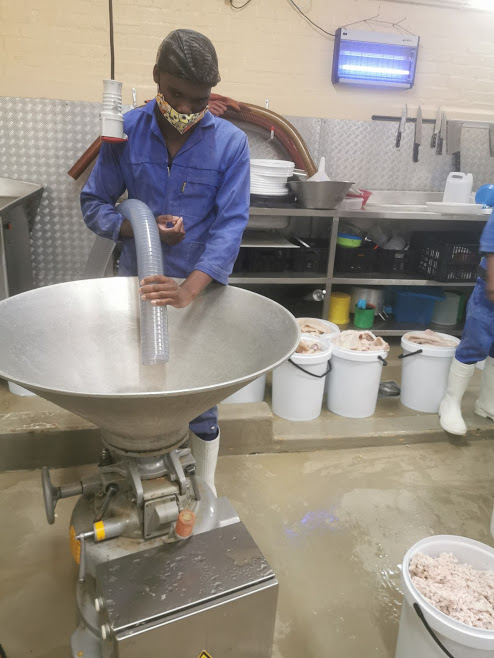
Test, test and when you’ve had enough, test some more!
Develop a way to do rapid testing of various combinations of products in isolation. Test per certain pH, temperature, particle size, etc. Test and test and test some more. Remember to keep careful notes with photos.

Find Solace in the wisdom of the old people.
Often, the greatest food innovations emerge out of an understanding of how things were done hundreds of years ago. This is the basic premise of The Earthworm Express.

List Protein Sources
Make a list of all protein sources, their protein content, fat, fibre and other characteristics. What is the state of the proteins? Denatured? Damaged? Get samples and test.

Don’t Trust Ingredient Comp’s.
Seek advice, but remember that staff from spice companies will tell you whatever they have to tell you to sell their particular product, which may or may not be what you are looking for.

Understand your Equipment
Take the time to understand the different pieces of equipment that purport to fulfil a certain function and compare the results by talking to different production managers who use these equipment pieces. Is smaller better? Heat generated? Damage to proteins?

List binders/ emulsifiers
List all possible binders/emulsifiers/fillers and test. Get samples and test.

Record and photograph everything!
Record everything. Inclusion (dosage), pH, temperature, reaction time, processing steps. Keep meticulous photo records.

Build an international network of trusted friends
Seek out the advice of people you trust when you run into a dead end. I find it best to have such a network of collaborators across the world. Pick the right people’s brains!

There is ONE least cost formulation for every situation.
I have concluded that it is merely a matter of data manipulation to arrive at the one ultimate “least cost” solution for every product, in any particular set of circumstances.

Separate the steps and logically group chemical reactions.
Group chemical reactions together and separate steps to achieve optimal results, thus creating different emulsions to be blended together in the final step.
Develop Rapid Tests’s
Develop rapid test techniques which are quick, inexpensive and accurately mimic processing conditions. Fed up and frustrated with the restrictive and expensive nature of the test kitchen set-up, it was the realisation of how to do this that was my biggest breakthrough.