By Eben van Tonder, 16 February 2026
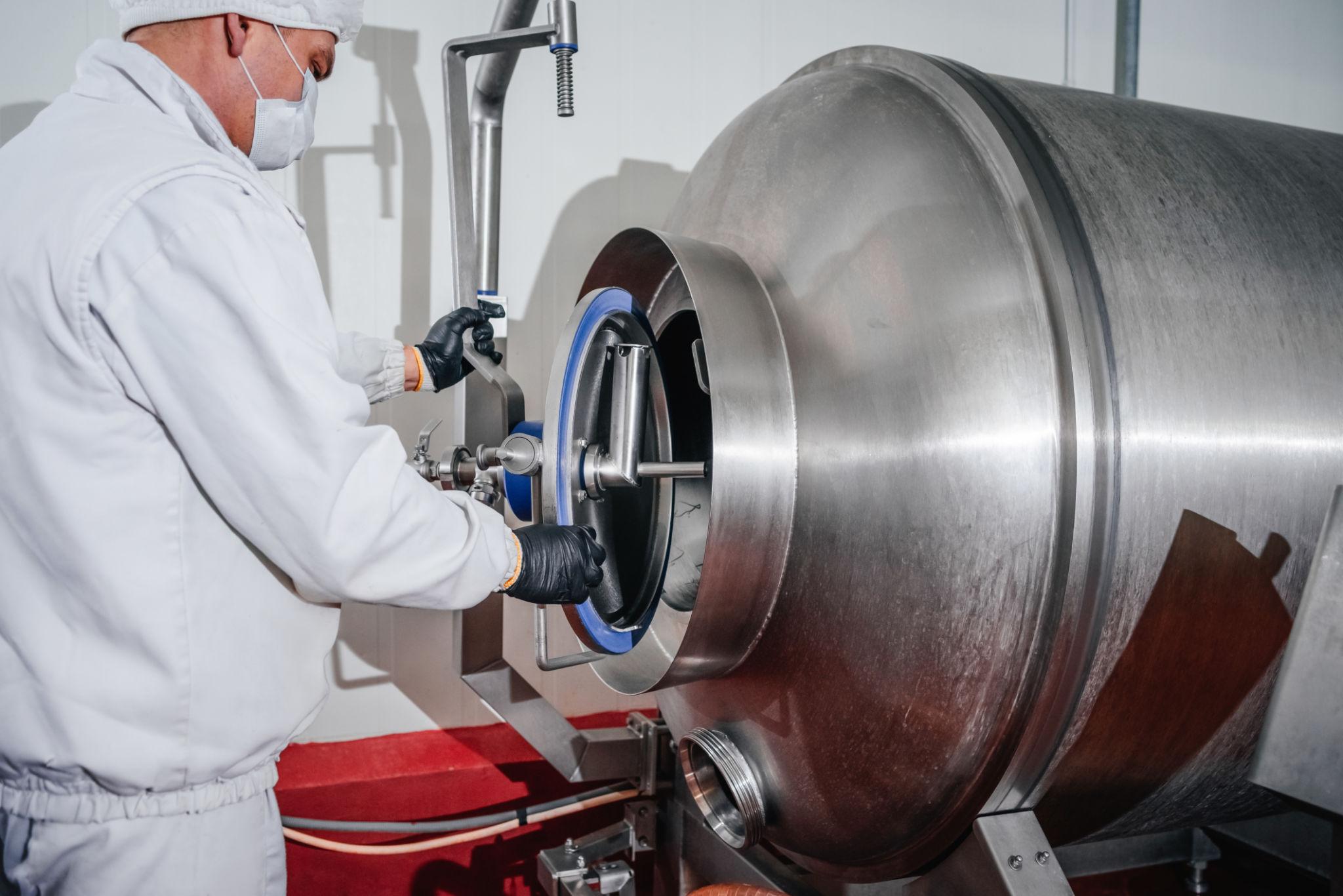
By Eben van Tonder, 16 February 2026
Abstract
This review examines two distinct structural strategies used in restructuring meat products. The first approach reconstructs a muscle-like material by promoting bonding between extracted myofibrillar proteins. Salt-solubilised myosin forms a heat-induced gel, producing a matrix that behaves mechanically like intact muscle tissue. The second approach constructs a structured food matrix using hydrocolloid gelation. In this case, carrageenan, konjac, alginate, methylcellulose, starch or gum systems form a continuous aqueous phase network that immobilises water and traps dispersed meat particles [1, 2, 3, 4].
Both strategies produce sliceable, stable products but differ fundamentally in behaviour. Protein-bound systems retain water through capillary entrapment within a denatured protein gel and display meat-like fracture mechanics. Hydrocolloid-structured systems retain water through polymer network immobilisation and display gel fracture behaviour typical of structured foods. The selection of structural philosophy therefore determines thermal stability, purge behaviour, bite, and product identity [1, 2, 3, 4].
Introduction
Industrial meat restructuring developed from the traditional practice of extracting salt-soluble proteins to bind fragmented muscle into coherent products. Early work in comminuted meats established that stability depended on the formation of a heat-set myofibrillar network capable of entrapping fat and water. Later technological developments introduced alternative binding systems that stabilise structure without relying primarily on a continuous meat protein phase. As a result, modern products that appear similar externally may consist of materially different internal architectures [5, 6, 7].
Two structural frameworks are now encountered in practice. In one, cohesion originates from interactions among meat proteins and their heat-induced aggregation. In the other, cohesion is governed by gel-forming polysaccharides that create a continuous hydrated phase surrounding dispersed meat particles. Both produce cohesive and sliceable products, yet their mechanical response during cooking, storage and consumption follows the properties of the dominant structural phase rather than the ingredient list [1, 2, 5].
This distinction becomes practically evident in products such as South African Russian sausage, also marketed regionally as Zambian Hungarian, and in Austrian Burenwurst. When formulation emphasises protein extraction and meat-derived binding, the sausage behaves as a meat network with particle adhesion and elastic resistance typical of protein gels. When formulation shifts toward carrageenan, starch, alginate or related systems, the same product name corresponds instead to a composite gel in which meat acts as a filler within a hydrated polymer matrix. The external appearance remains familiar while the internal material class changes entirely [5, 6].
Recognising the governing structure is therefore essential for interpreting formulation behaviour. Water retention, cutting resistance, heating response and storage stability arise from the dominant matrix, and ingredient functionality must be understood in relation to that matrix rather than evaluated independently [1, 2, 5].
Structural Frameworks in Restructured Meat Products
Protein-Structured Material
Cohesion in protein-structured products is carried by extracted myofibrillar proteins that form a heat-set protein network. This is the classical mechanism in comminuted sausages and many reformed and tumbled products. Restructuring operations based on cutting, tumbling and massaging rely on salt to extract myofibrillar proteins and create a sticky exudate that binds pieces together [5, 6, 8]. Cuts of meat were historically classified by their binding ability, good binders such as bull meat and cow meat, poor binders such as hearts and fat meat, and fillers such as lips and tripe, and sufficient lean meat of good bind was understood to be essential for the meat paste to hold together during cooking and develop an acceptable level of firmness [9]. This practical understanding predates any formal food science and represents the original protein-binding philosophy in its simplest form.
Transglutaminase as a Later Reinforcement of Protein Binding
Microbial transglutaminase is a later technological development that reinforces protein-structured systems by forming additional covalent ε-(γ-glutamyl)lysine bonds between proteins. It is not the origin of protein binding in meat but a processing aid that strengthens it [10, 11]. Transglutaminases occur naturally in animal tissues and are involved in biological processes including blood coagulation and wound healing [12]. The commercial development of microbial transglutaminase began with isolation from Streptoverticillium mobaraense, offering the advantage of calcium independence compared to mammalian enzymes [11]. Motoki and Seguro [13] demonstrated that microbial transglutaminase could bind meat pieces at refrigeration temperatures without thermal processing, representing an advance over traditional binding methods. Kuraishi et al. [10] defined the enzyme’s broad substrate specificity and its effectiveness in creating stable protein networks under industrial conditions.
Hydrocolloid-Structured Material
Cohesion in hydrocolloid-structured products is carried by a hydrated polymer network where carrageenan, alginate-calcium systems, konjac, starch and gum systems form a continuous aqueous gel phase that immobilises water and traps dispersed meat particles [3, 4, 7]. Hydrocolloids are defined as high-molecular-weight polysaccharides or proteins that form viscous dispersions or gels when dispersed in water. They are widely used as thickening, gelling and stabilising agents in food systems, where they modify viscosity, texture and water-holding behaviour [15]. In meat products specifically, hydrocolloids are documented as improving functional properties, compensating for quality losses, and increasing moisture retention, particularly under reduced fat, reduced salt, or freeze-thaw stress [7, 16].
Historical Development
The Earliest High-Extension Ham: Meat Protein Binding from the Beginning
The history of extended ham is inseparable from the history of meat protein binding. The preserving of pork leg as ham has a long history, with production of cured ham documented among the Etruscan civilisation in the 6th and 5th century BC. Cato the Elder wrote about the salting of hams in his De agri cultura around 160 BC [17]. The wet curing process, which involves pumping curing solution into the meat, developed specifically to increase the weight of the finished product and ensure more even distribution of salt through the muscle [17]. This injection process. the earliest form of ham extension, relied entirely on the capacity of meat proteins to absorb and retain the added brine within the swollen myofibrillar structure [8, 18].
The scientific understanding of why this worked was formalised much later. Hamm’s foundational 1960 review on the biochemistry of meat hydration established that chloride ions bind to myofibrillar proteins, increasing negative charges and electrostatic repulsions between myofilaments, thereby expanding the lattice and creating space for additional water [18]. At the salt levels commonly used in curing, it is primarily the myofibrillar proteins, especially myosin, that act to bind meat pieces and retain injected brine [8]. Phosphates further enhanced this capacity by raising muscle pH, increasing net negative charge, and facilitating protein solubilisation even beyond what salt alone could achieve [8]. The result was a product that could carry significantly more water than the original muscle contained, held entirely within a swollen and subsequently heat-set protein matrix, the first fully realised high-extension ham, achieved entirely through meat protein binding with no hydrocolloid involvement [5, 6, 8, 18].
Tumbling and massaging were later developed as mechanical processes to redistribute extracted proteins to fibre surfaces as a tacky exudate, which then acts as an adhesive bridge between meat pieces upon heating. The intact muscle fibres supply a pre-existing scaffold while extracted protein films lock water within swollen myofibrils and inter-fibre spaces [8]. This mechanism operates successfully even at very high extension levels, provided the adhesive phase remains extracted meat protein and the fibre scaffold remains intact [5, 6].
What is a Hydrocolloid and How Did It Enter Meat Processing
A hydrocolloid is a substance that forms a viscous dispersion or gel when dispersed in water. The term encompasses a wide range of natural polysaccharides and proteins including carrageenan, alginate, konjac, locust bean gum, xanthan, starch and gelatin, all of which share the ability to interact with water molecules through hydrogen bonding and ionic interactions, creating structured networks that immobilise water and modify the texture of food systems [15, 19].
Seaweed has been used as a food source for centuries. Gelatinous extracts of Chondrus crispus, known as Irish moss, were used as food additives from approximately the fifteenth century [19]. Carrageenan was first commercialised as a powder product in the early nineteenth century and was initially introduced as a stabiliser in ice creams and chocolate milk before expanding into pudding, condensed milk and related dairy products in the 1950s [20]. Carrageenan received GRAS status under the US Food Additives Amendment, and its listing among generally recognised as safe substances, alongside phosphates, reflected its long history of food use without documented harmful effects [21].
The entry of hydrocolloids into meat processing followed a specific industrial logic. Poultry processors were concerned about the loss of water during cooking, which reduced their yield per unit weight of product and diminished eating quality. By injecting a brine containing salt, phosphate and carrageenan into the muscle, these problems were addressed: the carrageenan bound free water within the muscle during cooking and improved texture and tenderness, while also enabling processors to carry additional added water that would be retained through heating [22]. Carrageenan has also been used as a fat replacer in processed meat since at least the early 1990s, a function that became relevant as reduced-fat product development expanded [21]. In pâtés and processed meats including ham, carrageenan functions as a substitute for fat, increases water retention, increases volume and improves slicing characteristics [19]. Its introduction into meat was therefore driven not by any inherent superiority of hydrocolloid structuring over protein structuring, but by specific processing problems such as yield loss, fat reduction, compromised protein functionality for which a hydrocolloid gel offered a practical compensation [7, 16, 20, 22].
The Expanded History of Hydrocolloids in Meat
Carrageenans are extracted from red edible seaweeds and are classified into three main commercial types based on their degree of sulfate substitution. Kappa-carrageenan forms strong, rigid gels in the presence of potassium ions. Iota-carrageenan forms softer, more elastic gels in the presence of calcium ions. Lambda-carrageenan does not gel and is used primarily for suspension and viscosity modification [19, 23]. Rees et al. [23] established the structural basis of these differences, showing that kappa-carrageenan forms rigid gels through extensive helix aggregation while iota-carrageenan creates softer gels with limited aggregation.
The understanding of carrageenan gelation mechanisms developed through the latter half of the twentieth century. Du et al. [24] described the process as involving thermoreversible conformational changes where carrageenan chains transition from random coil to double helix structures, followed by aggregation of helices into a three-dimensional gel network. Geonzon et al. [25] demonstrated using multiple particle tracking that kappa-carrageenan forms permanent gel networks that restrict particle motion, confirming the mechanistic basis for its water-immobilising function in food systems.
Kappa and iota are the carrageenan types showing the most benefit in meat applications, performing as water managers and texture modifiers. Lambda shows some benefit for moisture retention but is detrimental to texture and is therefore less used in meat systems [26]. The composition of carrageenan used in meat processing often includes additional components such as potassium chloride, sodium chloride and other hydrocolloids including locust bean gum, guar gum and xanthan, which are added to promote specific functional characteristics [26]. At high ion concentrations typical of meat brines, however, many synergistic interactions that perform well in simpler systems may be subdued by the insulating effect of meat proteins [26].
The application of carrageenan and related hydrocolloids to meat broadened as the industry confronted challenges including fat reduction mandates, sodium reduction targets, raw material variability and the need to extend yields under economic pressure. Bartkuvienė et al. [27] confirmed that kappa-carrageenan significantly increases gel hardness and water-holding capacity in protein systems through electrostatic interactions and hydrogen bonding, though the resulting structure remains fundamentally different from protein-crosslinked systems. Research on polysaccharide hydrocolloids in meat has expanded to include cellulose, chitosan, sodium alginate, pectin and carrageenan, each with documented roles in retarding oxidation, improving texture and colour quality, and acting as cryoprotectants [16].
Structural Mechanisms
Meat Protein Binding
In meat systems, salt and phosphate extraction of myofibrillar proteins provides the substrate for heat-set gel formation. Chloride ions increase negative charges on myofibrillar proteins, causing electrostatic repulsion between myofilaments, expanding the lattice and creating space for additional water [18]. Phosphates act as electrolytes, increase ionic strength, raise muscle pH and further enhance protein solubilisation and water binding [8]. Tumbling redistributes extracted proteins to fibre surfaces as a tacky exudate that binds meat pieces upon heating. The bulk of water in fresh muscle is confined within myofibrils in the spaces between thick myosin and thin actin filaments, and any means that expands these interfilamental spaces increases water binding markedly [18]. Upon heating, the solubilised myosin denatures and forms a continuous gel network that locks water within the protein matrix and bonds meat surfaces together [1, 5, 6].
Hydrocolloid Gel Network Formation
Carrageenan gelation follows a fundamentally different mechanism based on polysaccharide chain interactions rather than protein crosslinking. The process involves thermoreversible conformational changes where carrageenan chains transition from random coil to double helix structures, followed by aggregation of helices to form a three-dimensional gel network [24]. In meat applications, the carrageenan gel network traps meat particles as physical inclusions rather than forming covalent bonds. Water is held within a polysaccharide matrix, and the meat components become embedded particles within a continuous hydrocolloid phase, fundamentally altering the product’s mechanical and sensory properties [3, 4, 7].
Water Addition Limits
Protein-Structured Products
At the salt levels used in meat curing, myofibrillar proteins — especially myosin — are the primary agents binding meat pieces and retaining added water [8]. Peer-reviewed sausage studies commonly operate with added water levels around 20 to 30 percent, with stability dependent on extraction conditions, fat level, chopping temperature and the salt-phosphate regime [5, 6]. At around 30 percent added water in emulsified sausages, a protein-structured system can remain stable if functional myofibrillar protein concentration is sufficient and process control is strong. Beyond that point, dilution pressure increases and the system becomes progressively more reliant on additional structural support or higher functional protein availability [5, 7]. It is not recommended that processors inject hams to 30 or 40 percent of green weight for maximum extension, as pumping over 25 percent of green weight increases cook loss and decreases bind strength [8].
Hydrocolloid-Structured Products and High Extension
Hydrocolloid systems become technically rational when extension targets move beyond what protein extraction can reliably support within practical processing time and available raw material quality [3, 4, 7]. Hydrocolloids reduce the need for long tumbling because they bypass the rate-limiting step — protein migration and organisation — by immobilising water rapidly through polymer network formation [7, 16]. For reformed and tumbled hams, the literature confirms that tumbling and massaging rely on extracted myofibrillar proteins as the primary binder, but hydrocolloids can improve yield and stability where protein functionality is compromised or where extension targets are extreme [5, 7].
Mechanical and Sensory Differences
The two systems differ in fundamental behaviour during cooking, cutting and consumption. The protein-binding system recreates muscle fibre mechanics through heat-set protein gelation, displaying behaviour consistent with muscle tissue: the product shrinks and firms during cooking, displays irregular fracture during slicing, and produces eating characteristics associated with restructured whole muscle products [1, 5, 6].
The hydrocolloid system creates gel mechanics that maintain structural uniformity through polysaccharide network stability. The product displays minimal shrinkage during cooking, produces very smooth and uniform cuts, and behaves as a formed loaf rather than a reconstructed muscle product [3, 4, 7]. Chen et al. [28] directly compared transglutaminase and methylcellulose as binders in plant-based patties and found that while methylcellulose provided superior texture parameters and lower cooking loss, transglutaminase enabled covalent crosslinking that fundamentally altered protein structure through amino acid participation in bond formation. Sorapukdee and Tangwatcharin [29] demonstrated that transglutaminase-restructured steaks maintained quality through freezing cycles, supporting the mechanistic advantage of chemical bonding over physical entrapment in freeze-thaw applications. Research on sensory characterisation has confirmed that when hydrocolloids are used in ham, the final product possesses higher amounts of bound water but a detectably different texture profile compared to whole muscle or protein-bound products [30]. Plant-based products that rely on hydrocolloid structuring generally exhibit lower sensory quality compared to actual meat, reflecting the fundamental difference in material class between a polysaccharide gel matrix and a denatured muscle protein network [30].
Cost Reality: Protein-Bound Systems at Moderate Extension
At moderate extension levels such as a Russian-style sausage with around 30 percent added water a well-run protein-structured system remains stable without requiring hydrocolloids as the primary structural load carrier. In that situation, based on extensive plant-level experience, meat protein-bound systems are considerably cheaper than hydrocolloid-dominated formulations. The cost of hydrocolloid blend systems at functional inclusion levels is high relative to the structural work they perform when added water levels are within the range that a protein matrix can reliably carry. Hydrocolloids become cost-rational at the plant level mainly when they replace something expensive in the process rather than simply in the recipe for example, long tumbling time, throughput constraints, high failure risk due to compromised raw material protein functionality, or extreme extension targets that exceed what the protein phase can reliably support [3, 4, 7]. The peer-reviewed literature supports the functional rationale for each condition under which hydrocolloids are justified, but does not provide universal cost models. The cost assessment stated here reflects plant-level operational reality rather than a claim derived from published formulation studies.
Advantages and Limitations
Protein-Structured Systems
Protein-structured systems provide meat-like fracture behaviour and cooking response because the load-bearing phase is denatured meat protein and fibre scaffold [5, 6]. They deliver robust product identity for whole muscle products, cooked chicken-style products, ribs, bacon, and roasted products where muscle behaviour during cooking is expected. The primary limitation is that extension becomes dilution-limited as added water rises, requiring longer mechanical processing, higher functional protein availability, or supplementary structure. These systems are also sensitive to raw material variability that reduces functional protein extraction, such as pale soft exudative conditions or freeze-thaw damage to cellular integrity [5, 6].
Hydrocolloid-Structured Systems
Hydrocolloid systems offer higher water immobilisation capacity because the continuous phase can be a polysaccharide gel rather than a protein gel, and can reach stability in shorter process times because polymer gelation can substitute for prolonged protein redistribution [3, 4, 7]. They are particularly useful where protein functionality is compromised. The primary limitations are that texture shifts toward gel fracture behaviour. Multiple sausage studies report increased hardness at higher carrageenan inclusion levels [27] and that performance depends on gel integrity being maintained during heating and storage. At moderate extension levels, they add formulation cost without structural necessity when a protein-bound system would perform reliably. And critically, no hydrocolloid system can replicate the taste and texture of meat. The eating experience of a protein-bound product, governed by denatured muscle fibre mechanics and native meat flavour, is materially different from that of a polysaccharide gel matrix in which meat acts as a dispersed filler [1, 5, 6, 30].
Implications for Product Development
Understanding these fundamental structural philosophies is critical because the choice of structural framework determines all subsequent ingredient functionality. In protein-binding systems, hydrocolloids serve only as moisture stabilisers and are not structural components. Removing them does not collapse the product structure, as mechanical integrity derives from the heat-set protein network [5, 6]. Conversely, in hydrocolloid gel systems, protein binders become optional. The structural integrity depends entirely on the polysaccharide gel network, and protein components function primarily as textural modifiers or nutritional contributors rather than structural elements [3, 4, 7].
This understanding explains why formulation approaches that attempt to combine both philosophies at full functional levels often create over-structured products that sacrifice the intended product identity. A bacon product utilising both maximum transglutaminase crosslinking and functional hydrocolloid gel formation risks producing a processed gel texture that no longer resembles bacon characteristics [10, 13, 28]. The choice of structural philosophy also governs processing parameters: protein-binding systems require specific temperature and time protocols for protein redistribution and enzyme activity where transglutaminase is used, while hydrocolloid systems depend on thermal cycling for gel formation and setting [3, 10, 13].
Conclusion
The restructured meat industry operates with two fundamentally different structural philosophies representing distinct approaches to product development rather than alternative ingredient selections. Meat protein binding — the original and historically primary approach — creates reconstructed muscle tissue through heat-set myofibrillar gelation, maintaining meat-like mechanical behaviour and sensory characteristics [1, 5, 6, 8, 18]. Hydrocolloid gel systems create structured food materials that achieve stability through polysaccharide networks while fundamentally altering the internal material class of the product [3, 4, 7, 16].
The protein-binding approach has a history that reaches from the earliest cured and injected hams, through the formalisation of bind constants and myofibrillar protein science in the twentieth century, to the later reinforcement of that binding through microbial transglutaminase. Hydrocolloid systems entered meat processing not as a superior alternative but as a practical compensation for specific processing constraints — yield loss, fat reduction, compromised raw material functionality, and extreme extension targets — and their use remains bounded by those conditions [7, 16, 20, 22].
These approaches differ not only in structural mechanism but in thermal behaviour, water retention method, textural properties, product cost at moderate extension, and ultimate product identity. No polysaccharide gel system can replicate the taste and texture of a product whose structure is governed by denatured meat protein and intact muscle fibre. Recognition of these distinctions enables more targeted product development: selecting the structural philosophy that matches the desired product outcome, rather than treating binding agents as interchangeable functional ingredients [1, 5, 6, 30].
References
[1] Tornberg, E. (2005). Effects of heat on meat proteins — implications on structure and quality of meat products. Meat Science, 70(3), 493-508.
[2] Xiong, Y.L. (2014). Myofibrillar protein from different muscle fiber types: implications of biochemical and functional properties in meat processing. Annual Review of Food Science and Technology, 5, 405-422.
[3] Imeson, A. (Ed.). (2010). Food Stabilisers, Thickeners and Gelling Agents. Wiley-Blackwell.
[4] Phillips, G.O., Williams, P.A. (Eds.). (2021). Handbook of Hydrocolloids. Third Edition. Woodhead Publishing.
[5] Aberle, E.D., Forrest, J.C., Gerrard, D.E., Mills, E.W. (2012). Principles of Meat Science. Fifth Edition. Kendall Hunt Publishing.
[6] Feiner, G. (2006). Meat Products Handbook: Practical Science and Technology. Woodhead Publishing.
[7] Ramírez, J.A., Uresti, R.M., Velazquez, G., Vázquez, M. (2011). Food hydrocolloids as additives to improve the mechanical and functional properties of fish products: a review. Food Hydrocolloids, 25(8), 1842-1852.
[8] Ohio State University Meat Science Extension. Sectioned and Formed Meat Products. Available at: https://meatsci.osu.edu/node/95
[9] Labudde, R.A., Lanier, T.C. (1995). Bind and its measurement. Cited in: van Tonder, E. Protein functionality, the bind index and the early history of meat extenders in America. Earthworm Express, April 2020.
[10] Kuraishi, C., Yamazaki, K., Susa, Y. (2001). Transglutaminase: its utilization in the food industry. Food Reviews International, 17(2), 221-246.
[11] Kieliszek, M., Misiewicz, A. (2013). Microbial transglutaminase and its application in the food industry. A review. Folia Microbiologica, 59(3), 241-250.
[12] Aeschlimann, D., Paulsson, M. (1994). Transglutaminases: protein cross-linking enzymes in tissues and body fluids. Thrombosis and Haemostasis, 71(4), 402-415.
[13] Motoki, M., Seguro, K. (1998). Transglutaminase and its use for food processing. Trends in Food Science and Technology, 9(5), 204-210.
[14] Yokoyama, K., Nio, N., Kikuchi, Y. (2004). Properties and applications of microbial transglutaminase. Applied Microbiology and Biotechnology, 64(4), 447-454.
[15] Saha, D., Bhattacharya, S. (2010). Hydrocolloids as thickening and gelling agents in food: a critical review. Journal of Food Science and Technology, 47(6), 587-597.
[16] Xie, Y., Yan, M., Yuan, S., Sun, S., Huo, Q. (2024). The beneficial role of polysaccharide hydrocolloids in meat products: a review. Foods, 13(2), 249.
[17] Wikipedia. Ham. Available at: https://en.wikipedia.org/wiki/Ham
[18] Hamm, R. (1960). Biochemistry of meat hydration. Advances in Food Research, 10, 355-463.
[19] Wikipedia. Carrageenan. Available at: https://en.wikipedia.org/wiki/Carrageenan
[20] Pacheco-Aguilar, R. et al. (2023). Current and emerging applications of carrageenan in the food industry. Food Research International, 173, 113429.
[21] United States Department of Agriculture Food Safety and Inspection Service. Additives in Meat and Poultry Products. Available at: https://www.fsis.usda.gov/food-safety/safe-food-handling-and-preparation/food-safety-basics/additives-meat-and-poultry
[22] Food and Agriculture Organization of the United Nations. Carrageenan. In: A Guide to Seaweed Industry. FAO Fisheries Technical Paper 441. Available at: https://www.fao.org/4/y4765e/y4765e0a.htm
[23] Rees, D.A., Steele, I.W., Williamson, F.B. (1969). Conformational analysis of polysaccharides. III. The relation between stereochemistry and function in the κ- and ι-carrageenans. Journal of Polymer Science Part C: Polymer Symposia, 28(1), 261-276.
[24] Du, L., Brenner, T., Xie, J., Matsukawa, S., Nishinari, K. (2016). A study on phase separation behaviour in kappa/iota carrageenan mixtures by micro DSC, rheological measurements and simulating water and cation migration between phases. Food Hydrocolloids, 55, 81-88.
[25] Geonzon, L.C., Bacabac, R.G., Matsukawa, S. (2019). Network structure and gelation mechanism of kappa and iota carrageenan elucidated by multiple particle tracking. Food Hydrocolloids, 92, 173-180.
[26] Chemical Book. Carrageenan — Application in Meat Products. Available at: https://www.chemicalbook.com/article/carrageenan-application-in-meat-products.htm
[27] Bartkuvienė, I., Keršienė, M., Petrikaitė, V., Leskauskaitė, D. (2024). Modulation of pea protein isolate hydrogels by adding kappa-carrageenan: gelling properties and formation mechanism. International Journal of Food Science and Technology, 59(9), 6598-6610.
[28] Chen, G., Lan, Y., Wang, L., Zhang, Y., Wang, Q. (2023). Effect of transglutaminase-catalyzed crosslinking behaviour on the quality characteristics of plant-based burger patties: a comparative study with methylcellulose. Food Chemistry, 408, 135227.
[29] Sorapukdee, S., Tangwatcharin, P. (2018). Quality of steak restructured from beef trimmings containing microbial transglutaminase and impacted by freezing and grading by fat level. Asian-Australasian Journal of Animal Sciences, 31(1), 129-137.
[30] Melios, C., Grasso, S., Bolton, D., Crofton, E. (2024). Sensory characterisation of meatless and nitrite-free cooked ham alternatives in comparison to conventional counterparts. Food Research International, 190, 114590.