By Eben van Tonder and Christa van Tonder-Berger, 4 August 2026
1. Introduction
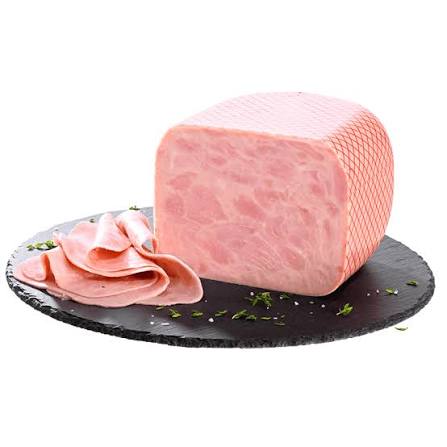
Pressed ham, reformed bacon, whole muscle cooked ham, cooked spare ribs, injected chicken pieces, hamburger patties and emulsified sausage all depend on the same underlying mechanism to hold meat pieces together and bind water. Salt and phosphate pull myosin out of the muscle fibre so it can form a protein gel on cooking. That gel is what binds separate pieces of meat to each other in pressed ham and reformed bacon. It is what holds injected water inside whole muscle ham, spare ribs and chicken. It is what holds a hamburger patty or a sausage batter together, even though neither has any natural connective structure of its own. The product changes from one case to the next. The underlying mechanism does not.
Two phosphates do the work in meat: tetrasodium diphosphate and pentasodium triphosphate. They perform related but distinct functions, and combining them gives a wider working window than either salt used alone. We develop this thought in this article and combine it with salt, the two workhorse ingredients that form the basis of meat processing. Salt and phosphate alter the interaction between actin and myosin, increase myofibrillar protein extraction and improve water retention. This article explains why the phosphate combination works, how to mix and use it on the production floor, what the science and patent history behind it actually show, where phosphate is and is not permitted, and how salt and phosphate compare with hydrocolloids as a way of holding water in meat.
2. The Two Phosphates and Why They Are Combined
STPP alone works. It is the phosphate most suppliers sell, and used on its own it extracts protein and holds water reasonably well. The reason to add tetrasodium pyrophosphate alongside it is timing.
STPP does not act on muscle protein directly. Meat enzymes have to break it down into pyrophosphate first, and that breakdown takes time, so a batch dosed with STPP alone is still building up to full activity through the first part of processing [1, 2]. Tetrasodium pyrophosphate is already in the active form. It starts weakening the bond between actin and myosin from the moment it dissolves into the meat, with no wait for enzymes to convert it [3].
Combine the two and you get both effects. Pyrophosphate does the early work while the STPP is still converting, and the STPP keeps working through the rest of mixing, tumbling and resting as it breaks down. The result is a phosphate blend that is active earlier and stays active longer than STPP on its own, for a small addition to ingredient cost. That is the entire case for using both salts rather than one.
Here are three examples. When paddle mixing meat that was put through a kidney plate, tack develops sooner in the mix cycle, because pyrophosphate is extracting protein from the first turn of the paddle rather than waiting for STPP to convert. When tumbling whole muscle hams before moulding, the same early action means more of the extraction needed for a good mould set and clean slice bind happens within your existing tumble time, instead of loading into the last part of the cycle as STPP alone tends to do. In injected bacon, extraction continues through the rest and equilibration period as the STPP keeps converting, so more of the injected brine is bound into the muscle protein by the time the product reaches the smokehouse or oven, which shows up later as less purge and better retained yield. None of this changes your dose. It changes how much of the extraction you get within whatever mix, tumble or rest time you already run.
Combining and Using the Two Phosphates in Practice
Let’s get practical. Two phosphates are important, and here is how you handle them in practice.
- Buy tetrasodium pyrophosphate and STPP separately as food grade dry powders, then blend them yourself. A starting ratio of roughly two parts pyrophosphate to one part STPP matches the historical Buchholz blends described above. Treat this as a trial starting point, not a fixed rule, and adjust it against your own results.
- Blend the two phosphates first, then weigh the blend into the batch at your target total inclusion, typically 0.2 to 0.5 percent of batch weight depending on the product (see the table further down). Do not weigh them separately.
- Dissolve the blend completely in cold water before it touches the meat. Pyrophosphate dissolves more slowly than STPP, and undissolved particles cause local protein coagulation and white streaking. Stir until the solution is clear.
- Add the dissolved phosphate together with the salt at the start of mixing, tumbling or brine preparation, not during it.
- For injected products, dissolve the blend in the injection brine at the strength needed to achieve target dose per kilogram of the finished, pumped product.
- For comminuted products in a bowl cutter, add the phosphate and salt to the lean meat first and cut before adding ice. This is the standard bowl cutting sequence in emulsified sausage manufacture: the blade extracts myofibrillar protein efficiently when it is cutting soft, cold meat, and much less efficiently once it starts striking ice chips, which blunt the cut and interrupt extraction. Add the ice progressively once extraction is underway, using it to control batter temperature as cutting continues, and keep the batter below approximately 12°C by the end of the cut.
3. Early Scientific Studies, Patents and the Muscle Biochemistry Behind Them
How did the use of phosphates in meat actually come about? The trail starts with basic muscle biochemistry in Hungary, runs through a Bavarian meat research institute founded just before the war, and threads through a parallel run of patents filed in the United States and Germany.
In 1942, Bruno Straub, working in Albert Szent-Györgyi’s laboratory in Szeged, Hungary, isolated the protein later named actin [4]. Szent-Györgyi’s group then showed that ATP alters the viscosity, precipitation and contractile behaviour of actomyosin, including the phenomenon later termed superprecipitation [5]. In resting living muscle, actin and myosin stay organised within interdigitating thin and thick filaments rather than existing as dissolved, separate proteins. ATP binding detaches the myosin head from actin, ATP hydrolysis primes the head for another cycle, and the subsequent release of inorganic phosphate triggers strong actin binding and the power stroke, followed by release of ADP [6]. ATP is the substrate of myosin ATPase and drives this cross bridge cycle. Sarcomeric filament architecture survives death, but the controlled, ATP supported cross bridge cycle does not, and actin and myosin become strongly associated during rigor mortis because depleted ATP can no longer detach the myosin heads. Pyrophosphate weakens that association, particularly with the ionic strength that salt provides, and promotes myosin extraction, but it does not reproduce ATP driven contraction. This Hungarian biochemistry came years before anyone applied a condensed phosphate to meat, and the link between the two is mechanistic, not a documented case of one group learning from the other.
The German institute at Kulmbach, Bavaria began in 1938 in Berlin as the Reichsanstalt für Fleischwirtschaft, with increased meat production and the prevention of spoilage among its founding objectives [7]. It relocated to Kulmbach in 1944 and ceased formal operation at the end of the war. George O. Hall filed United States Patent 2,513,094 in June 1945, describing molecularly dehydrated phosphates, including sodium tripolyphosphate, primarily for colour stability in cured meat, with acceptable taste and water binding also reported [8]. Three former directors restarted the Kulmbach institute privately during 1945 and 1946 as the Bakteriologisch chemisches Institut Kulmbach [7, 10]. Karl Buchholz, working for the chemical company Joh. A. Benckiser GmbH in Ludwigshafen am Rhein, described explicit mixtures of tetrasodium pyrophosphate and sodium tripolyphosphate in a patent claiming German priority from October 1948 [9], describing improved binding, water retention, storage properties and flavour.
The federal government took the Kulmbach institute over in 1950 and renamed it Bundesanstalt für Fleischforschung in 1960. It is now incorporated into the Max Rubner Institut. Grau, Hamm and Baumann, working at this institute, published on the water binding capacity of mammalian muscle and the influence of pH on water binding of ground beef in 1953 [11]. Hamm and Grau followed in 1955 with a paper on the effect of phosphates on the bound water of meat [12]. Bendall published on the swelling effect of polyphosphates on lean meat in Britain in 1954 [13]. Swift and Ellis studied water retention in phosphate treated ground meat in the United States in 1956 [14]. Robert J. Oliver and Marvin M. Voegeli patented phosphate curing mixtures addressing the low temperature solubility of disodium phosphate and sodium tripolyphosphate in curing solutions, filed in 1959 [15]. Hamm continued his own work and published his major review, Biochemistry of Meat Hydration, in 1960 [16]. Hellendoorn published comparable Dutch work in 1962 [17].
4. Phosphates Before Meat: Fruit, Vegetables and the Early Trade
Phosphates entered German food processing before they entered meat, through the fruit and vegetable preservation trade of the 1930s and 1940s. In that trade they buffered pH, sequestered the iron and copper traces that cause browning and rancidity, and firmed pectin gels through calcium phosphate cross linking in canned fruit. Kurt van Hees, whose firm later became a major supplier of meat phosphate systems, began his career in that trade before moving into meat, applying the same buffering and water binding chemistry to a new substrate once the actomyosin extraction mechanism was understood [18]. Bone, manure and guano were separately used as agricultural sources of phosphorus, and industrial treatment of bone and phosphate rock produced soluble phosphate fertilisers during the nineteenth century, a different chemical and historical thread from the food grade trade that fed into meat [19].
5. Natural Phosphorus Compounds and Industrial Raw Materials
Tetrasodium diphosphate and pentasodium triphosphate are condensed phosphates. This means each molecule joins two or more phosphorus atoms through a shared oxygen, unlike a simple orthophosphate, which has a single phosphorus atom. Both are manufactured industrially rather than found in this form in nature. Their industrial phosphorus source is phosphate rock, in which apatite group minerals form the principal mineral component [20]. Bone mineral is a related but distinct material, a substituted, poorly crystalline apatite commonly described as carbonated hydroxyapatite, set within bone’s organic matrix and water [21]. Within living muscle tissue, ATP is a naturally occurring organic triphosphate, ubiquitous in living cells and central to cellular energy transfer. None of these natural materials is chemically identical to the manufactured salts used in meat processing, though all belong to the same broader phosphorus chemistry.
6. Salt and Phosphate Inclusion by Product
Before the table of formulation ranges, it helps to know where phosphate is legally allowed at all, since that governs which of the ranges below you can actually use.
Where Phosphate Is Allowed, and How Much
- European Union: the combined phosphate group is generally permitted in heat treated and non heat treated meat products at 5,000 milligrams per kilogram, expressed as P2O5, with a small number of named exclusions [22]. In raw meat preparations, phosphate is authorised only in specific named products, not as a general permission.
- United States: FSIS limits all approved phosphates in meat and poultry products to 5,000 parts per million [23].
- Codex Alimentarius: the General Standard for Food Additives sets category specific maximum levels for the phosphate group in meat categories. Check the current GSFA database for the figure that applies to your export market, since the limit and its basis of expression vary by category [24].
- South Africa and other markets: confirm your own national additive regulation before use. A product’s classification, for example as boerewors or braaiwors, does not by itself authorise a specific additive [25].
The ranges reflect the different structural requirements of the products. Mechanism explains the differences between the systems, but it does not determine the exact inclusion level by itself. Assembled products depend on extracted myofibrillar protein at the surfaces between meat pieces. Emulsified products require the extracted protein to stabilise both water and dispersed fat. Intact injected products do not require adhesion between separate muscles, although ionic strength, protein condition, injection level and cooking still determine yield and texture. Fresh sausages develop conventional bind through meat protein, salt, particle reduction and mixing.
In this table, salt means the total sodium chloride introduced through all formulation components, calculated against the stated batch basis. Phosphate blend as weighed means the commercial phosphate preparation as weighed, not its P2O5 equivalent. For comminuted products, calculate percentages against the total uncooked batch. For injected products, calculate them against the total green product weight after brine addition and before cooking.
The ranges are practical formulation starting points. They are not literature based limits.
| Product | Salt, NaCl | Phosphate blend as weighed | Notes |
|---|---|---|---|
| ASSEMBLED, PRESSED AND FORMED WHOLE MUSCLE PRODUCTS | |||
| Pressschinken | 1.8 to 2.5% | 0.3 to 0.4% | Substantial myofibrillar protein extraction produces slice bind between muscle pieces. |
| Sandwichschinken | 1.6 to 2.0% | 0.3 to 0.5% | Higher finished moisture target than pressed ham, softer bite. |
| INTACT CURED WHOLE MUSCLE PRODUCTS | |||
| Gammons | 1.8 to 2.5% | 0.3 to 0.4% | Curing, water retention, protein swelling, yield and texture govern an intact bone in or boneless gammon. An assembled gammon needs the same interfacial bind as pressed ham. |
| INJECTED UNASSEMBLED PIECES, COOKED WHOLE | |||
| Chicken pieces, injection before cooking | 0.4 to 0.6% | 0.2 to 0.4% | A low salt trial range. Pump percentage, native sodium, phosphate type, pH, protein quality, distribution, equilibration and cooking loss determine the outcome at this level. |
| Marinated cooked pork ribs | 1.0 to 1.5% | 0.2 to 0.4% | Validate salt reduction against the finished product’s safety and shelf life, rather than relying on potassium lactate alone. Sugar at normal sensory levels does not lower water activity enough to serve as the antimicrobial hurdle by itself. |
| GROUND AND EMULSIFIED PRODUCTS | |||
| Hamburger patties | 0.8 to 1.2% | 0.2 to 0.3% | Salt and phosphate affect the entire comminuted matrix, not merely the surface. Phosphate permission for burger type products is restricted under EU law. Confirm local rules before use. |
| Bologna type emulsified products | 2.0 to 2.5% | 0.3 to 0.5% | Salt extracts myosin to stabilise the fat and water binding matrix. Excludes protected Mortadella Bologna PGI, whose specification prohibits polyphosphates. |
| South African Russians and Viennas | 1.8 to 2.2% | 0.3 to 0.5% | Finely comminuted emulsified versions follow the same functional logic as bologna type products, normally filled into a smaller calibre. |
| FRESH, UNCOOKED SAUSAGE | |||
| Boerewors | 1.5 to 1.8% | No phosphate required for bind. Confirm additive authorisation before use. | Meat protein, salt, particle reduction and mixing produce conventional bind. |
| Braaiwors | 1.5 to 1.8% | No phosphate required for bind. Confirm additive authorisation before use. | A broader category, regulated separately from boerewors in South Africa under regulation 5, subsections 7 and 12. The same bind principle applies. |
If you trial phosphate in boerewors or braaiwors once additive authorisation is confirmed, 0.2 to 0.3 percent is a common practical starting rate. The Mortadella Bologna PGI specification excludes polyphosphates entirely [26].
7. Hydrocolloids, Salt and Phosphate
Where do hydrocolloids actually show up in meat processing? Carrageenan appears in cooked ham and ham brine systems, holding injected water in the spaces between muscle fibres. Alginate is used in restructured and formed meat products, binding pieces together cold without cooking. Modified starches and gums appear widely in emulsified sausage and in cheaper injected products, adding viscosity and cooking yield. Konjac shows up in some formed and low fat products for its gel strength. These are not fringe ingredients. In several categories they have become standard.
If salt and phosphate are what actually extract protein and hold water in meat, as this article argues, how should you weigh a functional pack that leans heavily on hydrocolloids instead?
First, understand that salt and phosphate on one side, and hydrocolloids on the other, are two entirely different systems for binding and managing water in meat. They sit at opposite ends of the spectrum. One works with the muscle’s own protein. The other is a plant or seaweed derived gel former added from outside the meat.
I prefer the first system, for three reasons. It is natural, built from the meat’s own protein rather than an added gum. It gives the better result from a taste and texture standpoint, since a protein bound gel bites and tastes like meat, where a hydrocolloid gel bites and tastes like a gel. And it aligns with the chemistry already present in a cured formulation, since salt and phosphate are doing other jobs anyway, cure, pH, flavour, rather than being single purpose additions. Then there is price.
Salt and phosphate solubilise myofibrillar protein. Hydrocolloids do not perform this function. They may instead immobilise water, increase viscosity, form gels and improve cooking yield. Glorieux and colleagues examined phosphate type and dosage in emulsified meat products [27]. Goemaere and colleagues examined protein ingredients as partial substitutes during phosphate elimination [28]. Neither study evaluates carrageenan as a direct replacement for the complete salt and phosphate system.
As a working generalisation, and one that simplifies a genuinely more complicated picture with exceptions in specific products, hydrocolloids are frequently oversold in the meat trade as a substitute for real myofibrillar protein extraction, when what they actually deliver is a different and weaker form of water holding at a materially higher ingredient cost. This is a practical judgement from formulation experience, not a peer reviewed finding.
Part of this is a straightforward commercial dynamic rather than a technical one. Salt and phosphate are inexpensive commodity ingredients, so a functional blend built mainly around them leaves a supplier little room to charge a premium. A functional pack built around a hydrocolloid instead lets a supplier justify a higher price, since the ingredient costs more and seems to be more sophisticated on a specification sheet. This pricing pattern follows from ordinary supplier behaviour and needs no published study to establish. It does not mean hydrocolloids have no place in meat processing, only that their functional case is often overstated relative to their cost.
Animal plasma is a separate and effective binding agent, and Van Hees is among the suppliers who specialise in it. Its practical limitation is regulatory rather than functional. Plasma is subject to strict biosecurity and import controls in most jurisdictions. South Africa is a useful example of a market where plasma import approval is difficult to obtain, which restricts its use regardless of its technical performance.
A fair economic comparison needs current supplier prices and trials in the intended product, measuring ingredient cost, cooking yield, purge, freeze stability, slice integrity and sensory texture. Hydrocolloids and phosphates hold water through different mechanisms, so their relative value depends on the product, the formulation and the processing conditions.
8. Conclusion
Use both phosphates together, not STPP alone, because pyrophosphate is active immediately and STPP keeps working as it breaks down, giving a wider window of protein extraction for a small extra cost. Blend them yourself, dissolve them fully before they meet the meat, and add them with the salt from the start of processing. Salt and phosphate remain the cheaper and more effective route to real water binding in meat. Hydrocolloids and plasma both have a place, but hydrocolloids are frequently oversold relative to what they deliver, and plasma’s main obstacle is import regulation rather than performance. Check the additive regulation that applies in your own market and product before finalising any formulation.
References
- Hamm, R., Neraal, R. 1977. Über den enzymatischen Abbau von Tripolyphosphat und Diphosphat in zerkleinertem Fleisch. IV. Änderung der Tripolyphosphatase Aktivität im Muskel post mortem. Zeitschrift für Lebensmittel Untersuchung und Forschung 163, 126 to 127.
- Yamazaki, M., Shen, Q.W., Swartz, D.R. 2010. Tripolyphosphate hydrolysis by bovine fast and slow myosin subfragment 1 isoforms. Meat Science 85, 446 to 452.
- Shen, Q.W., Swartz, D.R. 2010. Influence of salt and pyrophosphate on bovine fast and slow myosin S1 dissociation from actin. Meat Science 84, 364 to 370.
- Straub, F.B. 1942. Actin. In Szent-Györgyi, A., editor. Studies from the Institute of Medical Chemistry, University of Szeged, volume II, 3 to 15.
- Szent-Györgyi, A. 1951. Chemistry of Muscular Contraction, second edition. Academic Press, New York.
- Gordon, A.M., Homsher, E., Regnier, M. 2000. Regulation of contraction in striated muscle. Physiological Reviews 80, 853 to 924.
- Max Rubner-Institut, Bundesforschungsinstitut für Ernährung und Lebensmittel. Historie der Bundesanstalt für Fleischforschung, Kulmbach. Institutional history page, undated. mri.bund.de.
- Hall, G.O. 1950 (filed 15 June 1945). Curing of meat to inhibit undesirable color change. United States Patent 2,513,094, assigned to Hall Laboratories, Inc.
- Buchholz, K. 1962 (filed 18 May 1955, priority 1 October 1948). Binding agents for meat. United States Patent 3,032,421, assigned to Joh. A. Benckiser GmbH, Ludwigshafen am Rhein.
- Welling, M. 2000. Die BAFF feiert. 50 Jahre im Bundesdienst und ein neues Outfit. Informationsdienst Wissenschaft, 30 March 2000.
- Grau, R., Hamm, R., Baumann, A. 1953. Über das Wasserbindungsvermögen des toten Säugetiermuskels. I. Der Einfluss des pH-Wertes auf die Wasserbindung von zerkleinertem Rindermuskel. Biochemische Zeitschrift 325, 1 to 11.
- Hamm, R., Grau, R. 1955. Über die Wirkung von Phosphaten auf die Wasserbindung des Fleisches. Deutsche Lebensmittel-Rundschau 51, 106 to 111.
- Bendall, J.R. 1954. The swelling effect of polyphosphates on lean meat. Journal of the Science of Food and Agriculture 5, 468 to 475.
- Swift, C.E., Ellis, R. 1956. The action of phosphates in sausage products. Factors affecting the water retention of phosphate treated ground meat. Food Technology 10, 546 to 552.
- Oliver, R.J., Voegeli, M.M. 1962 (filed 30 April 1959). Phosphate mixtures for curing meats. United States Patent 3,028,246, assigned to Swift and Company, Chicago.
- Hamm, R. 1960. Biochemistry of meat hydration. Advances in Food Research 10, 355 to 463.
- Hellendoorn, E.W. 1962. Water-binding capacity of meat as affected by phosphates. Influence of sodium chloride and phosphates on the water retention of comminuted meat at various pH values. Food Technology 16, 119 to 124.
- Van Tonder, E. Kurt van Hees and the Chemistry of German Meat Processing. EarthwormExpress, earthwormexpress.com.
- Mikkelsen, R. 2019. Sources of phosphorus for plants. Past, present, and future. Better Crops 103, number 1, 17 to 21.
- Jasinski, S.M. 2013. Mineral resource of the month. Phosphate rock. Earth, December 2013. United States Geological Survey.
- Stock, S.R. 2015. The mineral collagen interface in bone. Calcified Tissue International 97, 262 to 280.
- Regulation (EC) No 1333/2008 of the European Parliament and of the Council, Annex II, food additive provisions for phosphates. Consolidated text dated 18 February 2026, categories 08.2, 08.3.1 and 08.3.2.
- United States Department of Agriculture, Food Safety and Inspection Service. Ingredients Handbook, FSIS Directive 7620.3. Phosphates limited to 5,000 ppm in the Tables of Approved Substances for meat and poultry.
- Codex Alimentarius Commission. General Standard for Food Additives, GSFA Online database, food categories 08.2 and 08.3. FAO/WHO.
- Republic of South Africa. 2022. Regulations regarding the classification, packing and marking of certain raw processed meat products intended for sale in the Republic of South Africa. Government Notice 2410, Government Gazette 46789, 26 August 2022. Document number not independently verified against the Government Gazette by the authors.
- European Commission. 2022. Publication of the amended single document, Mortadella Bologna, EU No PGI IT 0325 AM02. Official Journal of the European Union C 225, 9 June 2022, 10 to 13. Citation details not independently verified against the Official Journal by the authors.
- Glorieux, S., Goemaere, O., Steen, L., Fraeye, I. 2017. Phosphate reduction in emulsified meat products. Impact of phosphate type and dosage on quality characteristics. Food Technology and Biotechnology 55, 390 to 397.
- Goemaere, O., Glorieux, S., Govaert, M., Steen, L., Fraeye, I. 2021. Phosphate elimination in emulsified meat products. Impact of protein based ingredients on quality characteristics. Foods 10, 882.