
Introduction to Bacon & the Art of Living
The story of bacon is set in the late 1800s and early 1900s when most of the important developments in bacon took place. The plotline takes place in the 2000s with each character referring to a real person and actual events. The theme is a kind of “steampunk” where modern mannerisms, speech, clothes and practices are superimposed on a historical setting. Modern people interact with old historical figures with all the historical and cultural bias that goes with this.
narrative – the history of bacon
The UK Letters
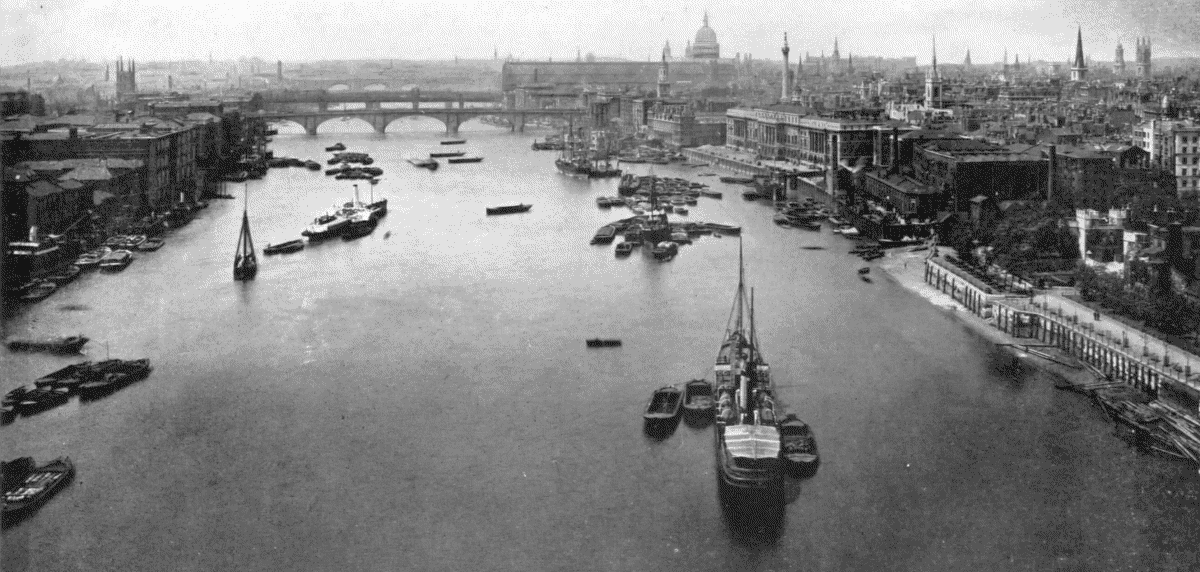
My Danish experience came to an end when I boarded a steamer en route to London. Andreas, his mom and dad, and Uncle Jeppe all joined us at the harbour in Copenhagen for an emotional farewell. In the year I spent in Denmark, I made giant leaps toward understanding the art of curing the best bacon on earth.
It was my first experience living in a completely different culture for such a long time. Well, it’s of course not a completely different culture, but it’s different enough from the Cape culture for me to notice a few interesting things. The concepts of our culture exist only in our mind, and these were expanded when I realised that our entire experience of reality is a product of our brains. Denmark exposed me to two sets of systems. The one set is that which we design in our minds. Oake’s mild curing process and Phil Armour’s disassembly lines are brilliant modern examples of this where work is a metaphysical concept where processes are designed to maximise an outcome. In this way, we can say that one process is better than the other if we judge it based on the energy input and the sum of the output. We can judge the feedback loops by the effectiveness whereby the system adapts to changes.
On the other hand, there is the construction of macromolecules like proteins which was achieved through forces of nature. In the nitrogen cycle, bacteria convert atmospheric nitrogen into forms that plants can use. Plants take up nitrogen from the soil, and it passes to animals through their food. Judged in this way, we can say that chemical reactions, bacteria, and our digestive system transform chemical compounds into forms that are useful for further processes. Like the concept of work that we toy with within our minds, a basic premise of all natural processes is that very complex structures and systems exist, predicated upon many very small and simple processes. The most complex system of nature is the total of many simple systems in such a way that the complete process becomes bigger than the sum of all the small reactions.
A new concept started forming in my mind. Very tentatively so I will have to give this a lot more thought before I can say too much about it, but it seems as if we become more productive as we more closely mimic nature. As if the concept of work in nature, which exists not in our minds, but as a fundamental principle of life itself, is the blueprint for the most productive system, and the closer we mimic how work is organised in nature, the more productive we become. What is interesting to me is that mentally, we build concepts that exist in nature already. So, to improve a system, breaking it down into the smallest possible parts is step one. To understand bacon curing, understand all the small reactions that make it possible.
Now we were off to England, where an entirely different adventure awaited us. If Denmark had been the lesson of nitrogen and protein, England would be the revelation of salt, sugar and refrigeration. Kristi and I arrived in London in January 1892. (1) A friend of Andreas, Kevin Picton, met me at the harbour. Excitement about being in London flooded my mind. Romantic images from my mental world as a child, growing up in Cape Town now took shape right in front of my eyes.
Kevin is Welsh. What more can I say? He graciously and generously opened his house to Kristi and me. His son was working in Australia at the time and he invited us to stay in his bedroom. Kevin and his wife Julie are hearty and warm people and took us in like family. They introduced us to the pub culture of the small English villages, something completely new to us.
It was in the local pub in Peterborough where we had some of our greatest conversations and on our third and fourth beer, I was no longer certain that we were conversing about the same subject on account of his strong Welsh accent. Who cared?! They were great evenings! We were having the time of our lives!
Kevin is a unique, intelligent, perceptive man and as tough as nails! He is clear about his goals and he pursues them with a single-mindedness that I have seldom come across in my many travels. His dad, Kevin and son all three played rugby for the same team, at the same time! This sums up the kind of family they are. I very soon learned that Kevin conducted his business, which was in making knives, precisely to slice bacon, as he played his rugby and trained his body, with single-minded dedication and courage! In my life, I have met some of the toughest men on earth in the bush in Africa, on the goldfields in Johannesburg, and the diamond fields in Kimberley, but I will venture to say that among them, there is no man as tough as Kevin! I only recently met him through the introduction of Andreas, and I already see that I will learn from him and that the proverb is true of Kevin and me, that as iron sharpens iron, so two friends sharpen each other.
The local pub we frequented in Peterborough is the Bull. I can honestly say that Kristi and I spent some of our most enjoyable evenings there with Kevin and Julie.


Above: The Pub in Peterborough where Kevin and I spent many enjoyable hours, talking bacon! Later, Oscar accompanied me to England and again, the Bull was our home away from home!
Over the weeks we spent with Kevin and Julie, we fell in love with Britain’s pub culture. Like the church back home, the English pub is central to life. It is where you go after work to unwind and play pool with other locals. The rugby and cricket teams meet there before a match and afterwards, this is where triumphs are celebrated, and defeats are forgotten. It is the thread that keeps communities close and neighbours familiar with the comings and goings of all.
I told Kevin about our experiences in Denmark and my hope to make it to Calne and the curing works of Harris. It just so happened that at this time, Julie met the agent of Lord Lansdowne, a certain Mr Fife, on account of the work she does for their local government. Mr Fife asked about a good pub to have a drink after work and she suggested that he visit the Bull. It was quite serendipitous that on that precise evening, Kevin, Kristi, and I were at the pub for a few beers before we intended to head home for supper.
Kevin, propelled by his Welsh nature, told Mr Fife about my quest to discover how to produce the best bacon on earth, and knowing that he is from Calne, wondered if he would introduce us to the folks at Harris. What I did not know at the time was that Calne where the Harris operation was located, was situated near the estate of Lord Lansdowne, the person represented by Mr Fife.
Despite Mr Fife’s formal mannerisms and speech, he was a warm English gentleman and correctly surmised that we would probably need a place to stay for our visit to the Harris bacon plants. He cordially invited us to stay over at Bowood House, the home of Lord Lansdowne and insisted that Lord Lansdowne would not want it any other way.
It was during this conversation that he told me how Joseph Priestley, who was the Earl of Shelburne’s librarian and tutor to his sons, isolated oxygen on 1 August 1774. Kristi and I were delighted to be so close to a place where such a fundamental advance had been made in chemistry, one of our favourite subjects. Mr Fife explained how Lord Lansdowne welcomed anybody to his house who had any interest in the sciences. The Marquess was to remain in India for a few more months, but he said that his master would not forgive him if, upon his return, he learned that we met and that he did not invite us to stay at his official residence so close to Calne. With that, it was set. We would stay at Bowood!
Kristi and the Older Salt
Mr Fife left us to our beer. I said to Kristi that England would turn out to be the country of salt, because the Harris cure rests on salt and because the English have been salting pork for as long as anyone has written about it. She put her glass down and gave me the look she gives me when I have said something that is only half right.
“You are going to Calne to learn about salt,” she said, “and before you go you should know that salt was an industry at home long before anybody in Britain wrote a word about it. Hallstatt lies above the lake in Upper Austria, on the mountain they call the Salzberg. Men cut galleries into the rock salt there with bronze picks. The oldest evidence of that mining is from the fifteenth century BC, in the Middle Bronze Age, and the wooden staircase found in the workings has been dated by its timber to 1344 BC. Three shafts were worked at the same time, more than a hundred metres deep. That phase ended around 1245 BC when a debris flow came down on it. Afterwards the mountain was opened again, and the mines of the period that now carries the name of our village, the Hallstatt period of about 800 to 400 BC, went deeper still.”
“The rock salt holds everything that was dropped in it. Wooden shovels, leather, rope, woollen caps, scraps of food, and the miners’ own waste, which is how we know what they ate. The analysis of that material found barley, millet, beans, fruit and nuts, a little meat, and the DNA of two fungi, Penicillium roqueforti and Saccharomyces cerevisiae. Blue cheese and beer, 2,700 years ago, inside a mine. Those were not people scratching a living off a hillside. That was a works, with a market, and the salt went out of it over hundreds of kilometres.”
“You can read what the place was for in its name. Hal is the old word for salt, and it comes back at you in Hallein, in Halle, in Schwäbisch Hall, in Bad Reichenhall. Now look at where you are going. The Cheshire salt towns are Middlewich, Northwich and Nantwich, and in Cheshire the wich in those names is the word for the brine house. The Romans boiled Cheshire brine in lead pans and called the place Salinae, which simply means the saltworks. So Calne is not the beginning of anything. Calne is one more place where men stood over brine and worked out what it does to meat, and they were late.”
I did not enjoy hearing it, and with Kristi that is usually the sign that it is correct. I had been carrying England around in my head as the source of bacon, with Denmark as the clever pupil and the Cape as the place where I would finally do it properly. She keeps taking the source away from me and setting it down further back and further east.
I thought about the day at Dappa se Gat, lying in the sun below Hangklip, when she first told me about Hallstatt. What we keep turning up do not look like separate inventions. They look like pieces of one older thing, broken and scattered, so that the English version and the Danish version are rediscoveries of a practice that was already working in the mountains above the Hallstätter See while the Britons had no writing of their own. I cannot prove that yet. I am writing it down so that I can test it later.
I knew Kristi had to return home to the Wechsel soon. I already started planning to establish myself at Bowood, to sail to the Cape for a short visit, and then to travel to Austria to see her.
Our time in England started in Peterborough but soon Kristi and I were on our way to Calne and the Bowood estate. Over the next few months, my education in Bacon curing and living life took on an entirely new dynamic! What follows is a series of letters I wrote from Calne, Peterborough, and Liverpool between 1892 and 1893. The revelations through these letters are explosive and offer a unique and intimate view of the development of the pork industry and curing bacon in particular. Bit by bit we start to unravel the multiple small and fascinating parts of what makes up the sum total of the art of bacon curing.
Back home in South Africa, Willem and James, Oscar’s brothers, joined our bacon-curing venture. Will and James moved to Cape Town first to oversee the purchase of a small plot of land (2) in Woodstock where our bacon curing plant would be erected.
Will met with David Graaff and arranged for the purchase of the land directly behind Combrinck & Co.’s New Market Street site, bought to erect refrigeration works in case they were forced to move from their site at the Shambles. James is our financial manager. He worked for the Bank of the Netherlands in Johannesburg when Oscar convinced him to join our small band of fools.
While I was learning the art of curing the best bacon on earth, together they would knit the commercial fabric of the company. Soon Kristi and I found ourselves on a train from Peterborough where Kevin and his beautiful wife Julie live with their two kids, on our way back to London to board the Great Western Railway for Chippenham, and from there the branch line that runs the last few miles into Calne. (3) It is the next major stop in my quest to discover how to cure the best bacon on earth. It is the single most exciting story on earth!


(c) eben van tonder
Stay in touch

Notes:
1. We arrived in London on Saturday, 22 October 2011. We spent a day in London with Ivan Procter from Marel before we took a train to Peterborough, where we met Kevin Picton.
2. The first Woody’s site was at 7 Assegaai Road, Kraaifontein.
3. The Calne branch line was opened on 3 November 1863 and ran a little over five miles from the Great Western main line at Chippenham into Calne. The Harris family were among the people who pressed for it, because it gave the curing works a direct rail connection for pigs coming in and for bacon going out.
References
NOAA. The Nitrogen Cycle.
Bowood. History.
American Philosophical Society. Joseph Priestley Papers.
Naturhistorisches Museum Wien. Hallstatt Research. The salt mine in prehistoric times.
Maixner, F., Sarhan, M. S., Huang, K. D., et al. 2021. Hallstatt miners consumed blue cheese and beer during the Iron Age and retained a non-Westernized gut microbiome until the Baroque period. Current Biology 31 (23): 5149 to 5162.
Roman Middlewich: Reassessing its Form, Function and Chronology. Journal of the Chester Archaeological Society, new series 83 (2009): 37 to 93.
Strickland, T. J. 2001. Roman Middlewich. A Story of Roman and Briton in Mid-Cheshire. Middlewich: Roman Middlewich Project.
Images:
Figure 1: River Thames, http://www.victorianlondon.org/bibliography.htm
[…] Chapter 9.00: The UK letters […]
[…] Chapter 13.00: The UK Letters […]